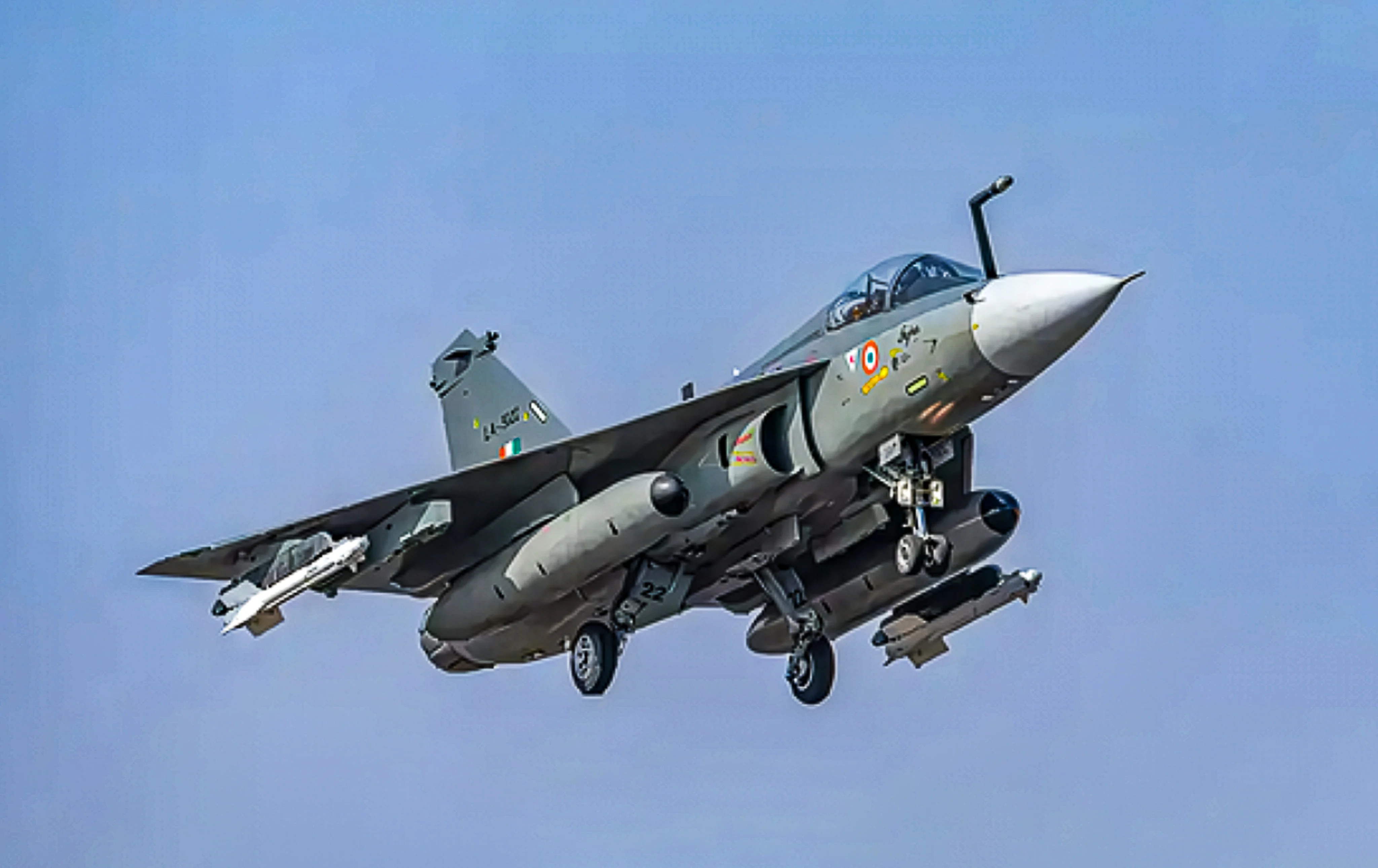
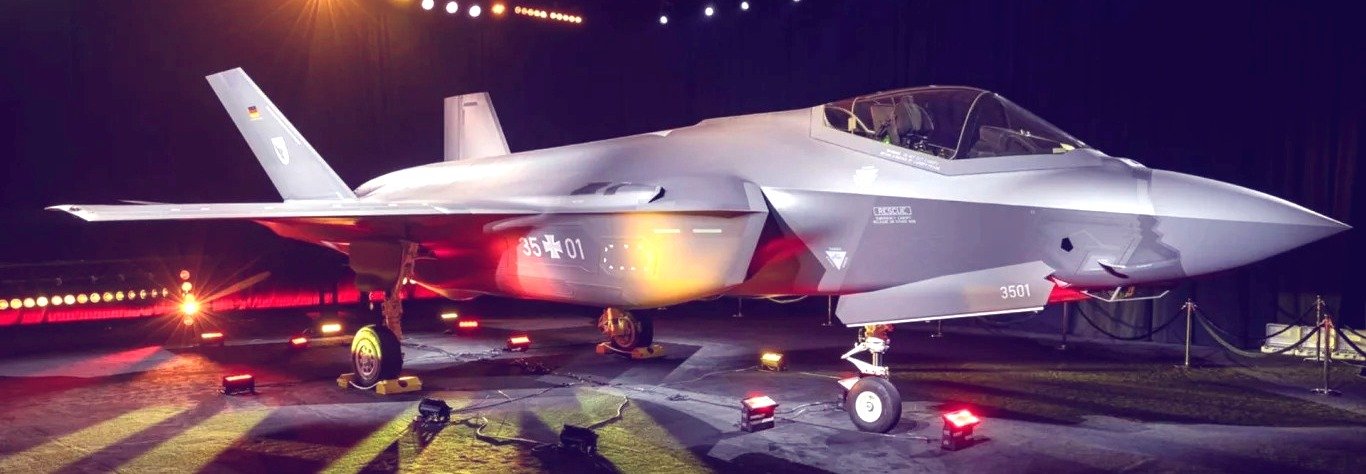
Washington DC; September 2026: American Company Lockheed Martin which has developed a multirole stealth fighter F-35A Lightning II for the United States Air Force (USAF) as part of the broader Joint Strike Fighter (JSF) program, has delivered 08 F-35A’s to Germany, alongside 02 F-35A’s to Finland as a part of NATO’s fifth generation network expansion, against escalating Russian aggressions.
The F-35A Lightning II is the conventional takeoff and landing (CTOL) variant of the F-35 family, designed primarily for air superiority, strike missions, and close air support. As the flagship fifth-generation fighter of the U.S. Air Force, the F-35A combines advanced stealth, avionics, and multirole capabilities, making it a key asset in modern combat scenarios.
Germany –
The aircraft was formally handed over in Fort Worth on 18 September 2026, giving the Luftwaffe a low-observable strike and sensor-fusion capability designed for high-threat operations. Germany’s first 08 F-35As will initially support pilot and maintainer training at Ebbing Air National Guard Base in Arkansas alongside U.S. and allied personnel. That training links the Luftwaffe directly to the wider F-35 combat ecosystem while accelerating its shift from the Tornado toward more survivable, networked and interoperable air operations.
The Tornado replacement is central to the German decision. The Luftwaffe has long relied on the aircraft for strike missions and Germany’s participation in NATO nuclear sharing, but the type is scheduled to leave service by 2030. The F-35A provides a lower-observable successor with far more advanced sensors, data fusion and networking, while retaining the ability to assume the nuclear-sharing mission. This gives the German fleet strategic importance beyond its relatively modest size because NATO deterrence depends not only on weapons but also on trained crews, survivable delivery aircraft and infrastructure able to support operations in heavily contested environments.
The Pentagon-linked training structure is equally important. Germany is not introducing the F-35A as an isolated national capability: pilots, maintainers, mission planners and support personnel are entering a common training and sustainment framework used by other F-35 operators. Ebbing Air National Guard Base has been developed as a major Foreign Military Sales training hub for international F-35 users, allowing allied crews to prepare within a standardized U.S.-led system before returning to national bases. This common foundation can reduce differences in procedures, maintenance practices and tactical preparation and improve the ability of German crews to integrate quickly into multinational NATO air operations.
The German fleet will enter an increasingly dense European F-35 network. Germany’s planned 35 F-35As place it close in scale to Belgium’s 34-aircraft fleet and Poland’s 32, while the Netherlands and Norway each selected 52 F-35As, Finland 64, and Denmark 27. Italy operates a mixed fleet combining F-35As and F-35Bs, while the United Kingdom uses the short-takeoff-and-vertical-landing F-35B for carrier operations. Germany’s choice of the conventional-takeoff F-35A reflects a different priority set focused on land-based operations, nuclear sharing, deep strike and integration with the Luftwaffe’s Eurofighter force rather than carrier aviation.
These comparisons show why Germany’s acquisition matters more as part of a combined NATO fleet than as a stand-alone force. A fleet of 35 aircraft would not by itself transform the European air balance, but when integrated with Dutch, Norwegian, Belgian, Danish, Polish, Finnish, Italian, British and U.S. F-35 units, it contributes to a much broader fifth-generation combat network spread across multiple countries, air bases and geographic approaches. Germany’s central location adds value because its air bases sit behind NATO’s eastern flank and along major reinforcement routes toward Poland and the Baltic region, allowing German F-35As to support both Central and Eastern European operations.
The operational advantage lies primarily in the aircraft’s combination of low observability, sensors and networking rather than conventional flight performance. The F-35A is designed to reduce the probability of detection by hostile radar while using onboard radar, electro-optical and electronic-support sensors to build a fused tactical picture. In a conflict involving Russia, this could allow German F-35As to operate closer to dense air-defense networks than many non-stealth fighters, detect radar emitters, identify surface-to-air missile sites, collect electronic intelligence and support suppression or destruction of enemy air defences.
The aircraft can also function as an airborne intelligence node rather than only as a strike fighter. Information collected inside or near contested airspace can be shared with German Eurofighters, other allied fighters and command-and-control assets operating farther from the most dangerous threat zones. This creates a complementary relationship between Germany’s future combat aircraft: the Eurofighter provides substantial air-to-air capacity and multirole firepower, while the F-35A contributes deeper penetration, threat detection and sensor-fused targeting information that can support the wider NATO force.
In a high-intensity confrontation with Russia, NATO would likely face a layered air-defense environment combining long-range surface-to-air missiles, mobile short- and medium-range systems, fighter aircraft, electronic warfare and extensive radar coverage. German F-35As would not make those defences irrelevant, because stealth reduces detection and engagement opportunities rather than eliminating them, but they could increase NATO’s freedom of action by helping identify threat locations, expose gaps in coverage and support coordinated attacks involving electronic warfare, stand-off weapons, decoys and other combat aircraft.
The expansion of European F-35 fleets also reduces the extent to which NATO must depend on U.S.-based stealth aircraft deploying across the Atlantic during the opening stages of a crisis. European F-35 operators provide fifth-generation aircraft, trained crews and support structures already inside the theater, allowing NATO to generate stealth sorties from several countries while U.S. reinforcements are still arriving. For Russia, this distribution complicates operational planning because high-end NATO air capability is no longer concentrated in a small number of U.S. units or bases but is increasingly spread across multiple national air forces.
Germany’s nuclear-sharing role adds another layer of strategic relevance. By replacing the Tornado with the F-35A, Berlin preserves its contribution to NATO’s nuclear deterrence structure with a combat aircraft that is better suited to surviving in modern radar and missile environments. Büchel Air Base is being prepared with the maintenance, mission-planning, cybersecurity and support infrastructure required for the new aircraft, ensuring that Germany’s transition is not simply a change of fighter type but the creation of a complete fifth-generation operating environment.
The first German F-35A nevertheless does not yet represent an operational combat squadron. The initial eight aircraft will remain in the United States for training while Germany develops the pilots, maintainers, weapons support, logistics and secure mission-planning systems required for sustained operations. Deliveries to Büchel are expected to begin in the third quarter of 2027 and continue through 2029, with the Tornado scheduled to leave service by 2030.
Germany’s first F-35A delivery in Texas matters at several levels. For Berlin, it begins the practical replacement of the Tornado and preserves the Luftwaffe’s nuclear-sharing mission; for Washington, it brings another major NATO ally deeper into the Pentagon-linked F-35 training and sustainment structure; and for NATO, it expands a European stealth fleet whose combined value lies in common sensors, tactics, logistics and networked operations. In a confrontation with Russia, that interoperability could become as important as the number of aircraft Germany ultimately places on the flight line.
Finland –
On Friday (18th September 2026) the Finnish Air Force has confirmed the receipt of the first 02 F-35A Lightning II. The milestone starts the transition from the F/A-18 Hornet to a 64-aircraft F-35A fleet that will strengthen Finland’s ability to detect, track and engage threats along NATO’s northern and eastern approaches.
The 02 aircraft, JF-510 and JF-512, departed Lockheed Martin’s Fort Worth facility in Texas on 15 September before making an intermediate stop at Lajes Air Base in the Azores. Flown by U.S. Air Force pilots and supported by aerial refuelling, they entered Finnish airspace at 17:21 local time on 18 September and landed at Rovaniemi at 17:45, escorted on the final leg by Finnish F/A-18 Hornets. The formation of the outgoing Hornet alongside its fifth-generation successor carried particular symbolism: Finland is moving from procurement and overseas training toward establishing the F-35 as an operational capability on Finnish territory. 08 Finnish Lot 17 F-35As are already being used for initial training in the United States, while the arrival of JF-510 and JF-512 opens the domestic phase of the transition. Rovaniemi itself is also acquiring greater strategic weight: NATO’s newly established Forward Land Forces Finland includes a Multinational Staff Element in the city, placing northern Finland increasingly within the Alliance’s wider deterrence and command architecture.
Finland plans to field 64 F-35A Lightning II fighters, with deliveries continuing through the end of 2030, replacing the combat capability currently provided by the F/A-18C/D Hornet fleet. Initial operational capability is scheduled for the beginning of 2028, when Lapland Air Wing is expected to have completed its transition and operate exclusively with the F-35, while full operational capability is planned by the end of 2030. Until then, the F-35A and Hornet will operate in parallel. Yet the program represents considerably more than a one-for-one aircraft replacement. Finland procured a comprehensive combat system incorporating aircraft, weapons, training, mission-support systems, sustainment, infrastructure and nationally controlled maintenance capabilities. When Helsinki selected the F-35A in 2021 following the HX competition, Finland’s Ministry of Defence concluded that the system met its requirements for military capability, affordability, industrial participation and security of supply, with particular emphasis on Finland’s ability to sustain combat operations under exceptional circumstances.
The strategic importance of Finland’s F-35A lies not simply in stealth or raw aircraft performance, but in the way it changes how the Finnish Defence Forces can detect, understand and engage threats. Advanced sensors and sensor fusion allow the F-35 to collect and combine information before distributing that picture across a networked force, supporting Finnish units operating on land, at sea and in the air. The Finnish Air Force has described the fighter as both a force multiplier and a “battlefield quarterback,” emphasizing that situational awareness generated by the aircraft can benefit the wider defense system rather than only the pilot flying it. Low observability, electronic warfare capabilities, greater internal fuel capacity, extended endurance and an expanding weapons portfolio further increase survivability and combat effectiveness in contested environments. Finland’s planned weapons ecosystem includes AMRAAM and Sidewinder air-to-air missiles as well as SDB, JDAM-family weapons, JSM and JASSM-ER capabilities. Taken together, the transition moves Finnish fighter aviation beyond the traditional role of interception toward a fifth-generation architecture in which the aircraft can function simultaneously as a sensor, decision-support platform, targeting node and precision-strike asset for the joint force.
Strengthening NATO’s Northern Deterrence and Finland’s Strategic Depth: That transformation carries exceptional geostrategic significance. Finland shares an approximately 1,340-kilometer border with Russia and occupies a pivotal position between the Baltic region, NATO’s northeastern flank and the Arctic High North. The introduction of a nationally based fifth-generation fighter fleet has consequences extending well beyond Finnish airspace. NATO has substantially reinforced its northern posture following the accession of Finland and Sweden, establishing Forward Land Forces Finland in June 2026 and placing a Multinational Staff Element in Rovaniemi. The Alliance has also established a Combined Air Operations Centre at Bodø, Norway, responsible for overseeing air operations across the Nordic region, Baltic Sea, North Atlantic and Barents Sea. In this environment, Finland’s F-35s will add a highly survivable sensor-and-combat capability to an increasingly integrated northern defense architecture. The strategic value is particularly significant because Finnish air power sits at the geographical intersection of several areas that NATO increasingly treats as interconnected rather than isolated operational spaces.
For NATO, Finland’s transition also strengthens collective deterrence and defense through practical interoperability. Since becoming a full Alliance member in April 2023, Finland has been integrating its formidable national territorial-defense model with NATO structures while retaining the ability to defend its own territory under demanding conditions. The F-35 adds another dimension to that process. Finnish personnel are already training within the wider F-35 community, with the Finnish Air Force identifying support from the United States, Norway and Denmark as part of the training effort. Commonality among Nordic and Allied F-35 operators creates opportunities for increasingly compatible tactics, mission planning, training, logistics and sustainment. This matters because deterrence depends not merely on possessing advanced aircraft, but on the ability to generate credible and usable combat power across national boundaries. Finland’s 64-aircraft fleet will contribute not only to protecting Finnish airspace, but also to strengthening a wider NATO air-power network extending across the Baltic and High North.
Team Maverick.