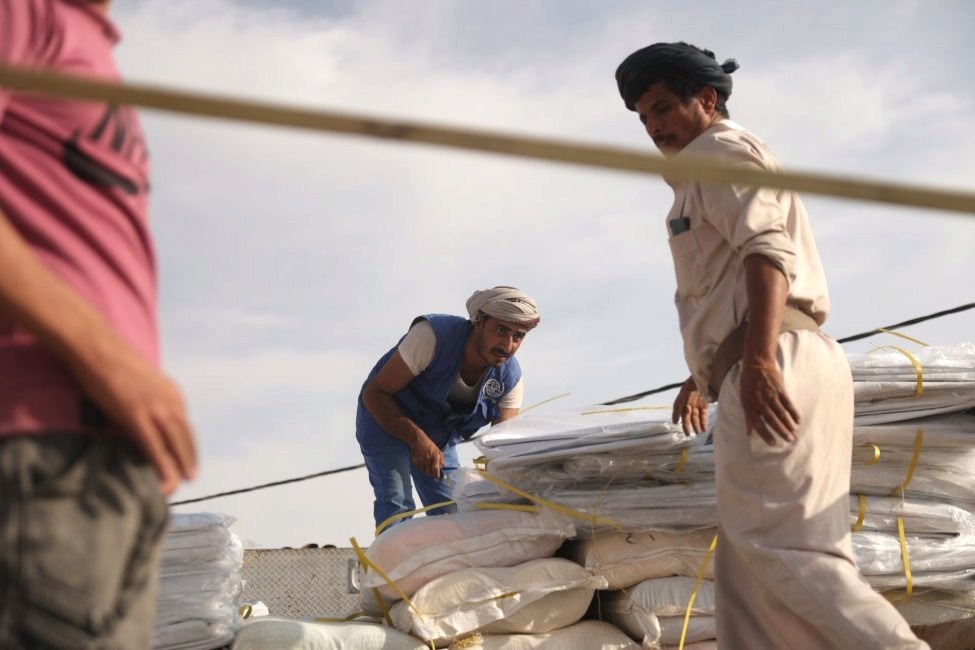
IOM Sounds Alarm As Displacement In Yemen Soars.

Geneva/Aden; January 2026: The International Organization for Migration (IOM) is responding to an alarming level of renewed insecurity in eastern Yemen that has forced new waves of families to flee their homes. Many have arrived in Ma’rib Governorate, where severe shortages of shelter, clean water, and essential services are putting newly displaced communities at immediate risk.
As a new surge of displacement continues, many newly arrived families are living in overcrowded shelters, makeshift structures, or with host communities already under pressure. Ma’rib hosts some of Yemen’s largest displacement sites, including Al Jufainah Camp, where around 16,000 families lack adequate shelter and basic services. This is increasing pressure on limited resources and heightening protection risks, particularly for women, children, older persons, and persons with disabilities.
“Families are once again fleeing with almost nothing, arriving exhausted and vulnerable”, said IOM Director General Amy Pope. “This surge in displacement is pushing already desperate communities to the brink. Without immediate and sustained aid, countless lives are at risk”.
IOM has provided emergency assistance to more than 1,600 newly displaced families, many of whom arrived after days of movement under unsafe and exhausting conditions. Assistance includes shelter support, water and sanitation services, health care, and protection.
IOM is delivering immediate lifesaving assistance across Ma’rib City and Ma’rib Al Wadi, including emergency cash support and referrals for multi-purpose cash assistance. Working with local authorities and humanitarian partners, and with funding from European Civil Protection and Humanitarian Aid (ECHO) and the German Federal Foreign Office (GFFO), IOM has reached additional families. However, shortages of shelter materials, non-food items, and rapid response stocks continue to limit the scale-up of assistance.
Beyond the immediate response, IOM teams continue to support displaced families and host communities with shelter and non-food items, primary health care, mental health and psychosocial support, and protection services, including psychological first aid and referrals for specialized care.
After more than 11 years of conflict, Yemen’s economy and public services remain severely strained, leaving 19.5 million people in need of humanitarian assistance and more than 4.8 million internally displaced. With only around 25 per cent of needs currently covered, millions remain without access to lifesaving assistance, including health care, shelter, water, sanitation and hygiene, cash assistance, and protection services.
IOM remains committed to responding to displacement across Ma’rib and Yemen, closely monitoring movements and adapting its response as needs evolve. The Organisation calls on donors and the international community to urgently increase flexible and sustained funding to ensure lifesaving assistance reaches families in need and to prevent further deterioration of humanitarian conditions in Yemen.
A Snapshot Of Yemen Humanitarian Needs And Response Plan 2025 –
Millions of Yemenis continue to bear the brunt of the conflict and experience dire living conditions, as they find it increasingly challenging to feed their families, visit a doctor and send their children to school. In 2025, an estimated 19.5 million people across Yemen need humanitarian assistance and protection services, which is 1.3 million people more than last year.
The country’s economy continues to decline, as climate shocks drive displacement and disrupt livelihoods. Food insecurity remains alarmingly high, and millions face severe protection risks. This reality is particularly acute for Yemen’s most vulnerable and marginalized groups, including women and girls, persons with disabilities, the Muhamasheen, refugees, migrants and internally displaced people (IDPs).
The 2025 Humanitarian Needs and Response Plan (HNRP) lays out a response that is locally-driven and grounded in the voices of affected communities. It is adapted to evolving needs and risks, and takes into account the dynamic operating environment and existing capacities. The plan is highly prioritised and the result of a rigorous boundary-setting exercise to include only life-saving and life-sustaining activities. It also puts forward concrete ways to ensure quality and cost-effective programming, improve targeting and minimize risk of diversion.
To fulfill the plan and provide humanitarian assistance and protection services to the most vulnerable population, totalling 10.5 million people, the humanitarian community is seeking US$2.47 billion.
The plan builds on progress made last year. In 2024, 197 aid organizations delivered a principled response reaching more than 08 million people with life-saving assistance and services. They achieved this despite persistent operational constraints, including bureaucratic impediments and interference. Humanitarians also faced increased violence and threats to their safety and security, including arbitrary detentions, which have hindered the humanitarian response.
The past decade has demonstrated that humanitarian action saves lives and safeguards people’s dignity. However, humanitarians cannot end civilian suffering alone. Much more is needed to reduce needs, achieve peace, revive the economy and build the resilience of communities through sustainable development activities.
Humanitarian Response Under Strain: Funding Cuts Disrupt Lifesaving Services Across Sectors –
In 2025, Yemen’s humanitarian response faced unprecedented funding shortfalls, with the Yemen Humanitarian Needs and Response Plan funded at only 25 per cent. The severe gap has forced all clusters to scale back critical services despite escalating needs. Health and protection clusters exemplify the devastating consequences of these cuts, leaving millions of people without essential care and exposed to heightened risks.
Health System On The Brink –
Yemen’s fragile health system is deteriorating rapidly as reduced funding and operational constraints threaten the continuity of care amid widespread food insecurity and malnutrition, poor water and sanitation conditions and disease outbreaks. Since January this year, 453 health facilities have faced partial or imminent closure, affecting hospitals, primary health centres, and mobile clinics across 22 governorates. These include 177 primary health centres (PHCs), 200 primary health units (PHUs), 76 hospitals, and 18 mobile clinics. In the DFA-controlled areas only, disruptions affect 53 hospitals, 130 PHCs, 144 PHUs, and one mobile clinic, while in the Government of Yemen controlled areas, 23 hospitals, 47 PHCs, 56 PHUs, and 17 mobile clinics are impacted.
Team Maverick.







Punjab Kings Beat Gujarat Titans by 3 Wickets in Last-Over Thriller
Delhi, March 2026 : In an exciting match of the Indian Premier League 2026, Punjab Kings d…

Punjab Kings Beat Gujarat Titans by 3 Wickets in Last-Over Thriller
Delhi, March 2026 : In an exciting match of the Indian Premier League 2026, …