‘A Disgrace For Humanity’ – UGCC Head On Fourth Anniversary Of Ukraine War.

Kyiv; February 2026: The fourth anniversary of Russia’s large-scale military invasion of Ukraine is “tragic” and a “disgrace for humanity”, says Sviatoslav Shevchuk, Major Archbishop of Kyiv-Halyč.
In an interview, with the Vatican News – the Father and Head of the Ukrainian Greek Catholic Church takes stock of four years of a war “that should never have started”.
Vatican News (Q): Your Beatitude, four years have passed since the start of the large-scale war in Ukraine. What would you like to say on this occasion?
Major Archbishop Sviatoslav Shevchuk (A): I would say that this is a tragic anniversary. No one could have imagined a war in Europe lasting four years. And when we say four years, we are referring only to the large-scale Russian invasion. In fact, the war began in 2014 with the occupation of Crimea and part of eastern Donbas.
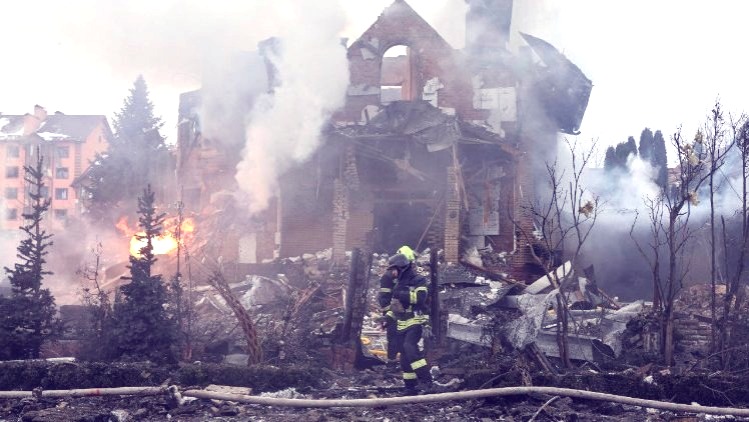
We are facing a real tragedy, which has been getting worse in recent months. The number of civilians killed and wounded continues to rise. I can say that even at the beginning of the invasion in 2022, the situation was not as dramatic as it is today, especially during this winter, particularly in the Ukrainian capital.
Q: How are people who live near your cathedral in Kyiv, for example, coping? How is the Church helping to address these challenges?
A: Kyiv is experiencing a real tragedy, which some are now calling “Kholodomor”, from the Ukrainian word “kholod”, meaning “cold”. We are all familiar with the word “Holodomor”, genocide through artificial famine; but now we are facing another form of genocide, linked to the winter cold. This winter is the harshest in a decade: the temperature in Kyiv has dropped to -200. The Russians are methodically destroying the vital infrastructure of Ukrainian cities, particularly the capital.
Kyiv, one of the largest European capitals, has a population of almost four million. The heating and electricity systems are centralised: each neighbourhood has its own power station that provides electricity and hot water to buildings. There is no gas in our neighbourhood: we cook with electricity, which is also needed to pump drinking water into 09 or 20 storied buildings. This winter, many power stations, built during the Soviet era and therefore known to the Russians, were destroyed. When the temperature dropped below 200, it was no longer possible to supply electricity and hot water; the pipes froze and burst, and the sanitation systems were also severely damaged. Imagine a building with three thousand people: everything in the flats is frozen, the internal temperature is only a few degrees higher than outside, and the bathrooms are unusable. Many are trapped in their homes and do not know where to go.
How do we respond? So-called Resilience Centres have been set up in front of large buildings: tents heated by generators, where people can recharge their devices, drink hot tea, be together and warm up. Some spend the night there. Schools and nurseries have also been adapted to offer shelter.
We have opened a Resilience Centre in the semi-basement shelter of our cathedral. Our generator runs almost twenty hours a day, because we only receive electricity from the city grid for 02-03 hours. Many people sleep there and, in fact, live there: we have to provide everything, because they cannot return to their homes.
The mayor of Kyiv has invited those who can to leave the city temporarily; it is estimated that almost half a million people have left. However, many remain because they are working or have no alternative. Schools, universities, supermarkets, hospitals and pharmacies are open, but the big problem remains the functioning of vital infrastructure. And this methodical destruction continues: drones fly over the city, identify the power stations that are still operational and then, with missiles and targeted attacks, they are hit. This, in short, is the situation we are experiencing.
Q. Since the beginning of the large-scale war, the Church in Ukraine has always stood by the people. Over the course of these four years, several phases of this commitment can be distinguished. How would you describe the current phase, characterised by the fatigue of the population? How does the Church continue to support and accompany people today?
A: We are all the same people and we suffer together. I am a citizen of Kyiv; the cold does not ask, “Are you a priest or a bishop?” or “Which Church do you belong to? How do you pray to God?” In the face of this tragedy, we are all equal. We try to stay united, help each other and also find Christian meaning: how to live as Christians in these conditions.
There are some peculiarities at the moment. When the government orders forced evacuations from combat zones, people prefer to move to the nearest large cities, such as Kharkiv, Chernihiv, or Sumy. It is clear that one of the objectives of the bombing is precisely to discourage the population, to force them to leave their homes. Some analysts argue that the aim is to create a buffer zone without civilians to facilitate military manoeuvres. But people are staying, not leaving, and we are trying to get aid to where there are also children and elderly people. Perhaps the enemy expected the Ukrainians to flee, but this is not the case.
Another observation from Kyiv is that there is no sense of fatigue leading to despair or resignation: on the contrary, with these continuous missile attacks, the will to resist is growing. I cannot explain this phenomenon, but I can recount an episode in my cathedral. A 05 year old boy, who always attends the Liturgy, replied as follows when I asked him if it was cold at his house: “If I can beat the cold, Ukraine will win too”. It was clear that it was cold at his house because he was dressed in heavy clothes, but despite everything, he felt like a hero. For me, this is the voice not only of that family, but of the whole people. In the Resilience Centres, people smile and sing; in courtyards and in front of frozen buildings, they play music and dance. It is something that amazes even us.
But of course, the pain is growing, with so many dead and wounded. According to the UN Human Rights Mission in Ukraine, 2025 was the deadliest year for civilians since the invasion began. The number of civilians killed and wounded increased by 31% compared to 2024 and by 70% compared to 2023. The more there is talk of peace agreements, the more blood flows on Ukrainian soil. While the powerful of the world meet to discuss who to put more pressure on, the people suffer. This is the situation we must face and accompany.
I must also say that people’s fear during the bombings is diminishing: they are getting used to it, and this is dangerous because sometimes we lose sensitivity to the pain of others. Therefore, the Church must always foster a religious sense of respect for human suffering, because we know that in every pain there is the suffering of Christ Himself.
Q. Probably, priests and religious continue to feel deep empathy, partly because they have experienced bereavement in their own families…
A: Of course, there is no family in Ukraine that has not experienced pain or mourning for the loss of a brother, sister, parent, or child who has been killed or wounded. Since the Synod of Bishops, we have launched a support programme for our priests and consecrated persons. We administered a questionnaire to understand how they are doing. Interestingly, the vast majority say they do not want to take holidays or rest. At first, I thought, ‘How admirable!’ But psychotherapists explained to us that this is a sign of trauma: psychologically, they cannot leave the parish or community because they fear that something serious might happen in their homes or churches during their absence.
It is also difficult for me to leave Ukraine: I constantly receive news about the latest events in Kyiv. A psychotherapist said to me: “When Kyiv is bombed, do you suffer even though you are in Rome? This is a sign of trauma.”
So, we accompany our priests through a programme of “healing of wounds”: those who have experienced and overcome their own suffering become “wounded healers”, able to understand those who suffer and guide them towards healing, including psychological and mental healing.
Mental and spiritual health is at the heart of our commitment. We are gaining experience we have never had before, which could become a treasure for other Churches that have not experienced a similar tragedy, to help people draw closer to God, to Christ, the source of salvation and health, not only spiritual but also mental and physical.
Q. Over the past four years, the Church in Ukraine has been able to experience the solidarity of the universal Church in various ways. Would you like to share with us some particular examples of this closeness?
A: Over these four years, we have received so much solidarity from the whole universal Church, promoted above all by the Holy Father – first by Pope Francis, of blessed memory, and now by Pope Leo. We are truly grateful to the Holy Father and to all our brothers and sisters in Christ, to all people of good will who have expressed their closeness.
This solidarity has had its ups and downs. I remember the early days of the war, when humanitarian aid arrived in large quantities from various countries in Europe and around the world. Last year, however, in 2025, aid had almost disappeared. It was increasingly difficult to obtain approval for projects aimed at those who did not have the means to survive. At the beginning of 2025, it was estimated that around five million people in Ukraine were food insecure, but only 2.5 million could receive assistance. This winter, tragic for its cold and difficulties, images of people suffering but trying to resist have rekindled international solidarity, reminiscent of February-March 2022.
I would like to recount a particular episode. After each bombing in Kyiv, I often share updates with friends. I sent a dozen people a picture of the aftermath of an attack with a short comment: “We survived another hellish night in Kyiv. Temperature going down at -200. The struggle for life, humanity and solidarity continues”.
Among the recipients was Cardinal Grzegorz Ryś, Archbishop of Krakow, who responded with immediate solidarity. The following Sunday, he announced a collection for Kyiv, making my message public. Three days later, he wrote to us that one million zlotys [approximately €235,000 – ed.] had already been deposited into the Caritas account. Four days later, the first trucks with generators were already on their way to Kyiv. Commenting on this gesture, I recalled the Latin saying “Bis dat qui cito dat” – “He who gives quickly gives twice”. Indeed, those generators were urgently needed to save lives.
The spontaneity of this solidarity was also noted by the Pope, who thanked those who took immediate action to help. Subsequently, the Polish Bishops’ Conference and other European Churches, particularly the Italian Bishops’ Conference through Caritas, also promoted humanitarian aid collections and made their contribution.
Today, we are experiencing a wave of solidarity that goes beyond financial support: it is important for us that all European parishes talk about the suffering of Kyiv, because Christian memory and prayer have been able to stir consciences and hearts. We are deeply grateful to all those who have contributed to saving lives in Ukraine.
Q. Your Beatitude, on this fourth anniversary, what message would you like to send to the international community and to the faithful around the world?
A: I think that the fourth anniversary of this war is a disgrace for humanity. It is shameful that, in four years, the international community has failed to stop the aggressor’s deadly hand. Some historians have observed that, in our lands, the Second World War lasted less than the current Russian aggression against Ukraine. It is something that should never have started and must now end.
Therefore, on this sad anniversary, I ask everyone to make a promise to God and to themselves: to build peace. Politicians must do their duty. Men of the Church and diplomats, including Christian ones, must do theirs. The military, volunteers: everyone is called to do their part. We must do everything possible to stop the aggressor. Then another time will come: that of healing the trauma and rebuilding what the war has destroyed. But that will be another story. Orate pro nobis. Pray for us.
Team Maverick.


President Of India Reviews Passing Out Parade at Indian Military Academy, Dehradun.
Dehradun; June 2026: The Supreme Commander of the Armed Forces and President of India, Dro…
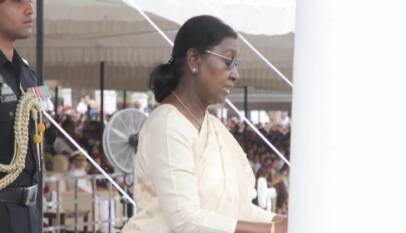
President Of India Reviews Passing Out Parade at Indian Military Academy, Dehradun.
Dehradun; June 2026: The Supreme Commander of the Armed Forces and President of India, …