Chhattisgarh to Become Fully Free from Armed Naxalism by March 31, 2026: Deputy Chief Minister Vijay Sharma

Raipur, March 2026: Deputy Chief Minister and Home Minister Vijay Sharma expressed firm confidence that Chhattisgarh will be completely free from armed Naxalism by March 31, 2026. He stated that Bastar is now moving beyond its past of fear and violence toward a new era of peace, development, and opportunities.
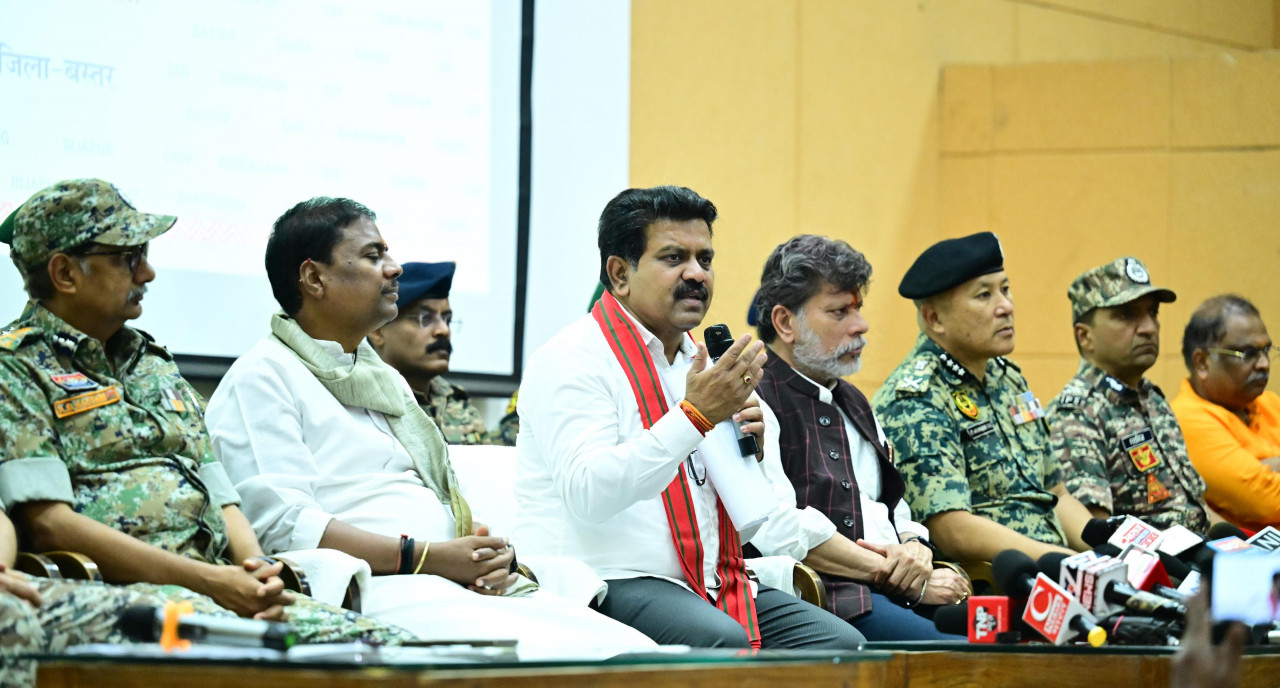
Addressing a press conference in Jagdalpur, Sharma said that coordinated and sustained efforts by the state government, central agencies, and security forces have led to significant progress in eliminating Naxalism. He described this achievement not just as an administrative success, but as a historic transformation marking the social, economic, and humanitarian resurgence of Bastar and the entire state.
Several dignitaries and senior officials, including ministers, legislators, top police officers, and representatives of central and state security forces, were present during the briefing.
The Deputy Chief Minister noted that following the timeline announced in August 2024 by Union Home Minister Amit Shah, the state adopted a well-planned strategy, the positive outcomes of which are now clearly visible. He cited the recent surrender and rehabilitation of a senior Maoist leader, Papa Rao, along with his associates and weapons, as a major development. This, he said, reflects the weakening of the top leadership of Naxal organizations and growing trust in the rehabilitation policy.
Providing further details, Sharma stated that over the past two years, more than 3,000 Naxalites have surrendered and been rehabilitated, including members from the highest to lower ranks. Additionally, over 2,000 have been arrested, and more than 500 have been neutralized in encounters. Overall, this has resulted in a reduction of over 5,000 armed cadres, significantly weakening the Naxal network. He added that currently no active top-level Maoist leader remains in Chhattisgarh, and only about 30 to 40 Naxalites are left in remote northern and southern regions, who are also expected to surrender soon.
Sharma emphasized that this transformation is not solely due to security operations but also the result of trust-building, dialogue, and effective rehabilitation policies. He noted that several districts once affected by Naxalism—such as Kabirdham, Khairagarh-Chhuikhadan, Rajnandgaon, Mohla-Manpur-Ambagarh Chowki, Dhamtari, Gariaband, and Mahasamund—are now completely free from the problem. More than 95 percent of Bastar’s geographical area is no longer under Naxal influence.
He praised the courage and dedication of security forces, stating that their efforts under challenging conditions have been instrumental in achieving this milestone. He also highlighted the crucial role played by local communities, journalists, Panchayati Raj representatives, and tribal groups such as the Muria, Maria, Gond, and Halba in supporting the campaign and fostering social harmony.
The Deputy Chief Minister underlined that the government’s focus extends beyond eliminating Naxalism to ensuring the holistic development of Bastar. Initiatives like the Bastar Olympics have provided youth with positive opportunities, while cultural events such as Bastar Pandum have helped preserve local traditions.
He further announced that around 400 security camps in interior areas will gradually be converted into development centres, including police stations, schools, hospitals, and minor forest produce processing units, thereby improving access to education, healthcare, and employment.
Sharma credited the success of the campaign to the vision of the Prime Minister, the leadership of the Union Home Minister, and the guidance of Chief Minister Vishnu Deo Sai. He also acknowledged technical support from institutions such as ISRO, NTRO, ITBP, and NSG.
Concluding his address, Sharma reiterated that Bastar is steadily progressing toward peace and development. He urged people to avoid misinformation and actively participate in this transformative journey. Emphasizing that the water, forests, and land of Bastar belong to its people, he said local communities will play a key role in their conservation and development.
He expressed full confidence that within the stipulated timeline, Chhattisgarh will emerge as a model of peace, development, and good governance for the nation.



Iran Denies Direct Talks with US, Says Only Messages Exchanged via Intermediaries
Tehran, March 2026: Seyed Abbas Araghchi has clarified that Iran has not held any direct n…
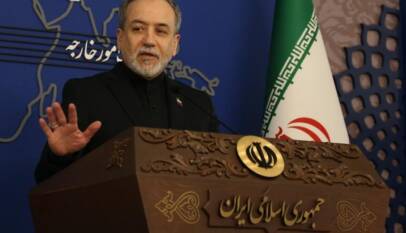
Iran Denies Direct Talks with US, Says Only Messages Exchanged via Intermediaries
Tehran, March 2026: Seyed Abbas Araghchi has clarified that Iran has not held any …