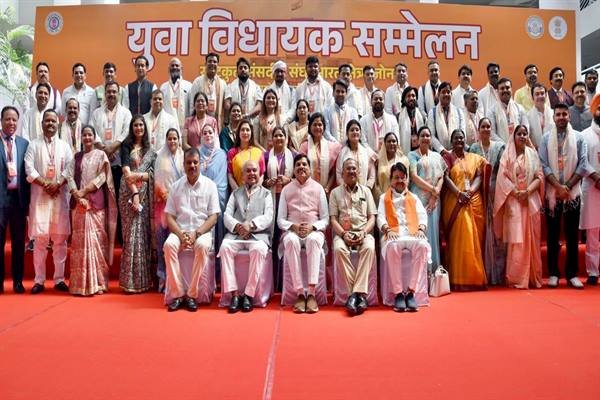
Humility, Dignity and Discipline are Fundamentals in Politics: CM : Dr. Yadav

Chief Minister Dr. Mohan Yadav has said that humility, dignity, and discipline are essential elements in politics. Those dedicated to public service can remain active and successful in public life. Personal ambitions negatively affect democratic values and systems. He said that public representatives must remain sensitive to public issues, be well-informed, skilled in stress management, and fully dedicated to serving the public interest. The conduct of a public representative and their ability to manage and resolve problems reflect their personality and leadership qualities. Political leaders should rise above party differences and work collectively for positive activities and development works.
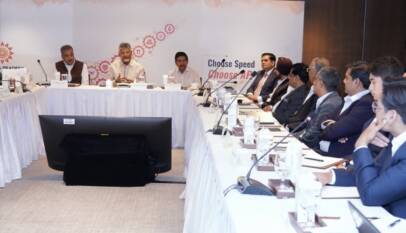
Chief Minister Dr. Yadav was addressing the inaugural session of a two-day conference of young legislators organised in the Madhya Pradesh Legislative Assembly. The program began with the singing of Vande Mataram in the Vidhan Parishad Hall.
The conference was attended by Madhya Pradesh Legislative Assembly Speaker Shri Narendra Singh Tomar, Rajasthan Assembly Speaker Shri Vasudev Devnani, Parliamentary Affairs Minister Shri Kailash Vijayvargiya, and Leader of Opposition Shri Umang Singar. Young legislators up to 45 years of age from three states, Madhya Pradesh, Chhattisgarh and Rajasthan, participated in the conference under the Commonwealth Parliamentary Association (India Region–6).
Chief Minister Dr. Yadav said that the belief that the concept of democracy originated in the West is not entirely true. Democracy is a natural feature of the Indian political system. Indian traditions have always respected 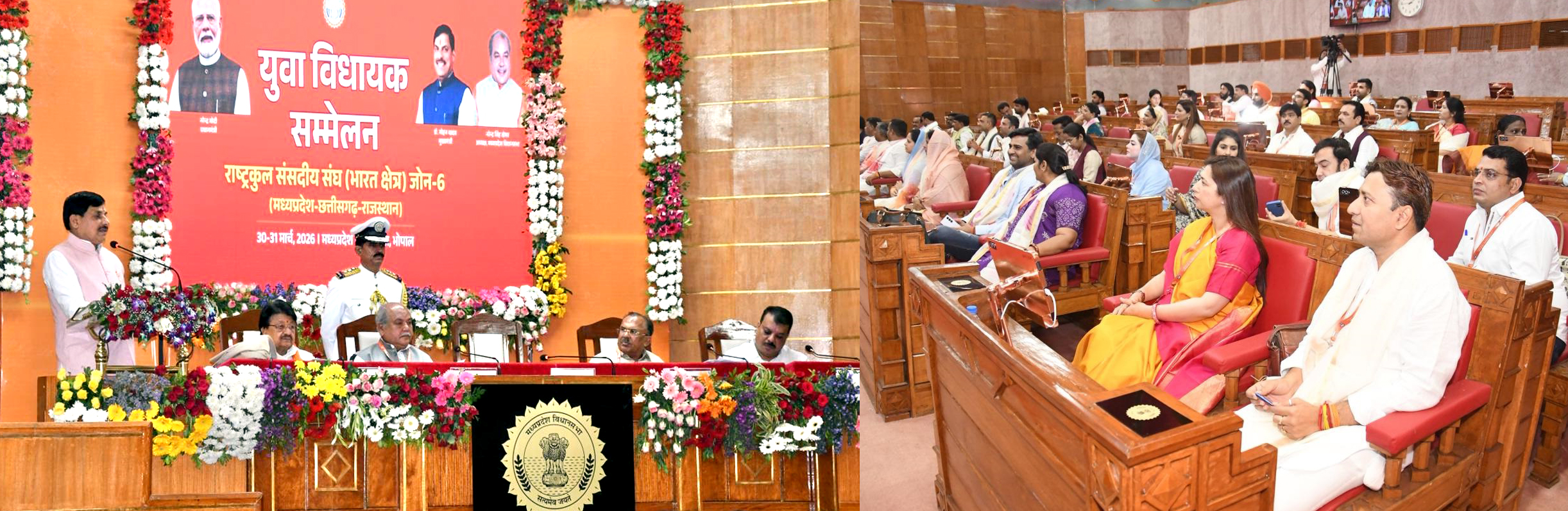 diversity of opinions, and the practice of intellectual debates (Shastrarth) in political and religious matters has existed since ancient times. The respect given to freedom of expression in India reflects these democratic values. He stated that deep-rooted democratic traditions are the reason why democratic institutions continued to function smoothly even after the British left the country, whereas the situation in several neighbouring countries has been different.
Chief Minister Dr. Yadav, inspiring young legislators, said that we should learn the value of maintaining equanimity in all situations, drawing inspiration from Maryada Purushottam Lord Ram. When Lord Ram was about to be crowned king, he was instead sent into exile, yet he accepted both situations with equal composure. The Chief Minister also mentioned that historical accounts of rulers such as Emperor Vikramaditya indicate that they did not necessarily pass power directly to the next generation. Instead, capable individuals involved in governance assumed leadership. Such rulers believed that if the next generation possessed leadership ability and administrative competence, they would naturally rise to leadership roles. These Indian values and traditions should continue to be upheld today.
Chief Minister Dr. Yadav stated that public representatives and people in positions of power should also devote time to their families and instill good values in the next generation. Without proper values, there is a possibility that the next generation may harm the reputation built by their predecessors. Therefore, public representatives must remain particularly sensitive and vigilant in this regard.
Young Public Representatives Key to Achieving Viksit Bharat 2047
Speaker of the Madhya Pradesh Legislative Assembly Shri Narendra Singh Tomar said that the participation of youth is extremely important for strengthening democracy. He stated that democracy is not a system belonging to any single individual, community, or region, but a comprehensive system based on the principles of liberty, justice, equality and fraternity. India’s democracy becomes stronger through the active participation of its citizens. Referring to Babasaheb Dr. Bhimrao Ambedkar’s address to the Constituent Assembly on November 25, 1949, Shri Tomar said that the success of the Constitution depends on how committed and ethical those implementing it are.
Speaker Shri Tomar said that young legislators act as a bridge between citizens and the government in a democracy. Their fresh energy, modern outlook, and innovative capabilities can bring positive changes in important sectors such as education, healthcare, industry and climate change. He added that young public representatives can also play a significant role in raising awareness against social evils such as casteism, substance abuse, and gender discrimination. He referred to the vision of Prime Minister Shri Narendra Modi, which encourages a larger number of young people to enter politics in order to bring new energy and transparency into the political system. Shri Tomar said that to connect youth with the democratic process, the Election Laws (Amendment) Act, 2021, has simplified the process of voter registration.
Shri Tomar further stated that the Madhya Pradesh Legislative Assembly has also taken several important initiatives to enhance democratic participation. Steps such as giving priority to Zero Hour notices by first-time legislators and making responses related to Question Hour more effective have been taken to strengthen democratic processes. He urged young legislators to seriously study parliamentary traditions, rules, and procedures, actively participate in House proceedings, and enrich their knowledge and experience by seeking guidance from senior members.
Speaker Shri Tomar said that strong youth leadership can become a powerful bridge between the experiences of the past and the plans for the future. The Speaker expressed confidence that the discussions and deliberations during the Young Legislators’ Conference would strengthen democratic values and provide renewed energy towards achieving the goal of Viksit Bharat 2047.
Legislators must Serve as Bridge between People and Governance: Speaker ShriDevnani
Speaker of the Rajasthan Legislative Assembly, Shri Vasudev Devnani, said that the primary responsibility of public representatives is to establish effective communication between the people and the government. He stated that the strength of democracy depends on greater transparency and participation among citizens, the legislature, and governance processes. Legislators, he said, should not limit themselves to merely winning elections, but should actively contribute to social development through study, thoughtful engagement, and sensitivity towards public issues. An effective legislator is one who actively participates in House proceedings, asks questions, engages in discussions with adequate preparation, and raises issues concerning the public with seriousness.
Shri Devnani said that the Legislative Assembly is not only a platform for making laws but also the most important democratic forum for presenting the aspirations and concerns of the people. Therefore, it is essential for legislators to cultivate the habit of study and develop a deep understanding of parliamentary and legislative traditions and procedures. Emphasising the need to curb corruption and ensure the fair use of public resources, he said that ensuring transparency and accountability in governance is a collective responsibility. The credibility of democratic institutions will increase only when public representatives perform their duties with honesty and integrity.
Speaker Shri Devnani also highlighted the important role of youth, stating that the participation of young people is vital for the nation’s development. India’s true progress will be achieved only when the benefits of development reach the last person in society. He said that the vision of Viksit Bharat can be realised only through inclusive development and equal opportunities for every section of society. Encouraging young public representatives, he urged them to empower themselves through continuous study, experience, and dialogue, and to further strengthen the dignity and traditions of democratic institutions.
Parliamentary Affairs Minister Shri Kailash Vijayvargiya said that democracy is governance of the people, by the people, and for the people. For democracy to remain strong, public representatives must also be strong. Being an MLA is a significant responsibility, as legislators represent the hopes and aspirations of a large population and give voice to their problems, difficulties, and expectations. He advised young legislators to maintain balanced behaviour, remain sensitive to public issues, and make concrete efforts to resolve them, maintain efficient office management with proactive staff, and keep pace with modern digital technologies.
Leader of Opposition Shri Umang Singar said that when one becomes a legislator, there are many personal expectations, while the people of the constituency also look to their MLA with great hope for development, public services, and welfare initiatives. The position of an MLA is an effective platform to raise the concerns of the people. It is important to connect with people emotionally and build strong relationships with them. He encouraged young legislators to actively participate in Assembly sessions and rise above party politics in matters of development. Shri Singar also noted that many young people believe politics is negative, which discourages them from entering public life. For the sake of national interest and democracy, this perception needs to change.





Naidu Invites Singapore Investors to Join Andhra Pradesh’s Innovation Journey
Amaravati, June 2026 : Andhra Pradesh Chief Minister N. Chandrababu Naidu on Monday invite…
Naidu Invites Singapore Investors to Join Andhra Pradesh’s Innovation Journey
Amaravati, June 2026 : Andhra Pradesh Chief Minister N. Chandrababu Naidu on Monday invited …