Oil Prices Keeps Surging As War With Iran Disrupts Supplies.

Singapore/Moscow/London/Berlin; April 2026: Oil prices remain slightly unchanged in an offbeat trade today, as investors awaited clarity on the status of talks between the U.S. and Iran even as they remained wary about sustained supply losses due to shipping disruptions.
Where – Brent crude futures rose 73 cents (0.7%), to $109.76 a barrel at 03:38 Hours (GMT), on the other side US West Texas Intermediate crude futures were trading 26 cents lower (0.2%), at $111.28 per barrel. The price movements in Asia trading today were dwarfed by an 11% surge for WTI and an 8% rise for Brent during the previous trading session on Thursday, the biggest absolute price increase since 2020.
On Sunday, Trump has exerted more pressure on Tehran, threatening to target Iran’s power plants and bridges on Tuesday (07th April) if the strategic Strait of Hormuz is not reopened. Still, prices are largely unchanged today. The U.S., Iran and a group of regional mediators are discussing the terms for a potential 45-day ceasefire that could lead to a permanent end to the war, Axios reported on Sunday, citing four U.S., Israeli and regional sources.
The Strait of Hormuz, which carries oil and petroleum products from Iraq, Saudi Arabia, Qatar, Kuwait and the United Arab Emirates, remains largely closed due to Iranian attacks on shipping after the war began on February 28. It is considered that the failure in the restoration of supplies vide the Strait of Hormuz is becoming more a question of political victory.
Because of the Middle East supply disruptions, refiners are seeking alternative sources for crude, particularly for physical cargoes in the U.S. and Britain’s North Sea. Still, some vessels, including an Omani-operated tanker, a French-owned container ship and a Japanese-owned gas carrier, have passed through the Strait of Hormuz since Thursday, shipping data showed, reflecting Iran’s policy to allow passage for vessels from countries it deems friendly.
The war threatens to linger on, as Iran has officially told mediators it is not prepared to meet with U.S. officials in Islamabad in the coming days and efforts to produce a ceasefire have reached a dead end,
On Sunday, OPEC+, consisting of some members of the Organization of the Petroleum Exporting Countries and allies such as Russia, agreed to a modest rise of 206,000 barrels per day for May.
However, that decision will largely exist on paper as several of the group’s key producers are unable to raise output due to the war. Russian supply has been disrupted recently by Ukrainian drone attacks on its Baltic Sea export terminal. Maverick News 30 have reported on 05th April, that Ust-Luga terminal resumed loadings on Saturday after days of disruptions.
Meanwhile, Iraq’s state oil marketer SOMO has asked its customers to submit crude oil lifting schedules within 24 hours, a document reviewed by media reporters showed, following media reports that Iran has exempted Iraq from any restrictions on transit through the Strait of Hormuz.
“In light of the above, and to ensure the continuity and stability of crude oil export operations, we urge your esteemed company to submit its lifting schedules within 24 hours to enable the timely processing of your lifting programs, including vessel nominations and the contractual volumes, in full alignment with the agreed terms and conditions”, SOMO said in the document issued on April 5.
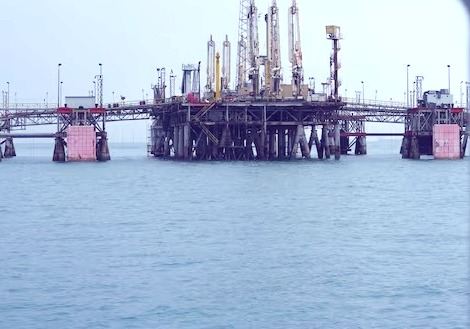
“We hereby reaffirm that all loading terminals, including the Basrah Oil Terminal (BOT) and associated facilities, remain fully operational, and SOMO is in a state of full readiness to execute all contractual lifting programs without any limitation”, the document further asserted.
A resumption of oil exports will help the OPEC member lift production as its output collapsed to about 800,000 barrels per day last month. However, some market participants said it remains to be seen if any shipowners will allow their tankers to enter the Gulf to lift oil given that the U.S.-Israeli war with Iran is ongoing.
Earlier, on 04th April in Berlin, five European Union nations – Germany, Italy, Spain, Portugal and Austria made a joint call for an EU-wide tax, a windfall tax on energy companies’ profits in reaction to rising fuel prices due to the Iran war, according to a letter from finance ministers to the EU Commission. Such a measure could help fund relief for consumers in the face of high energy prices and be a signal that they stand united and are able to take action, according to the letter.
“It would make it possible to finance temporary relief, especially for consumers, and curb rising inflation, without placing additional burdens on public budgets. It would also send a clear message that those who profit from the consequences of the war must do their part to ease the burden on the general public”, they have appealed unifiedly.
In the letter, addressed to EU Climate Commissioner Wopke Hoekstra, the ministers pointed to a similar emergency tax in 2022 to address high energy prices. “Given the current market distortions and fiscal constraints, the European Commission should swiftly develop a similar EU-wide contribution instrument grounded on a solid legal basis”, they wrote.
A spokesperson for the EU Commission confirmed it had received the letter and that it was assessing it. “More generally, the Commission is working closely with member states on possible targeted policy measures in response to the current energy crisis facing Europe”, the spokesperson said. However, the letter gave no details of what level of windfall tax the ministers were proposing, or on which companies it should fall.
The German Fuel and Energy Association, which represents refineries and petrol stations, said that the impression that companies were unjustifiably profiting was inaccurate and that there was no justification for a windfall tax. “Our primary goal is to maintain the supply of fuels and motor fuels in Germany under increasingly difficult conditions”, it said in an emailed statement.
On Tuesday – 31st March, the bloc’s energy chief said that it was considering reviving energy crisis measures used in 2022, including proposals to curb grid tariffs and taxes on electricity. The EU have introduced a suite of emergency policies in 2022, after Russia cut gas deliveries. They included an EU-wide cap on gas prices, a tax on energy companies’ windfall profits, and targets to curb gas demand.
Europe’s heavy reliance on imported fuel leaves it exposed to the Middle East conflict’s impact on global energy prices. EU Energy Commissioner Dan Jorgensen said Brussels was particularly concerned in the short term about Europe’s supply of refined petroleum products such as jet fuel and diesel.
Suvro Sanyal – Team Maverick.




Delivery Of Second Indigenous Diving Support Vessel – ‘Nipun’
‘Nipun’ the second Diving Support Vessel (DSV), built by Hindustan Shipyard Limited&n…

Delivery Of Second Indigenous Diving Support Vessel – ‘Nipun’
‘Nipun’ the second Diving Support Vessel (DSV), built by Hindustan Shipyard Limited was delivered to the …