Agarhan Port to Become One of the World’s 10 Largest Ports!

The Union Cabinet has approved the construction of a new port in Gardhan, located in Palghar district, at a project cost of ₹76,200 crore. This port is set to become one of the 10 largest ports globally and is expected to significantly boost the state’s economic development. The project is anticipated to create approximately 1.2 million direct and indirect jobs.
The Union Cabinet’s approval of this port expansion project in Maharashtra marks a critical step forward for the state’s development. Prime Minister Narendra Modi and Union Minister for Sports, Youth Welfare, and Ports Development, Sanjay Bansode, have been thanked for their support.
No villages are planned to be relocated for land acquisition needed for road and rail connectivity to the port. Additionally, the impact on fisheries has been studied by the Central Marine Fisheries Research Institute (CMFRI), a central government organization. Appropriate actions will be taken as per the Maharashtra government’s policies regarding compensation, in consultation with the fishermen affected by the project.
New Economic Opportunities for Local Citizens
The local fishing community and all stakeholders involved in the fishing industry will be rehabilitated and compensated accordingly. The state government will implement skill development programs to create new employment opportunities. The expansion of the port is expected to open new avenues of economic growth for both the state and local residents.
Central and State Government Shares
The port project will be carried out through a joint partnership between the Jawaharlal Nehru Port Trust (JNPT) and the Maharashtra Maritime Board. The total project cost is ₹76,200 crore, with the central and state governments contributing 74% and 26% of the funding, respectively. Construction of the port will begin soon.
Need for Port Expansion
Despite the expansion of the Jawaharlal Nehru Port Authority (JNPA) and increased efficiency at Nhava Sheva Port, the current capacity of about 6.5 million containers (Twenty-Foot Equivalent Units or TEUs) will only reach 10 million TEUs. Given the anticipated growth in India’s export and import sectors, the construction of an additional port is necessary for future demand.
Adapting to the Natural Depth of Expansion
The JNPA currently has a depth of 15 meters, allowing it to berth ships with a capacity of 17,000 TEUs. However, Gardhan offers a natural depth of 18 to 20 meters, enabling the berthing of ships with capacities exceeding 24,000 TEUs. This will reduce India’s reliance on international ports like Singapore and Colombo. Additionally, Gardhan’s location along the international shipping routes of the ‘Indian Middle East Europe Economic Corridor’ and the ‘International North-South Transportation Corridor’ makes it ideal for import and export activities.
Increased Port Costs
The total project cost, including land acquisition, is ₹76,220 crore. This will cover core infrastructure, terminals, and other commercial infrastructure under the Public-Private Partnership (PPP) model. The port infrastructure will include nine 1,000-meter-long container terminals, four multi-purpose berths, four liquid cargo berths, one ro-ro berth, one coastal cargo berth, and one coast guard berth. The project also involves reclaiming 1,448 hectares of offshore area and constructing a 10.14 km breakwater, along with container/cargo storage areas. The Cabinet has approved the establishment of road connectivity between the port and national highways through the Ministry of Road Transport and Highways (MORTH) and rail connectivity with the existing rail network and the upcoming dedicated rail freight corridor through the Ministry of Railways (MOR).
Promoting a Sustainable Marine Environment
India’s trade policies and developments in maritime transport have driven significant growth in containerization. The maritime sector in India is set for transformation with the comprehensive roadmap launched during the Global Maritime India Summit. The Amrit Kal Vision 2047, formulated by the Ministry of Ports, Shipping, and Waterways, builds on the Maritime India Vision 2030 and aims to develop world-class ports while promoting inland waterways, coastal shipping, and a sustainable maritime sector. The capacity of the three major container-handling ports on the west coast will be
India Set to Join the Ranks of the Top 10 Container Ports Worldwide
The proposed deep-draft, all-weather major port at Gardhan will increase India’s national container handling capacity by 23.2 million TEUs and enable the port to accommodate mega-sized container ships with capacities of up to 24,000 TEUs. This expansion will position India among the top 10 container ports globally. The enhanced capacity will also support EXIM trade flows through the India Middle East Europe Economic Corridor (IMEC) and the International North-South Transportation Corridor (INSTC). By promoting public-private partnerships (PPP) and leveraging modern technology, the project aims to create state-of-the-art terminal facilities capable of handling mainline mega vessels on international shipping routes connecting the Far East, Europe, the Middle East, and Africa.
Green Port Initiative
At the heart of this project is a strong commitment to environmental stewardship. The development of the Gardhan port is envisioned as a “greenfield” initiative, focusing on sustainable practices and minimizing disruption to local ecosystems.
The port aims to incorporate sustainable measures, including the adoption of renewable energy and efficient port operations. For instance, shore power will be provided for ships, and only electric or green fuel-powered transport vehicles will be permitted within the port ecosystem. By embracing green initiatives and innovative technologies, VPPL (the port developer) aspires to set a new benchmark for port development in India, aiming to create a zero-emission port that ushers in a sustainable and prosperous future.
The project will generate significant employment opportunities, both during the construction and operation phases. Local youth will benefit from skill development programs, and fishermen whose livelihoods are adversely affected will be compensated in accordance with state government policies. The project is expected to stimulate economic activity and provide direct and indirect employment opportunities to over 1 million people.
The strategic location of the Gardhan port will facilitate container traffic, bridging international and Indian coastlines, thereby maximizing economies of scale. Additionally, the port will cater to the EXIM requirements of industries in Vapi, Indore, Karnataka, and Maharashtra.
Leveraging the Expertise of Jawaharlal Nehru Port Authority (JNPA)
The Jawaharlal Nehru Port Authority (JNPA) is one of India’s major container-handling ports. Since its establishment on May 26, 1989, JNPA has transformed from a bulk cargo terminal to one of the country’s leading container ports. Recognizing its expertise, the Government of India has entrusted JNPA with the implementation of this port project.
Currently, JNPA operates five container terminals: NSFT, NSICT, NSIGT, BMCT, and APMT. The port also has a shallow water berth for general cargo, while its liquid cargo terminal is managed by the BPCL-IOCL consortium. Additionally, the newly constructed coastal jetty enhances connectivity with other Indian ports, facilitating increased coastal container traffic.
Situated on 277 hectares of land, JNPA also operates a carefully designed multi-product Special Economic Zone (SEZ), equipped with state-of-the-art infrastructure, to promote India’s export-oriented industries.



Coal Mine Gas Explosion in China’s Shanxi Province Kills 82, Rescue Ops Continue
Taiyuan, May 2026 : A devastating coal mine gas explosion in north China’s Shanxi Province…
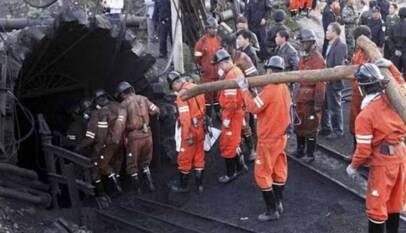
Coal Mine Gas Explosion in China’s Shanxi Province Kills 82, Rescue Ops Continue
Taiyuan, May 2026 : A devastating coal mine gas explosion in north China’s Shanxi …