Madhya Pradesh: A Journey into Ancient India

Nestled in the heart of India, Madhya Pradesh stands as a testament to the country’s rich cultural, spiritual, and historical legacy. Home to UNESCO World Heritage Sites, stunning rock shelters, grand forts, and serene temples, this state takes visitors on a journey back to ancient India. With its abundant natural beauty, 11 national parks, 24 wildlife sanctuaries, and six tiger reserves, Madhya Pradesh offers an unparalleled experience for history buffs, nature enthusiasts, and spiritual seekers alike.

Indore: The City of Food and Culture
The journey into Madhya Pradesh often begins in Indore, the commercial capital of the state. Known for its vibrant energy and food culture, Indore provides a glimpse into the modern heartbeat of the region. One of the city’s biggest highlights is the “56 Dukan” market, where visitors can savor local delicacies like kulfi, matka pizza, and the renowned kunafa. Despite the bustling atmosphere, Indore retains a charm that perfectly balances tradition and modernity.
A short drive from Indore takes visitors to the Patalpani Waterfall, a natural retreat that, while underwhelming at times, offers a brief respite from city life. From Indore, travelers often proceed to Mandu, a fortress city that sits majestically on the Malwa Plateau.

Mandu: The Timeless Fortress City
Perched at an altitude of 2,100 feet, Mandu is a city of grandeur and history. Its breathtaking stone architecture, constructed between the 14th and 15th centuries, narrates stories of a bygone era. With 75 surviving structures, it is impossible to explore the entire city in a single day. Among its highlights are the architectural marvels of Jahaz Mahal, Ashrafi Mahal, Rupmati Mahal, Hindola Mahal, and Baz Bahadur Palace. Each structure is a testament to the craftsmanship of the medieval period, showcasing intricate carvings and artistic brilliance.
The beauty of Mandu lies in its ability to transport visitors to a time when the city was a flourishing cultural and political center. The sheer scale and design of its monuments reflect the importance it held in the Malwa region.

Bhopal: The City of Lakes
From Mandu, the journey continues to Bhopal, the capital city of Madhya Pradesh. Known for its tranquil lakes and rich heritage, Bhopal is a fascinating mix of history and modernity. Legend has it that Raja Bhoj, the Paramara king, established the city in the 11th century after creating a reservoir to cure his skin ailment. Over time, “Bhoj-Paal” evolved into what we now know as Bhopal.
The Upper Lake, or Bada Talab, remains a prominent feature of the city, offering a serene escape in the heart of the urban landscape. Visitors can enjoy evening strolls by the lake, where the charm of Bhopal comes alive under the fading sunlight. The Taj-ul-Masjid, one of the largest mosques in India, further adds to the city’s architectural splendor, exuding a magical aura as dusk sets in.

Bhimbetka: The Legacy of the Stone Age
A short journey from Bhopal leads to the Bhimbetka Rock Shelters, a UNESCO World Heritage Site that marks the origins of human habitation in India. These caves, dating back over 100,000 years, hold paintings that showcase the creativity and lifestyle of primitive humans. With more than 750 caves, Bhimbetka is a rare archaeological wonder where visitors can witness rock art believed to be over 30,000 years old.
The site was first documented in 1888, and subsequent excavations revealed traces of Homo erectus, connecting Bhimbetka to humanity’s earliest artistic expressions. The paintings, depicting hunting scenes, rituals, and everyday life, are a testament to the artistic instincts of early humans and their interaction with the natural environment.

Sanchi: A Symbol of Peace and Enlightenment
Sanchi, located approximately 150 kilometers from Bhopal, is synonymous with the teachings of Lord Buddha and the legacy of Emperor Ashoka. Built in the 3rd century BCE, the Great Stupa at Sanchi is one of India’s oldest stone structures and a UNESCO World Heritage Site. The intricately carved gateways, or toranas, narrate stories from the Jataka tales and the life of Buddha, depicting his teachings and journey toward enlightenment.
Each gate of the Sanchi Stupa tells a unique story. The west gate highlights Buddha’s seven births, while the east and south gates depict Mayadevi’s vision and Siddhartha’s transformation into the Buddha. The north gate portrays Buddha’s final walk into the void, symbolizing his ultimate liberation.
Ashoka’s embrace of Buddhism following the Kalinga War led to the construction of stupas across India, with Sanchi being one of the most iconic. Rediscovered in the 19th century, the site remains a place of tranquility and spiritual significance.
Udayagiri: Rock-Cut Wonders of the Gupta Period
Close to Sanchi lies the Udayagiri Caves, a group of 20 rock-cut temples that date back to the reign of Chandragupta II during the 3rd century CE. These caves, comprising 18 Hindu temples and two Jain sanctuaries, showcase the artistic brilliance of the Gupta Empire. The intricate carvings and sculptures, depicting Hindu deities and mythological scenes, highlight the importance of Udayagiri as a center of spirituality and artistry.

Orchha and Jhansi: Echoes of Royalty and Resistance
From Bhopal, the journey leads to Orchha, a historic town on the banks of the Betwa River. The Orchha Fort complex, with its palaces and temples, reflects the grandeur of the Bundela dynasty. Despite limited time, exploring its architectural beauty offers a glimpse into the opulence of medieval India.
A short distance from Orchha lies Jhansi, a city forever etched in Indian history for its association with Rani Lakshmibai. The golden statue of the warrior queen, standing at the city’s entrance, is a tribute to her indomitable spirit. Jhansi Fort, a symbol of her legacy, stands tall as a reminder of her bravery during the First War of Independence in 1857.
Gwalior: A City of Forts and Music
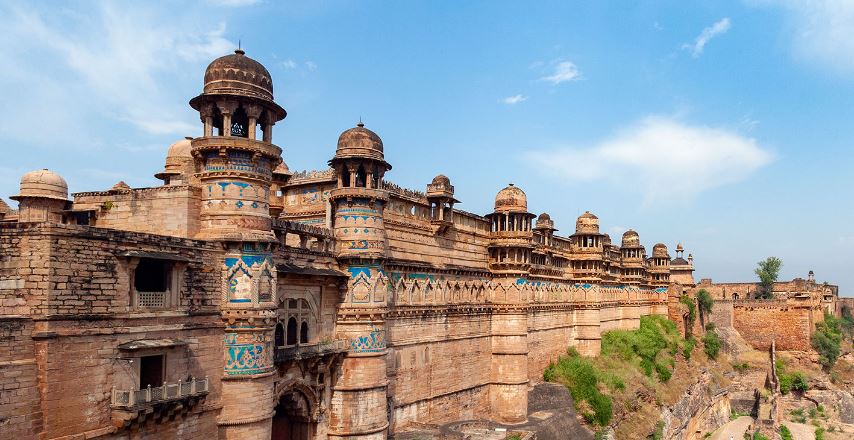
The final destination of this journey is Gwalior, a city renowned for its majestic fort and musical heritage. Gwalior Fort, often referred to as the “Gibraltar of India,” dominates the skyline with its imposing walls and intricate architecture. Within its confines lie palaces, temples, and monuments that showcase the city’s historical significance.
Another highlight of Gwalior is the Tansen Memorial Complex, dedicated to the legendary musician Tansen, one of the nine jewels of Emperor Akbar’s court. The site also houses the grand tomb of Tansen’s teacher, Mohammed Ghaus, an architectural masterpiece that reflects the Mughal era’s artistic excellence.

Khajuraho: A Marvel of Art and Architecture
No journey to Madhya Pradesh is complete without visiting the Khajuraho Temple Complex. Built between 950 and 1050 AD by the Chandela dynasty, the temples are divided into three groups: Eastern, Western, and Southern. The Western group, a UNESCO World Heritage Site, is particularly renowned for its intricate carvings and sculptures.
The temples depict scenes of mythology, daily life, and spirituality, blending Artha (purpose), Dharma (duty), Kama (desire), and Moksha (liberation). While often mischaracterized as being overly sensual, only 10% of the carvings feature such themes. Scholars suggest these depictions may reflect the Chandela dynasty’s spiritual beliefs, including Tantra, or serve as a counterbalance to ascetic practices.
Khajuraho’s artistry, with its detailed carvings and imaginative depictions, remains unparalleled. The experience of exploring these temples transcends words, offering visitors a profound connection to India’s rich heritage.
Conclusion: A Journey Through Time
Madhya Pradesh, with its historical landmarks, spiritual centers, and natural beauty, offers a glimpse into the essence of ancient India. From the Stone Age legacy of Bhimbetka and the grandeur of Mandu to the spiritual tranquility of Sanchi and the artistic brilliance of Khajuraho, every corner of the state tells a story.
A journey through Madhya Pradesh is not merely a trip but a voyage through time—one that unveils the glorious past of the Indian subcontinent. For those seeking to truly understand the roots of India, Madhya Pradesh stands as an unmissable destination, where history, art, and spirituality converge to create an unforgettable experience.





Shivakumar Says Congress United, Assures Women Will Get Cabinet Berth
Bengaluru, Aug 2026 : Karnataka Chief Minister D.K. Shivakumar on Monday sought to dismiss…
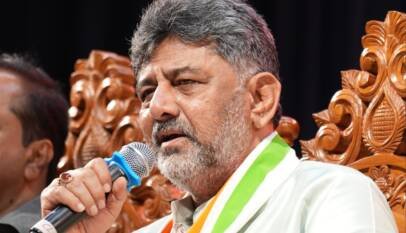
Shivakumar Says Congress United, Assures Women Will Get Cabinet Berth
Bengaluru, Aug 2026 : Karnataka Chief Minister D.K. Shivakumar on Monday sought to dismiss …