A quaint marriage tradition

By Mira Pawar.
A land of exquisite cultures and subcultures, India stretches its roots as back as several millennia ago. Today its emerged as a cultural colossus. Most of us are not aware of even one fourth of the cultures that exist among the tribal communities.
The tribal population constitutes about 8.9% of the total population in India which is the second largest in the world. The tribal people are believed to have rich traditions, cultures and heritage with unique lifestyle and customs. It is believed that many tribal people have adapted to modern lifestyle but some are still continuing to follow them.
Have you ever heard of a marriage tradition taking place without the groom’s presence? Most unlikely, sounds weird, isn’t it? Well, this practice does exist in our country and is followed for centuries. There is a tradition within a particular community in Gujarat where the bride first marries the sister of the groom. Chhota Udepur is a tribal dominated district where the tribal people follow this custom. The groom is not involved in his wedding. He does not take the barat along with his relatives and friends to the bride’s place to solemnise his wedding.
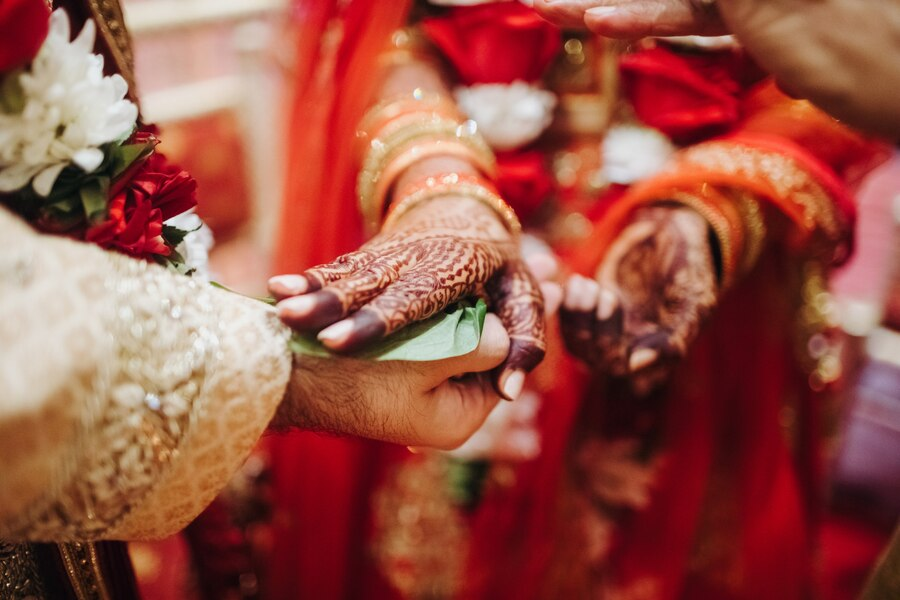
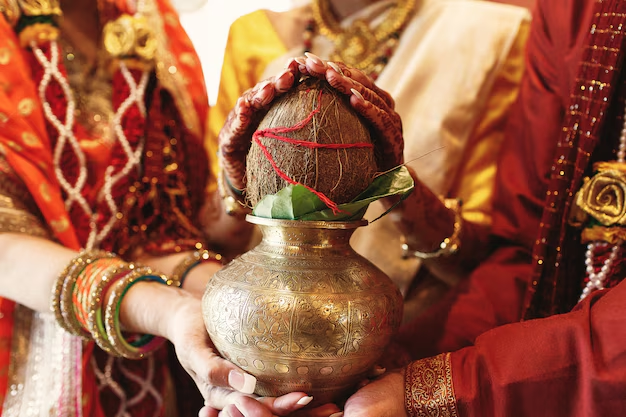
According to the rituals, the place of groom is taken by his unmarried sister who leads the barat to the bride’s place. If the groom does not have a sister, then any other unmarried girl from his side of the family takes the place. The groom does not perform any rituals. He gets dressed in the wedding attire and waits until his sister marries his bride and brings her home. All the rituals like exchanging garland (varmala), saatphere, sindoor etc., are performed by the groom’s sister
Surkheda, Sanada and Ambal are three villages in Gujarat where this practice is followed even today. Those who don’t follow this practice are believed to face problems in their married life. The villagers are of the opinion that this practice protects the groom from any harm or ill effect. Another theory as per the folklore asserts that the male deities of these three villages were bachelors and in order to show respect to them, the grooms stay home.
A couple of people tried to go against this custom and the consequences turned out to be very unfortunate, either the bridegroom died or they became victims of unfortunate events. However, non-believers of this practice want to know, if this practice is followed to protect the groom from mishaps, why his sister’s life should be at stake? Isn’t her life important? The sister is supposed to be unmarried and if at all something happens to her, what about the rest of her life? Some people believe that this is just a superstition and the vulnerable ones’ fall prey to such practices.








Houthis Claim Drone Shootdown as Red Sea Tensions Continue to Escalate
Sanaa, July 2026 : Yemen’s Houthi movement on Sunday claimed it had shot down a Saud…

Houthis Claim Drone Shootdown as Red Sea Tensions Continue to Escalate
Sanaa, July 2026 : Yemen’s Houthi movement on Sunday claimed it had shot down …