UP’s waterways to boost sustainable, safe, and affordable travel

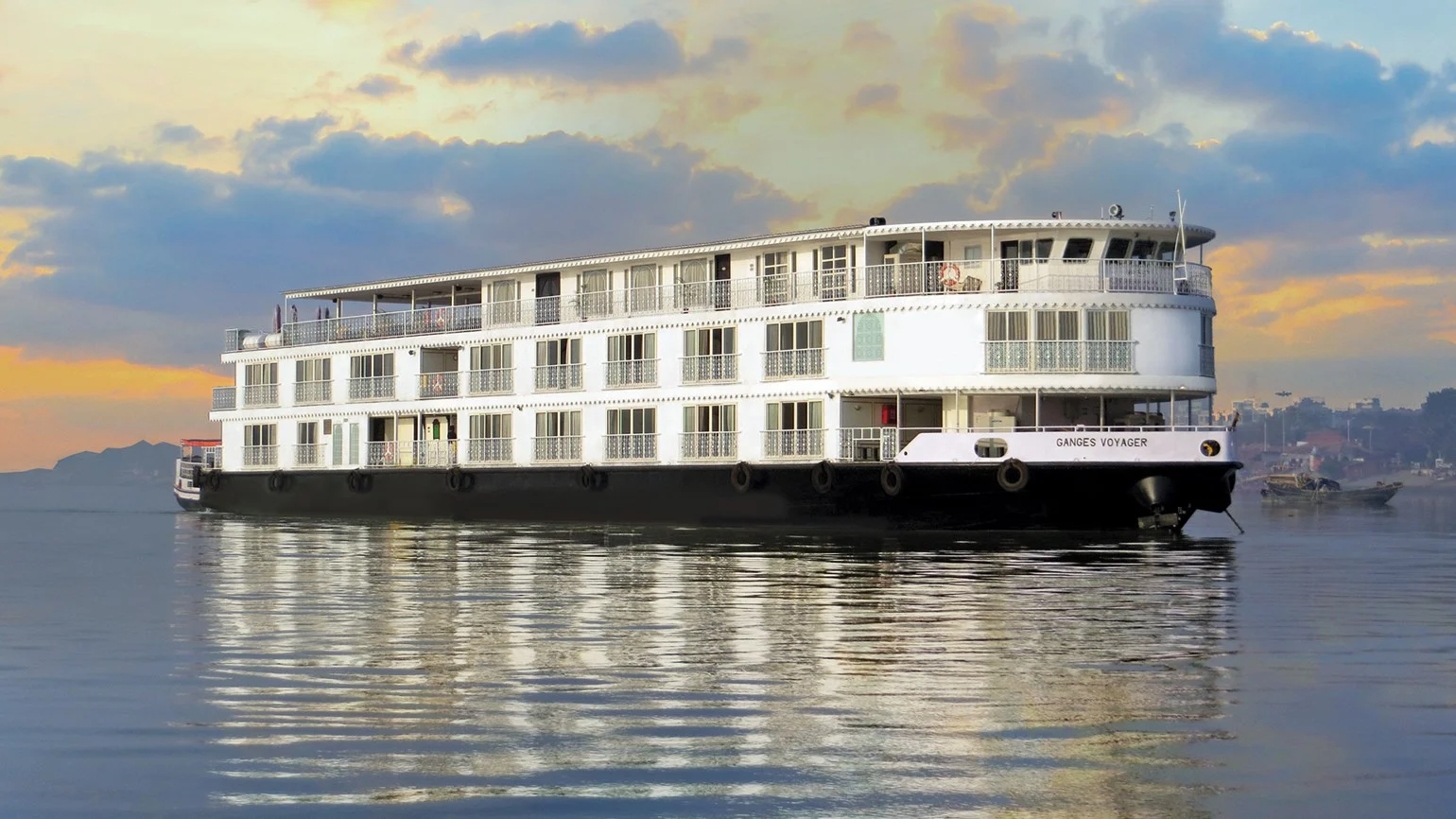
Lucknow : With the central government’s support, the Yogi Adityanath-led Uttar Pradesh government is set to expand water transport across the state significantly. Uttar Pradesh holds immense potential for inland waterway development, thanks to its perennial Himalayan rivers such as the Ganga, Yamuna, and Saryu, which flow year-round. The state encompasses the largest navigable stretch of the Ganga River—extending from Bijnor to Ballia—making it ideally suited for water transport.
As a landlocked state, Uttar Pradesh needs efficient access to seaports. This geographic reality makes water transport not just a possibility but a necessity. Unsurprisingly, UP earned the distinction of hosting the country’s first inland waterway, National Waterway-1.
In its first phase, National Waterway-1 spans nearly 1,100 kilometres and links Prayagraj, Varanasi, and Ghazipur to Haldia Port in West Bengal. Supporting infrastructure such as the Multi-Modal Terminal in Varanasi and floating terminals at Ramnagar, Ghazipur, and Prayagraj are already operational.
To facilitate uninterrupted cargo movement, the central government has recently approved the construction of lifting bridges over the Ganga in Ghazipur, Ballia, and Varanasi. These bridges lift vertically to allow ships to pass and return to their original position afterward, ensuring smooth transportation without delays. As inland navigation expands, the number of such bridges will also increase.
Similar lifting bridges are planned on the Yamuna, Gomti, Saryu, Betwa, Varuna, and Rapti rivers in the next phase. The Yogi government has already committed to integrating these rivers into the water transport network.
Additionally, feasibility studies are underway—supported by the Centre—to explore waterway potential on rivers like the Mandakini, Ken, and Karmanasha. Initially, the central government will manage the newly constructed bridges for two years before handing them over to the state. Expansion of National Waterway-1 from Kanpur to Farrukhabad is also planned, further boosting UP’s connectivity.
Waterways offer a more economical and sustainable rail, road, and air transport alternative. At a recent FICCI National Executive Meeting in Lucknow, State President Manoj Gupta stated that water transport can be up to 90% more cost-effective than conventional modes. It is also significantly safer, with minimal risk of accidents, and contributes to decongesting roads by diverting heavy freight traffic to rivers.
Water transport is a greener option due to its low fuel consumption. It opens up direct cargo routes along riverbanks, enabling local producers to reach wider markets and spurring regional economic growth. As an emerging sector, it will generate new employment opportunities at the grassroots level.
President Of India Reviews Passing Out Parade at Indian Military Academy, Dehradun.
Dehradun; June 2026: The Supreme Commander of the Armed Forces and President of India, Dro…

President Of India Reviews Passing Out Parade at Indian Military Academy, Dehradun.
Dehradun; June 2026: The Supreme Commander of the Armed Forces and President of India, …