A Decade of Modi: From 2014 Mandate to Vision 2047

On May 16, 2014, India witnessed a political earthquake that reshaped its leadership and national trajectory. The results of the 16th Lok Sabha elections marked the rise of Narendra Modi as a central figure in Indian politics. Leading the Bharatiya Janata Party (BJP) and its allies in the National Democratic Alliance (NDA), Modi swept to power with a massive mandate, ending the decade-long rule of the Congress-led United Progressive Alliance (UPA). This victory wasn’t just about a change in government — it signalled the start of a new era driven by a promise of development, good governance, and decisive leadership.
The 2014 general election was historic. Conducted in nine phases from April 7 to May 12, it saw a record voter turnout and a surge in enthusiasm, especially among young and first-time voters. The BJP emerged as the first party since 1984 to win an absolute majority on its own, securing 282 out of 543 Lok Sabha seats. Narendra Modi was sworn in as India’s 14th Prime Minister on May 26, 2014. This moment marked the beginning of a decade of sweeping reforms, structural changes, and a more assertive India both at home and on the world stage.
The first session of the 16th Lok Sabha began on June 4, 2014. Senior Congressman Kamal Nath was appointed as the pro-tem Speaker to oversee the transition. On June 6, Sumitra Mahajan, a veteran parliamentarian, was elected as the Speaker, while M. Thambidurai of the AIADMK became the Deputy Speaker in August. One of the early consequences of the BJP’s landslide win was the absence of an official Leader of Opposition — no other party had the minimum 10% of total seats (55) required to qualify. The Congress, which had ruled India for much of its post-independence history, was reduced to just 44 seats. The AIADMK came in third with 37 seats, while senior Congress leader Mallikarjun Kharge led the party in the Lok Sabha.
The 2014 verdict was more than just a rejection of the incumbent government. It was a vote of confidence in Modi’s vision — one that emphasized economic revival, national security, digital progress, and robust governance. Over the next five years, Modi’s administration rolled out landmark initiatives such as Make in India, Digital India, Jan Dhan Yojana for financial inclusion, and Swachh Bharat Abhiyan for sanitation. India’s global image also underwent a transformation, with Modi positioning the country as a rising power with a strong voice in international affairs.
In 2019, the Modi-led NDA returned to power with an even greater majority, securing 303 seats in the Lok Sabha. This second mandate reaffirmed public trust in Modi’s governance. His second term saw key legislative and policy shifts — most notably the abrogation of Article 370, which removed Jammu and Kashmir’s special status; the enactment of the Citizenship Amendment Act (CAA); and a massive national effort to combat the Covid-19 pandemic. Modi launched the Atmanirbhar Bharat (self-reliant India) initiative to boost local manufacturing and reduce dependence on imports, while simultaneously overseeing one of the world’s largest vaccination drives.
In 2024, Modi secured a third consecutive term, a feat only previously achieved by Jawaharlal Nehru. This third win underlines the broad appeal of Modi’s leadership model, which many see as a blend of nationalism, economic pragmatism, and strategic governance. It has also elevated him into the league of India’s most influential prime ministers.
National security has remained a cornerstone of Modi’s governance. Following terror attacks — including those in Uri (2016), Pulwama (2019), and Pahalgam (2025) — India under Modi adopted a new, proactive security doctrine. The country responded with cross-border strikes in Pakistan and Pakistan-occupied Kashmir (PoK), signalling a decisive break from previous restraint. These actions were widely supported across the political spectrum and marked India’s emergence as a nation unwilling to tolerate cross-border terrorism.
The Modi era has also seen an end to what many termed as “policy paralysis” during the UPA’s final years. His government has pushed through crucial economic reforms, simplified the tax regime through the implementation of the Goods and Services Tax (GST), and moved forward with long-pending legal reforms. The administration has consistently positioned itself against vote-bank and appeasement politics, with Modi repeatedly asserting that his focus is on inclusive growth and national interest. Welfare schemes like Ayushman Bharat (health insurance), Ujjwala Yojana (clean cooking fuel), and PM Awas Yojana (housing for the poor) have directly impacted millions.
Now entering his third term, Modi has outlined an ambitious vision for India’s future. At the heart of this vision is the goal to make India the world’s third-largest economy by 2028. More significantly, he aims to transform India into a “Viksit Bharat” (Developed India) by 2047 — the centenary of the country’s independence. This grand vision is being pursued through investments in infrastructure, digital technology, manufacturing, renewable energy, and ease of doing business. Massive transportation and logistics corridors, smart cities, and tech-driven services are laying the foundation for India’s next growth leap.
Internationally, Modi has made diplomacy a key part of his leadership. Under his guidance, India hosted the G20 summit with remarkable success, pushed for reforms in multilateral institutions, and emerged as a leading voice for the Global South. Whether it’s climate change, global trade, or digital public infrastructure, India has positioned itself as a proactive and influential player. The “Modi doctrine” in foreign policy emphasizes strategic autonomy, strong bilateral ties, and regional cooperation.
As India reflects on its journey since May 16, 2014, it is evident that this period has been one of transformation. From bold economic moves and welfare outreach to military assertiveness and global diplomacy, Prime Minister Narendra Modi’s leadership has steered the country through challenges and milestones alike.
Looking ahead, the road to 2047 is expected to bring both opportunities and trials. But with continuity at the helm, a clear development roadmap, and a population increasingly driven by aspiration and innovation, India stands at a historic turning point. The vision of a fully developed, empowered, and globally respected India is no longer a distant dream — it’s a national mission in progress.


Shivakumar Says Congress United, Assures Women Will Get Cabinet Berth
Bengaluru, Aug 2026 : Karnataka Chief Minister D.K. Shivakumar on Monday sought to dismiss…
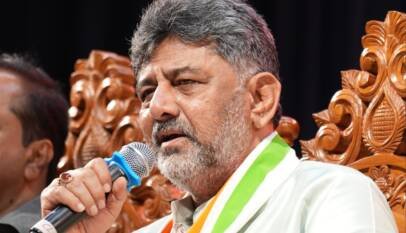
Shivakumar Says Congress United, Assures Women Will Get Cabinet Berth
Bengaluru, Aug 2026 : Karnataka Chief Minister D.K. Shivakumar on Monday sought to dismiss …