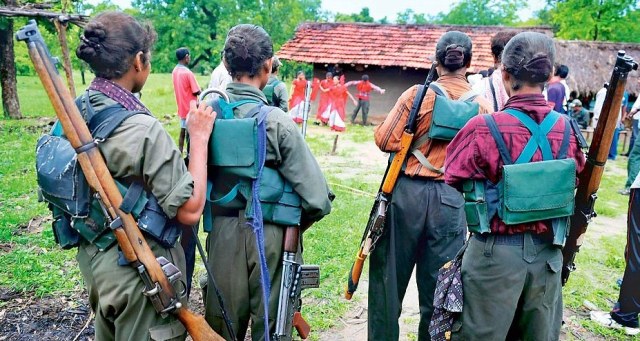
End of an Era: India Declares Itself ‘Naxal-Free’ After Decades-Long Insurgency

New Delhi, March 2026 : India’s long and turbulent engagement with Naxalism, which began in 1967, has finally reached what the government describes as a decisive conclusion. Union Home Minister Amit Shah announced in Parliament that the country is now “Naxal-free,” marking the end of a movement that once posed one of the gravest internal security challenges to the nation.
The roots of Naxalism can be traced back to a peasant uprising in Naxalbari in northern West Bengal, inspired by the revolutionary ideology of Mao Zedong. Initially aimed at challenging feudal land ownership and systemic inequalities, the movement soon evolved into a broader armed rebellion against the Indian state. What began as an ideological struggle gradually transformed into a violent insurgency, with Maoist groups advocating the use of armed force to seize political power.
Over the decades, the movement spread across a vast geographical stretch known as the “Red Corridor,” covering parts of undivided Andhra Pradesh, Maharashtra, Madhya Pradesh (including present-day Chhattisgarh), Odisha, Bihar, and West Bengal, with linkages extending into Nepal. At its peak, Naxalism affected more than 200 districts, disrupting governance, stalling development, and claiming thousands of lives, including those of security personnel and civilians.
Addressing Parliament, Shah highlighted the devastating human and economic cost of the insurgency. He noted that Maoist violence had claimed over 20,000 lives and created significant obstacles to progress in affected regions. He described the movement as a direct challenge to democracy, asserting that its ultimate objective was to establish parallel systems of governance and exploit gaps in state authority.
The Home Minister also took aim at past political leadership, particularly the tenure of Indira Gandhi, alleging that earlier governments allowed Leftist extremism to gain a foothold in India’s political and social landscape. By drawing this connection, Shah framed the current government’s efforts as part of a broader attempt to correct historical missteps and restore national stability.
A significant element of his speech also touched upon the controversial issue of so-called “urban Naxals,” referring to sections of intellectuals and activists allegedly sympathetic to Maoist ideology. Shah cited instances of ideological and logistical support networks operating in urban areas, reigniting a debate that has remained contentious in political and academic circles.
Despite the political undertones, there is broad consensus that Naxalism has witnessed a steady decline over the past two decades. This downturn has been attributed to a combination of sustained security operations and developmental initiatives. Coordinated efforts by central and state forces, including elite units such as the COBRA battalions of the Central Reserve Police Force, have significantly weakened insurgent networks and leadership structures.
Simultaneously, the government has invested heavily in infrastructure and welfare in tribal and remote areas that once served as Maoist strongholds. The expansion of roads, schools, and healthcare facilities has improved connectivity and quality of life, while targeted schemes have aimed to integrate tribal communities into mainstream governance. Employment opportunities and livelihood programmes have further reduced the appeal of insurgent groups, eroding their traditional support base.
While the declaration of a “Naxal-free” India is undoubtedly a milestone, challenges remain. Security agencies acknowledge that small pockets of insurgency still persist in remote areas. Moreover, the ideological roots of the movement have not been entirely eliminated, and vigilance will be required to prevent any resurgence.
Even so, the government’s announcement signals a significant turning point in India’s internal security landscape. After nearly six decades of conflict, the decline of Naxalism represents not only a triumph of security strategy but also the impact of sustained developmental efforts aimed at addressing the underlying causes of unrest.





Portugal Part Ways with Roberto Martinez After World Cup Exit, Begin Search for New Head Coach
Lisbon, July 2026 : The Portuguese Football Federation (FPF) has officially confirmed the …

Portugal Part Ways with Roberto Martinez After World Cup Exit, Begin Search for New Head Coach
Lisbon, July 2026 : The Portuguese Football Federation (FPF) has officially confirmed the departure …