ICAR-CIFRI Boosts Sustainable Fisheries Awareness Among Farmers

The Viksit Krishi Sankalp Abhiyan, launched by the Indian Council of Agricultural Research (ICAR) and the Ministry of Agriculture & Farmers’ Welfare, is a significant initiative aimed at strengthening agricultural development across 700 districts in India. In collaboration with state governments, this campaign seeks to empower approximately 1.5 crore farmers by bridging the gap between agricultural research and practical farming methods.
The key objectives of the Viksit Krishi Sankalp Abhiyan (May 29 to June 12, 2025) in fisheries sector include:
- Enhancing farmer-scientist interaction to improve fish production and knowledge-sharing.
- Promoting research-driven solutions to tackle challenges in fish farming.
- Encouraging sustainable farming practices through modern fish farming techniques.
- Facilitating access to government schemes for financial and technical support.
On May 30, ICAR-CIFRI Scientists in association with local Krishi Vikash Kendra’s (KVKs) successfully conducted extensive outreach programs across West Bengal and Assam, engaging over 4000 farmers to promote sustainable fisheries and aquaculture practices. The initiative covered key aspects such as fish disease management, composite fish culture, and pond health with stupendous emphasis on “Biofloc Technology (BFT)”, across multiple districts, including South 24 Parganas, Birbhum, Kalimpong, Uttar Dinajpur, Murshidabad, Jhargram, and Paschim Medinipur.
BIOFLOC TECHNOLOGY –
Biofloc Technology (BFT) is considered as the new “blue revolution” since nutrients can be continuously recycled and reused in the culture medium, benefited by the minimum or zero-water exchange. BFT is an environment friendly aquaculture technique based on in-situ microorganism production. Biofloc is the suspended growth in ponds / tanks which is the aggregates of living and dead particulate organic matter, phytoplankton, bacteria and grazers of the bacteria. It is the utilisation of microbial processes within the pond / tank itself to provide food resources for cultured organism while at the same time acts as a water treatment remedy. Thus, this system is also called as active suspension ponds or
heterotrophic ponds or even green soup ponds.
Composition and Nutritional Value of Biofloc –
Biofloc is a heterogeneous aggregate of suspended particles and variety of microorganisms associated with extracellular polymeric substances. It is composed of microorganisms such as bacteria, algae, fungi, invertebrates and detritus, etc. It is a protein rich live feed formed as a result of conversion of unused feed and excreta into a natural food in a culture system on exposure to sunlight and vigorous aeration. Each floc is held together in a loose matrix of mucus that is secreted by bacteria and bound by filamentous microorganisms or electrostatic attraction. Large flocs can be seen with the naked eye, but most of them are microscopic. Floc size range from 50 – 200 micron. A good nutritional value is found in Biofloc. The dry weight protein ranges from 25 – 50%, fat ranges 0.5 – 15%. It is a good source of vitamins and minerals, particularly phosphorous. It has an effect similar to probiotics. The dried Biofloc is proposed as an ingredient to replace the fishmeal or soybean in the feed.
Advantage of BFT Ø
- Eco-friendly culture system.
- It reduces environmental impact.
- Judicial use of land and water.
- Limited or zero water exchange system.
- Higher productivity (It enhances survival rate, growth performance, better feed conversion in the culture systems of fish).
- Higher biosecurity.
- Reduces water pollution and mitigate the risk of introduction and spread of pathogens.
- It reduces utilisation of protein rich feed and cost of standard feed.
- It reduces the pressure on capture fisheries i.e., use of cheaper food fish and trash fish for fish feed formulation
Through interactive training sessions, farmers gained valuable insights into modern fish farming techniques, pest control, and government support schemes like PMMSY. A significant number of pamphlets were distributed, ensuring continued learning and awareness. By facilitating scientific intervention and enhancing farmer knowledge, the program contributed to improving fish productivity, strengthening rural livelihoods, and advancing India’s fisheries sector toward long-term sustainability.
Team Maverick

KITG 2026 (Day 7 Roundup): Jharkhand’s Shiv Kumar and Prithvi Oraon Fastest Runners; Chhattisgarh’s Siddharth Nagesh Wins Shot Put Gold, Discus Silver
Lakshadweep’s Abdul Fatah becomes first long jump athlete to cross 7 metres and win gold C…
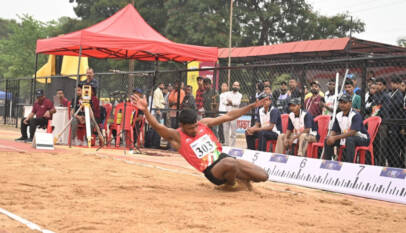
KITG 2026 (Day 7 Roundup): Jharkhand’s Shiv Kumar and Prithvi Oraon Fastest Runners; Chhattisgarh’s Siddharth Nagesh Wins Shot Put Gold, Discus Silver
Lakshadweep’s Abdul Fatah becomes first long jump athlete to cross 7 metres and win …