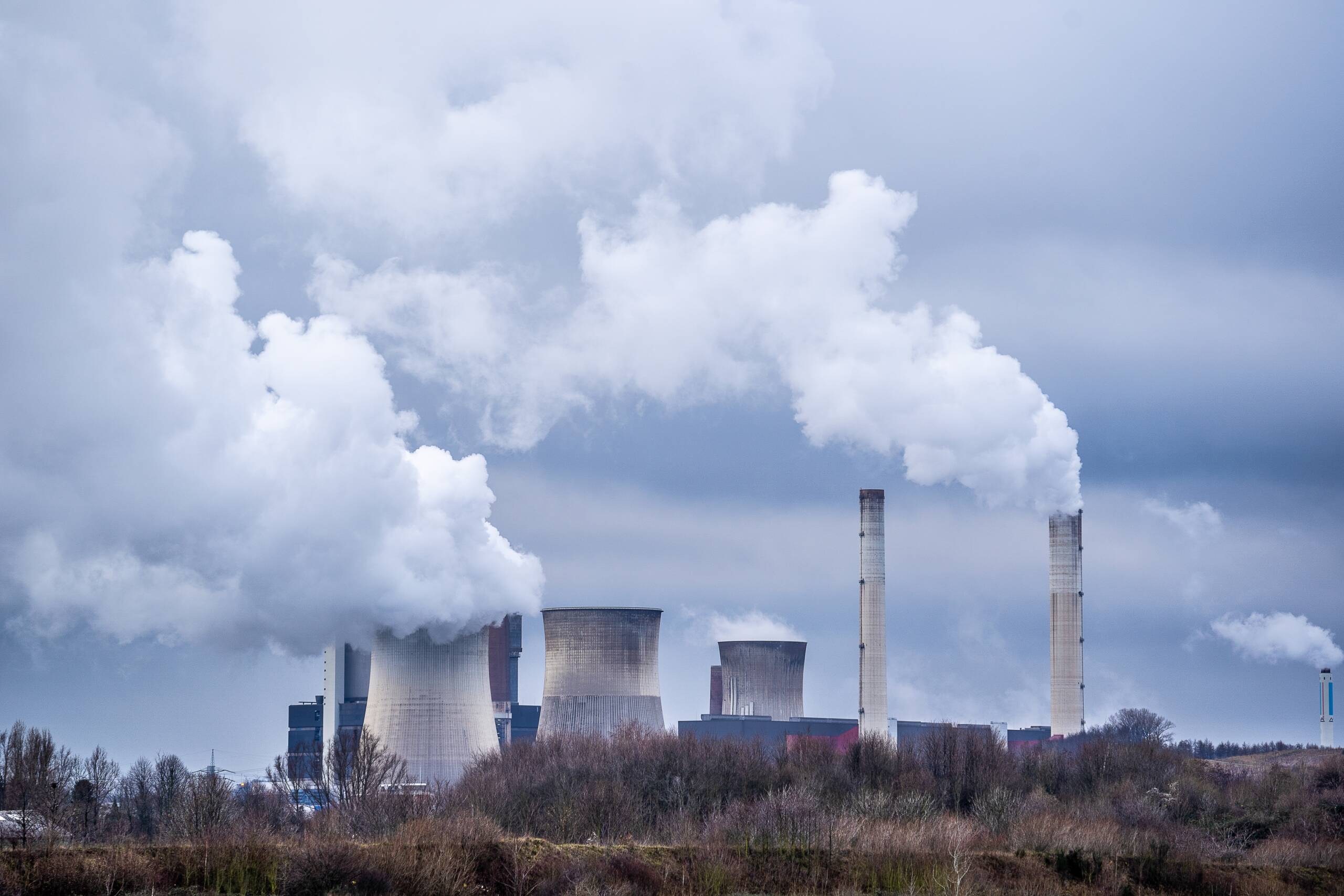
FGD Norms Eased to Balance Costs, Climate and Compliance

Relaxation expected to cut electricity costs by 25 to 30 paise per unit
New Delhi — In a significant policy shift, the Ministry of Environment, Forest and Climate Change (MoEF&CC) has relaxed the requirement for mandatory installation of flue gas desulphurisation (FGD) systems at most coal-based thermal power plants, marking a move towards differentiated compliance based on proximity to urban populations and the sulphur content of the coal used.
The new framework, finalised after extensive deliberations and multiple independent studies, will restrict FGD mandates only to plants located within 10 kilometres of cities with a population exceeding one million.
Plants in critically polluted areas or non-attainment cities will be evaluated on a case-by-case basis. All other plants — accounting for nearly 79% of India’s thermal power capacity — are now exempt from mandatory FGD installation.
The decision follows a series of studies by IIT Delhi, CSIR-NEERI and the National Institute of Advanced Studies (NIAS), which found that ambient sulphur dioxide (SO₂) levels in most parts of India are well within the National Ambient Air Quality Standards (NAAQS). Measurements across multiple cities showed SO₂ levels ranging between 3 and 20 µg/m³, significantly below the NAAQS threshold of 80 µg/m³.
The studies also questioned the environmental and economic efficacy of a universal FGD mandate in the Indian context. Indian coal typically has a sulphur content of less than 0.5%, and due to high stack heights and favourable meteorological conditions, dispersion of SO₂ is efficient.
The NIAS study warned that retrofitting FGDs nationwide would add an estimated 69 million tonnes of CO₂ emissions between 2025 and 2030 due to increased limestone mining, transportation, and power consumption.
Crucially, the relaxed norms are expected to bring down the cost of electricity by 25 to 30 paise per unit. That benefit, say experts, will ultimately flow to consumers. In a high-demand, cost-sensitive economy, the impact could be significant — helping state discoms contain tariffs and reducing the subsidy burden on governments.
The financial burden of mandatory FGD retrofitting was previously estimated at over Rs 2.5 lakh crore, or Rs 1.2 crore per MW, with installation timelines of up to 45 days per unit. Several power producers had warned that this would not only raise costs but also jeopardise grid stability during peak seasons.
Industry executives welcomed the decision. “This is a rational, science-based move that avoids unnecessary costs and focuses regulation where it is most needed,” said a senior executive at a leading public sector utility. “More importantly, it will help keep electricity affordable.”
Officials stressed that the government remains committed to environmental protection, but with a smarter lens. “This is not a rollback. It is a recalibration based on evidence,” a senior MoEF&CC official said. “Our approach is now targeted, efficient and climate-conscious.”
An affidavit incorporating these findings will be submitted shortly to the Supreme Court in the MC Mehta v Union of India case, where FGD enforcement timelines have been under judicial scrutiny.








India Make Two Changes for Must-Win Fourth T20I as Shreyas Iyer Opts to Bat Against England
Bristol, July 2026 : India made two significant changes to their playing XI as captain Shr…

India Make Two Changes for Must-Win Fourth T20I as Shreyas Iyer Opts to Bat Against England
Bristol, July 2026 : India made two significant changes to their playing XI as …