US Court has delivered that a person with Defibrillator can be executed.

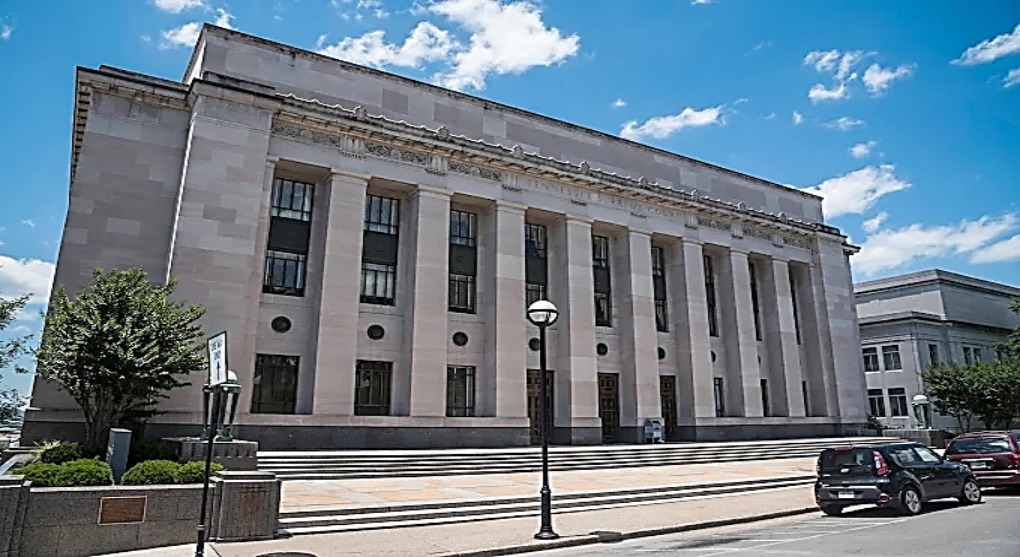
The Tennessee Supreme Court on Thursday has ruled that the southern US state of Tennessee can move forward with the execution of a man Byron Black with an implanted defibrillator, despite concerns that the device could result in a botched execution. Byron Black is currently on death row after his conviction in a 1988 triple murder.
Black’s execution has been delayed multiple times, but a date was set on August 5 for him to receive a lethal injection. However, in July, his defence team argued the execution could not proceed without first deactivating Black’s defibrillator, for fear it would continuously shock his heart as he passed away, resulting in an unnecessarily painful and prolonged death.
Davidson County Chancery Court Judge Russell Perkins previously ruled that Black’s defibrillator would have to be removed prior to execution. But the Tennessee Supreme Court overturned that decision, arguing that removing the defibrillator in advance would amount to a “stay of execution”. The state justices added that the lower court’s order was invalid because it had exceeded its authority.
Kelley Henry, one of Black’s attorneys, said that she is looking at the opinion before making a decision about next steps. Lawyers for the state said on Wednesday that healthcare workers, many of whom view participation in the execution process as a violation of medical ethics, were not willing to facilitate the defibrillator’s removal.
However, the court did not address concerns over whether possible complications to the execution caused by the device could violate Black’s constitutional right against cruel and unusual punishment. It also left open the possibility that Black could still win a reprieve against his execution.
Botched executions have been a subject of debate for years in the US, one of the few Western countries that still uses capital punishment. Capital punishment carried out through methods such as lethal injection and electrocution can be frequently error-prone, sometimes resulting in painful, drawn-out deaths for prisoners.
A 2022 report by the Death Penalty Information Center (DPIC) found that seven out of 22 attempted executions in the US were “visibly problematic” and included “executioner incompetence, failures to follow protocols, or defects in the protocols themselves”.
A 2024 Gallup poll found that 53% of people in the US still support the death penalty, while 43% disapprove. Those figures, however, represent some of the lowest levels of support on record, with favour dropping sharply over the last several decades. According to Amnesty International, the US executed 24 people in 2023, the third-highest number of confirmed executions in the world after Iran and Saudi Arabia. The US also had the fifth-highest number of death sentences, after China, Iran, Saudi Arabia and Somalia.
Proponents of the death penalty say it is morally justified when someone has been found guilty of a heinous crime. But experts say several factors – including fears innocent people could be put to death, the disproportionate use of the death penalty against Black people and people of colour, high costs and doubts about its effectiveness as a crime deterrent – are driving the decline.
While state-level executions continue to decrease, federal executions remain relatively rare, despite a notable uptick during former President Donald Trump’s administration, under which 13 people were executed between July 2020 and January 2021. In comparison, the US federal government carried out three executions in a ‘55 year period’ between 1964 and 2019. President Joe Biden’s administration placed a freeze on federal executions in July 2021.
Administrative problems that can lead to botched executions, which critics say violate US constitutional protections against cruel and unusual punishment, have been a source of concern and the European Union has previously refused to sell drugs used in executions to the US.
Fears an innocent person could be put to death is also one of the most significant worries over the practice. A 2021 Pew Research Center poll found nearly 80 percent of people in the US believe there is “some risk” an innocent person could be wrongfully put to death. It also found the majority of those executed in 2022 had “significant vulnerabilities” such as brain damage, serious mental illness or an IQ level that qualified them as intellectually disabled.
Twelve people had experienced serious trauma, neglect or abuse as children, and three had been sentenced to death for crimes they had committed as teenagers, the report said. The death penalty also has been criticised for being disproportionately applied to people of colour, with DPIC stating that “racial bias against defendants of color and in favor of white victims” has a significant effect on who is prosecuted, sentenced and put to death.
Hadar Aviram, a professor of law at the University of California, Hastings College of the Law in San Francisco, told Press, that the US is unique in that it is the only country to restore the death penalty after instituting a brief moratorium on its use. “The return of the death penalty was part of a general punitive trend in the late 1970s”, said Aviram.
The United States has tried to argue that it can continue using the death penalty while maintaining its core values. People want to believe that when someone is put to death, the state is in a position of moral superiority.
Team Maverick







Suryavanshi’s 17-Ball Blitz Powers Rajasthan Royals to Dominant Win Over CSK
Guwahati, March 2026 : A sensational knock by Vaibhav Suryavanshi powered the Rajasthan Ro…

Suryavanshi’s 17-Ball Blitz Powers Rajasthan Royals to Dominant Win Over CSK
Guwahati, March 2026 : A sensational knock by Vaibhav Suryavanshi powered the Rajasthan Royals …