Self-Reliant Farmers through SMART Project

Kanchani Company achieves annual turnover of over ₹100 crore
With the aim of supporting small and marginal farmers as well as agri-entrepreneurs by developing inclusive and competitive value chains for agricultural produce, the “Balasaheb Thackeray Agribusiness and Rural Transformation (SMART) Project” is being implemented in Maharashtra with assistance from the World Bank. This project is beginning to bring about positive changes in the agriculture sector, with Kanchani Company serving as a prime example.
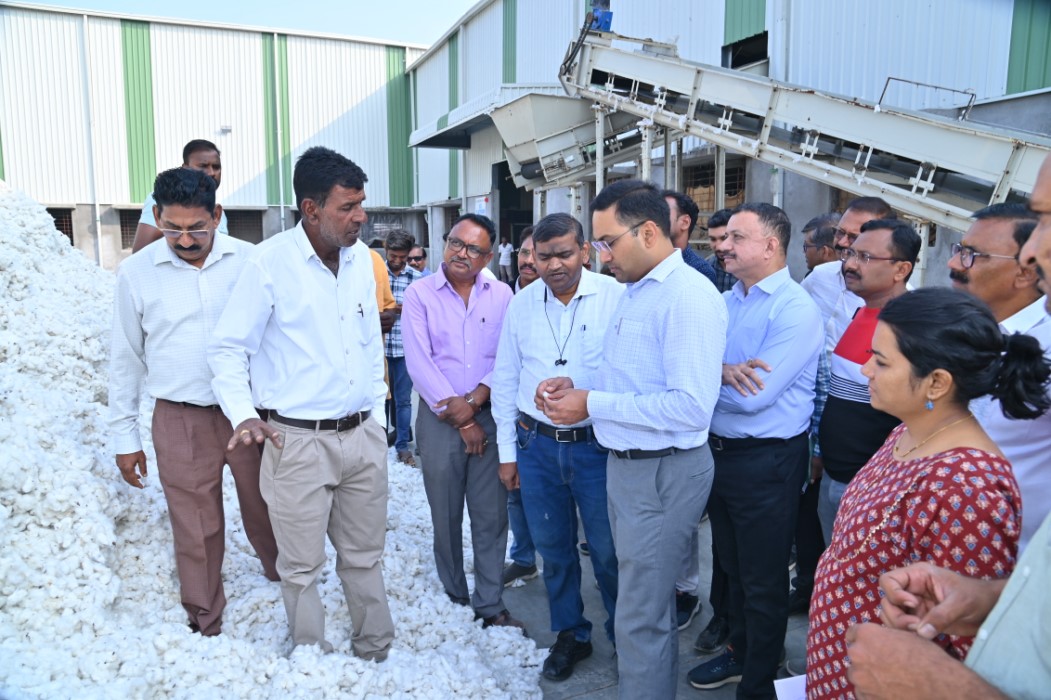
Among the 14 ginning units started under the SMART scheme, Kanchani became the first operational ginning unit in the state. Utilizing government support, farmers united to form a Farmer Producer Company (FPC) and established a direct value chain, ensuring that the profits from processing raw materials remained with them instead of intermediaries. This initiative from Chandrapur district’s Warora-based Kanchani Farmer Producer Company has significantly boosted rural economic growth and fostered self-reliance among farmers.
The company processes cotton and exports bales directly to countries like China and Vietnam. The project received ₹5 crore in financial assistance under the SMART scheme through the Joint Director of Agriculture, Nagpur Office, of which ₹3 crore has been disbursed. With strong farmer collaboration and substantial government support, Kanchani Company has achieved an annual turnover of ₹100 crore. Inspired by Kanchani’s success, other FPCs like Antaranga in Bhandara’s Tumsar, Kanhan, and Kamptee have also started following this growth trajectory.
Small and marginal farmers, who often fail to get fair prices for their produce despite year-round efforts, united to formally establish the Kanchani FPC in 2017. Through a ₹5 crore grant under the SMART project, a cotton ginning and pressing unit was set up, comprising 24 DR ginning and pressing units along with cleaning and reading sheds. This allowed farmers to process their raw cotton into bales, yielding higher returns. Initially, the company also began trading crops like soybean, chickpea, and pigeon pea.
In 2023, 350 farmers produced 900 cotton bales. Nearly 95,000 quintals of cotton were brought to the ginning unit, resulting in 18,500 bales. In FY 2024-25, approximately 1.80 lakh quintals of farm produce were collectively procured, benefitting around 8,000 farmers. Through chickpea seed production, 250 farmers received ₹1,100 per quintal more than market prices. This development signifies a highly satisfactory picture of rural empowerment.
With a vision to transform farmers into entrepreneurs, Kanchani Company is ensuring that farmers no longer need to rely on middlemen or lose money to commission agents. By establishing a collective sales network, farmers are getting better prices for their produce. With over 2,000 farmer members, the company ensures timely payments for their produce. Furthermore, 52 FPCs from Chandrapur, Yavatmal, and Gadchiroli districts have signed agreements with Kanchani Company for marketing and selling pigeon pea, chickpea, turmeric, rice, soybean, and cotton bales across other states. Kanchani facilitates finding good buyers without charging any fee. Additionally, warehousing support is provided through the State Warehousing Corporation. Post-harvest management and primary processing are enhancing product value, resulting in safe food products for consumers.
Following Kanchani’s success, Kanhan Agrovision Company was established in 2018 by 20 farmers in Kanhan, Kamptee Taluka, Nagpur district, under the group farming and SMART initiative. The company started a rice mill and, with government support, has advanced significantly. In 2024, it received a grant of ₹87 lakh under the SMART project, enabling the purchase of a wheat cleaning and grading machine, godown construction, a shed for equipment, and a 60-metric-ton weighbridge. They are now supplying produce to ITC Ltd. in Bhopal. Currently, 312 farmers are associated with this project, expressing their intent to venture into wheat seed production. This path is expected to define the company’s future success.
Farmer CBOs in Nagpur Division
Given the large number of small and marginal landholders in the state, efforts are underway to organize them into farmer groups and companies, emphasizing group farming and collective procurement to strengthen their market linkages. To foster the development of competitive agricultural value chains, Community-Based Organizations (CBOs) and Farmer Producer Companies (FPCs) are being established under the SMART project in Nagpur Division. The project provides grants for technical assistance, infrastructure, and risk mitigation to help these farmer organizations access organized markets.
Under the SMART project, 79 farmer CBOs in Nagpur Division have been approved with a sanctioned fund of ₹172.05 crore, of which ₹103.02 crore has been disbursed. These include 10 CBOs in Wardha, 15 in Nagpur, 11 in Bhandara, 14 in Gondia, 22 in Chandrapur, and 7 in Gadchiroli districts.
SMART – Increasing Farmer Incomes
Previously, Maharashtra successfully implemented two World Bank-assisted projects: the Maharashtra Competitive Agriculture Development Project and the Maharashtra Rural Livelihoods Project. Building on this, the World Bank has decided to assist the state government in executing the SMART project. Through the formation of Farmer Producer Groups and their active participation, the project aims to connect farmers with markets, enhance value addition through post-harvest management and primary processing, produce safe food products for consumers, and ultimately increase farmers’ incomes by creating livelihood opportunities.
SMART is being implemented in Maharashtra with financial assistance from the World Bank (70%), State Government (27%), and private sector through CSR (3%). The total project cost is ₹2,100 crore. Its execution involves 11 agencies under seven administrative departments – Agriculture, Animal Husbandry, Marketing, Cooperation, Women and Child Development, Rural Development, and Urban Development. This holistic approach is bringing about transformative changes in farmers’ lives across Maharashtra.


Lebanon At ‘Breaking Point’ As Displacement Soars And Strikes Intensify.
Beirut; April 2026: The UN’s top humanitarian official warned the Security Council (USA – …

Lebanon At ‘Breaking Point’ As Displacement Soars And Strikes Intensify.
Beirut; April 2026: The UN’s top humanitarian official warned the Security Council (USA – …