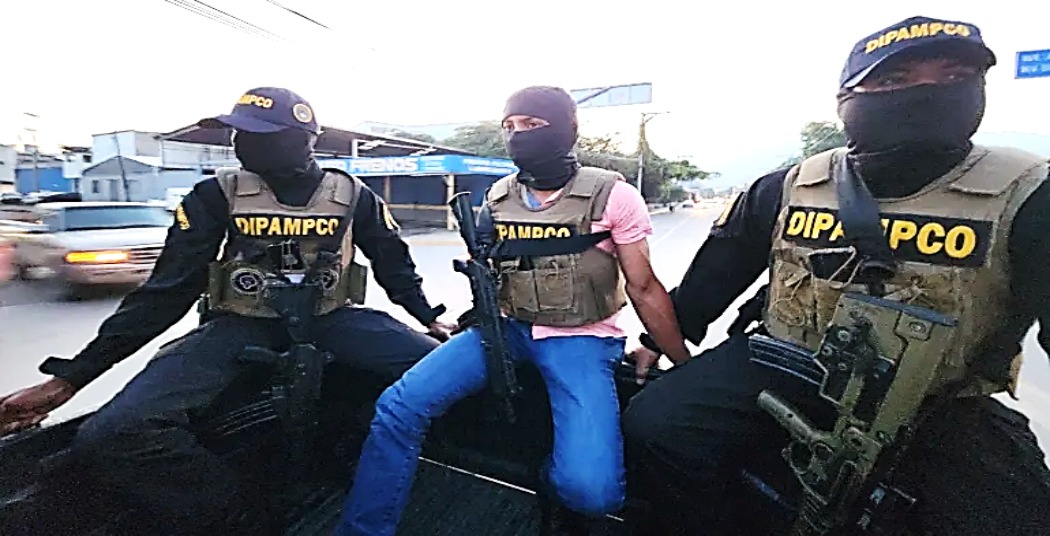
Imposition of “State of Exception” has bewildered Humanity in Honduras.

World Legal Experts have condemned the corruption and abuse, exemplifying the Honduras’s “state of exception” – an emergency declaration that has suspended certain constitutional rights while granting greater powers to the military and police. While, such measures are meant to be temporary, the state of exception was first declared in December 2022, in the name of fighting drug traffickers and gangs.
But it has been extended at least 17 times since, often without the explicit approval of Honduras’s Congress.
For human rights observers, the continued renewals have raised alarms over whether the state of exception is being used as a shield for law enforcement excesses. In May, 2025, the United Nations High Commissioner for Human Rights (OHCHR) urged the Honduran government to “put an end” to the state of exception, citing systematic abuses at the hands of security forces. “The implementation of the state of exception has led to serious human rights violations, including extrajudicial killings, forced disappearances, arbitrary detentions and raids without judicial oversight“, the UN office wrote. It added that Honduras’s National Commission for Human Rights (CONADEH) had arrived at similar conclusions.
Joaquin Mejia, who is an investigator with the Team for Reflection, Investigation and Communication, a Honduran human rights advocacy group, believes such abuses are a trend under the state of exception. “The biggest negative effect is what the National Commission for Human Rights registered: that, from December 2022 to December 2024, 798 complaints at the national level over human rights abuses are attributed to state security forces“, Mejia said.
Although, ‘States of exception’ are not uncommon in Latin America and the Caribbean. By one estimate, from 2020 to 2023, as many as 30 states of exception and similar measures were declared across the region, including in countries like Ecuador, Belize and Peru. But the United Nations High Commissioner’s office warned that, in Honduras’s case, a prolonged emergency declaration could “become the new normal”, leading to long-term infringements on human rights. Honduras’s state of exception is itself modelled off a controversial crackdown that unfolded in a neighbouring country, El Salvador. There, successive governments had struggled to tamp down on the violence that gave El Salvador the reputation of being the “murder capital of the world“.
Media outlets noted that there were periods in the 2010s when an average of one murder was reported in El Salvador every hour. The local death toll reportedly outstripped that of many war zones. But when President Nayib Bukele took power in 2019, he implemented a series of “mano dura” or “iron fist” policies, including a state of exception that began in March 2022.
Bukele, a self-proclaimed “the world’s coolest dictator” had flooded the streets with soldiers and police in order to conduct mass arrests of alleged gang members. But human rights groups believe many of the young men swept up in his dragnet tactics had no gang affiliation at all. They have little chance to prove their innocence, however. Under Bukele, mass trials can be held with up to 900 people at time, and many are held in detention without ever hearing their cases in court. Still, Bukele’s policies became popular even outside of El Salvador, as homicide rates in his country dropped at least, critics say, on paper.
In November 2022, eight months after El Salvador announced its state of exception, Honduras followed suit with its own. In Honduras, left-leaning politician Xiomara Castro had campaigned to be president on the promise she would demilitarise the country. But she announced the state of exception less than a year into her term. The move came in response to a sudden rise in extortion killings, wherein gangs promise protection or death depending on whether they are paid.
The Association for a More Just Society, a human rights group, estimated at the time that extortion was a $737m industry in Honduras, amounting to nearly 3% of the country’s gross domestic product (GDP). Under President Castro, the state of exception was initially set to last for just 30 days. Nearly 20,000 police officers were deployed to Honduras’s streets.
Crucially, Castro embarked on an experiment of passing control over domestic security from the military to the police. That was a departure from the policies of her predecessor, disgraced right-wing President Juan Orlando Hernandez, who had created numerous elite military-police forces. One of them was the National Anti-Mob and Gang Force (FNAMP), a military-run special forces unit whose mission was ostensibly to dismantle gangs — or “maras” — like MS-13 and Barrio 18. But Castro’s government had disbanded FNAMP at the beginning of 2022, after Honduran investigative reporters published allegations that the unit operated as a death squad in league with MS-13.
The scandal was ugly enough that the head of the National Police at the time, Gustavo Sanchez, admitted wrongdoing in the FNAMP. “We are going to transform it, because we’ve found an institution that violated human rights”, he said at the time. Instead, the Castro government created a new unit under the control of the police: the Anti-Maras, Gangs and Organised Crime Police Directorate (DIPAMPCO). It became one of the most visible forces patrolling the streets during the state of exception.
Critics have accused Honduran law enforcement of using the additional powers and lighter oversight during the state of exception to commit violence as well. In 2024, for instance, it was reported that the government received at least 108 complaints of forced disappearances during the first 29 months of President Castro’s term. Some of those disappearances, the news outlet said, have been linked to DIPAMPCO. “Part of the problem is that most of the members of the DIPAMPCO are former members of the FNAMP”, said the prosecutor who spoke with the Media.
A representative for the Honduran National Police did not respond to the Media about the accusations regarding alleged corruption and enforced disappearances. In previous media reports, Honduran government officials have also declined to comment on alleged disappearances. In 2024, however, Sanchez, the police chief, claimed that criminal groups had “replicated” DIPAMPCO uniforms to wear while carrying out illegal activities. He announced that the police unit would change its uniforms as a result. But questions of police overreach are only part of the backlash to the state of exception.
Critics have also called into question whether the state of exception has actually been effective in combatting the crime it was established to curtail.
The state of exception has encouraged criminal gangs to better hide the bodies of their victims, in order to reduce the homicide tallies that could invite further government crackdowns. The main difference is that, instead of killing someone, they make them disappear.
But the future of the state of exception is uncertain. Honduras is in a high-stakes election year, and a new president will be chosen in November. Already, groups like Amnesty International have called on the candidates to commit to ending the emergency declaration. Even so, the state of exception with its limits on civil liberties could dampen free speech and influence the outcome of the vote.
It is apparent that the state of exception has less to do with reducing violence and more to do with exerting power to protect political interests. The DIPAMPCO want the state of exception to continue so that the population can’t protest during the elections. They want it to continue so that they can ensure they can stay in power. It’s based on intimidation.
Mejia, the human rights investigator, also believes that the current situation “represents an enormous danger” during election season. “Any electoral cycle needs a peaceful political climate with full respect for civil rights”, he said.
Team Maverick


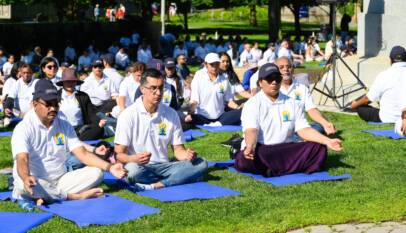
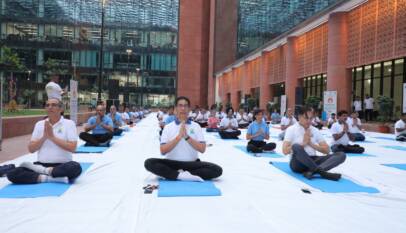


Ashwini Vaishnaw, Arjun Ram Meghwal Join Mass Yoga Session in Bikaner
On the occasion of International Day of Yoga, Union Minister for Railways, Information &am…
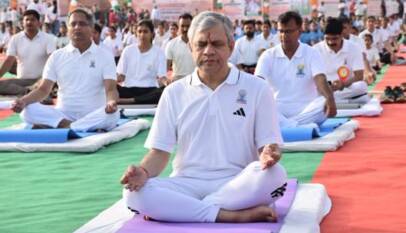
Ashwini Vaishnaw, Arjun Ram Meghwal Join Mass Yoga Session in Bikaner
On the occasion of International Day of Yoga, Union Minister for Railways, Information & …