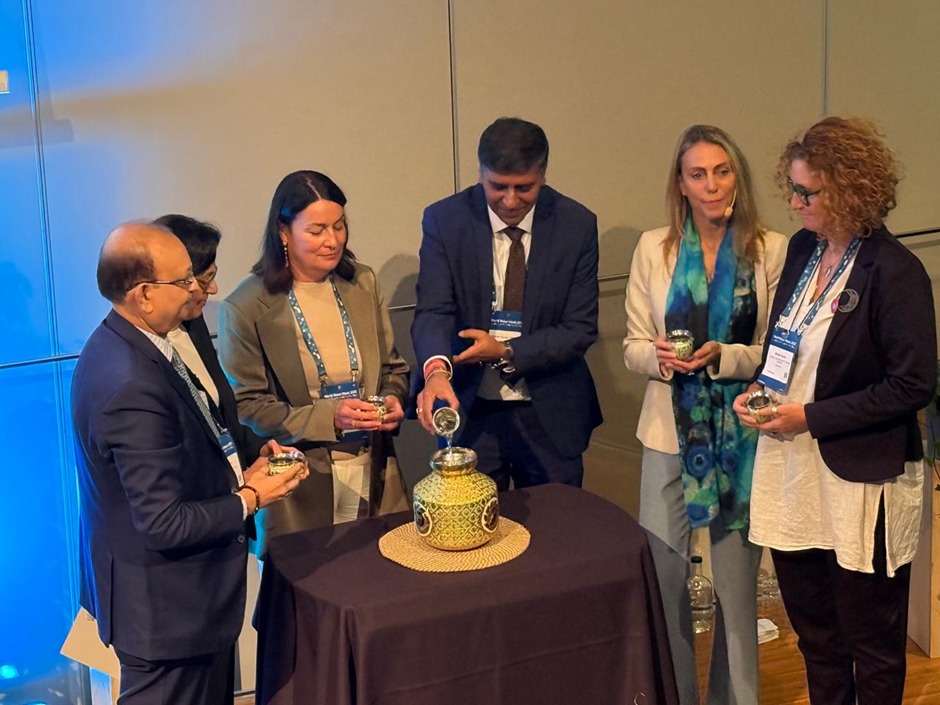
Namami Gange recognized as global inspiration for river conservation at Stockholm world water week

New Delhi/Lucknow, Aug 2025: Rivers and water resources are essential for sustainable development, and their rejuvenation remains the top priority of the National Mission for Clean Ganga (NMCG). Through its pioneering work in river rejuvenation and water conservation, NMCG has emerged as a leading voice in the global water dialogue. Its participation in this year’s Stockholm World Water Week underscores India’s growing role in addressing global water challenges. Organized by the Stockholm International Water Institute (SIWI) since 1991, this prestigious event has become one of the most influential platforms for global policymakers, scientists, industry experts, and social activists.
The highlight of this year’s conference was the session “River Cities Reimagined: Climate-Smart and Basin-Centric Urban Development,” jointly led by the National Mission for Clean Ganga (NMCG), the National Institute of Urban Affairs (NIUA), and Deutsche Gesellschaft für Internationale Zusammenarbeit (GIZ). Experts in the session emphasized that amidst the challenges of climate change and urbanization, river-centric development is the key to making cities sustainable and resilient.
Addressing the session, Shri Rajeev Kumar Mital, Director General, NMCG, stated that the Namami Gange Mission has laid the foundation for a historic policy shift in river rejuvenation in India. He informed that the mission has already seen a massive investment of ₹40,000 crore, which is driving efforts to restore the Ganga and its tributaries to their pristine state. He stressed that Namami Gange is a living example proving that when modern technology and innovation come together, rivers can indeed be revived as lifelines once again.
He highlighted several pioneering initiatives under the mission, such as Hybrid Annuity Model-based STPs, solar-powered treatment plants, and soil biotechnology, which are setting new global benchmarks. Shri Mital also emphasized that the mission has evolved into a mass movement, delivering visible positive outcomes. Underlining the importance of global partnerships, he acknowledged the significant support of the World Bank, GIZ, C-Ganga, the Netherlands, and Denmark, which has strengthened excellence in river science, water security, and management.
Experts at the conference made it clear that the solutions to climate change and urbanization challenges lie in the conservation and management of river basins. India’s Namami Gange initiative was showcased as a model example, considered exemplary for other nations. Measures such as pollution control, organic farming, wetland conservation, and climate-smart urban development have made this mission a global source of inspiration.
The conference emphasized that international cooperation is vital to maintaining ecological balance and ensuring water security. Platforms like the Global River Cities Alliance will play a key role in guiding climate adaptation and sustainable development efforts.
Experts concluded with a critical message—cities must no longer remain mere consumers but must become active stewards of river basins. In the era of climate change, river conservation has become indispensable, and adopting river-centric urban development is the way forward.
The session concluded with a powerful takeaway—when cities collaborate and think beyond borders, rivers can be not only saved but also enriched. This is the true foundation of stability and prosperity, ensuring water security and ecological balance for future generations.






ISRO Successfully Tests Indigenous Ship-Borne Tracking System for Gaganyaan Mission
New Delhi, July 2026 : The Indian Space Research Organisation (ISRO) has successfully vali…
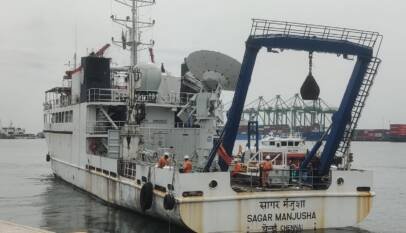
ISRO Successfully Tests Indigenous Ship-Borne Tracking System for Gaganyaan Mission
New Delhi, July 2026 : The Indian Space Research Organisation (ISRO) has successfully validated …