Tensions Escalate Between Pakistan and Afghanistan After Explosions Rock Kabul

Kabul, Oct 10: Tensions between Pakistan and Afghanistan surged sharply following a series of powerful explosions in Kabul, which residents and observers fear may have been caused by unprovoked cross-border airstrikes.
The Afghan capital was rattled as loud blasts echoed across multiple neighborhoods, with witnesses reporting the distinctive hum of aircraft overhead. The explosions reportedly originated from District 8 in eastern Kabul, a densely populated area housing key government facilities alongside residential zones. Panic spread quickly among residents, although the exact origin and intent behind the blasts remain unconfirmed. Early reports, however, suggest the possibility of airstrikes, fueling concerns over a potential escalation in regional conflict.
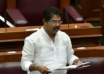
The incident occurred just hours after Pakistan’s Defence Minister Khawaja Asif issued a fiery statement in the National Assembly, signaling a breakdown in diplomatic restraint. “Enough is enough, our patience has run out. Terrorism from Afghan soil is intolerable,” Asif said, referring to a previous visit to Kabul by Pakistani officials, during which Afghan authorities allegedly refused to guarantee the prevention of militant activity targeting Pakistan.
While Pakistan has not officially claimed responsibility for any strikes, the timing of Asif’s comments and the subsequent explosions have intensified suspicions of deliberate military action. In response to the rising tensions, mobile internet services were abruptly suspended in Islamabad and Rawalpindi, though authorities have yet to provide a formal explanation.
The alleged strikes drew swift condemnation from Baloch representative Mir Yar Baloch, who took to X to denounce Pakistan’s actions. “We strongly condemn the terror attack on Kabul today by the rogue state of Pakistan. The terrorism carried out by its military could be ended within weeks if Afghanistan recognises Balochistan as an independent state,” he asserted.
Baloch further criticized Pakistan’s military presence, arguing that garrisons and airbases in Balochistan and occupied Pashtunistan do not represent Pakistan as a nation but function as tools of coercion against neighboring regions. “Pakistan has no direct border with Afghanistan; its military bases in Balochistan and occupied Pashtunistan symbolize terrorism for both Balochistan and Pashtunistan, and pose a threat to Afghanistan’s security,” he said.
Proposing a bold geopolitical solution, Mir Yar Baloch suggested, “If Kabul recognises Balochistan as independent and incorporates Pashtunistan into Afghanistan, the Baloch and Afghan peoples could jointly secure their borders and airspace, preventing Pakistan’s military aircraft and drones from targeting civilians. Pakistan would no longer be able to threaten our national security.”
As the situation develops, fears of further military escalation continue to grow, with the international community closely monitoring the fragile security dynamics between the two neighboring nations.
Kabul, Oct 2025 : Tensions between Pakistan and Afghanistan surged sharply following a series of powerful explosions in Kabul, which residents and observers fear may have been caused by unprovoked cross-border airstrikes.
The Afghan capital was rattled as loud blasts echoed across multiple neighborhoods, with witnesses reporting the distinctive hum of aircraft overhead. The explosions reportedly originated from District 8 in eastern Kabul, a densely populated area housing key government facilities alongside residential zones. Panic spread quickly among residents, although the exact origin and intent behind the blasts remain unconfirmed. Early reports, however, suggest the possibility of airstrikes, fueling concerns over a potential escalation in regional conflict.
The incident occurred just hours after Pakistan’s Defence Minister Khawaja Asif issued a fiery statement in the National Assembly, signaling a breakdown in diplomatic restraint. “Enough is enough, our patience has run out. Terrorism from Afghan soil is intolerable,” Asif said, referring to a previous visit to Kabul by Pakistani officials, during which Afghan authorities allegedly refused to guarantee the prevention of militant activity targeting Pakistan.
While Pakistan has not officially claimed responsibility for any strikes, the timing of Asif’s comments and the subsequent explosions have intensified suspicions of deliberate military action. In response to the rising tensions, mobile internet services were abruptly suspended in Islamabad and Rawalpindi, though authorities have yet to provide a formal explanation.
The alleged strikes drew swift condemnation from Baloch representative Mir Yar Baloch, who took to X to denounce Pakistan’s actions. “We strongly condemn the terror attack on Kabul today by the rogue state of Pakistan. The terrorism carried out by its military could be ended within weeks if Afghanistan recognises Balochistan as an independent state,” he asserted.
Baloch further criticized Pakistan’s military presence, arguing that garrisons and airbases in Balochistan and occupied Pashtunistan do not represent Pakistan as a nation but function as tools of coercion against neighboring regions. “Pakistan has no direct border with Afghanistan; its military bases in Balochistan and occupied Pashtunistan symbolize terrorism for both Balochistan and Pashtunistan, and pose a threat to Afghanistan’s security,” he said.
Proposing a bold geopolitical solution, Mir Yar Baloch suggested, “If Kabul recognises Balochistan as independent and incorporates Pashtunistan into Afghanistan, the Baloch and Afghan peoples could jointly secure their borders and airspace, preventing Pakistan’s military aircraft and drones from targeting civilians. Pakistan would no longer be able to threaten our national security.”
As the situation develops, fears of further military escalation continue to grow, with the international community closely monitoring the fragile security dynamics between the two neighboring nations.
Team Maverick,





Shivakumar Says Congress United, Assures Women Will Get Cabinet Berth
Bengaluru, Aug 2026 : Karnataka Chief Minister D.K. Shivakumar on Monday sought to dismiss…
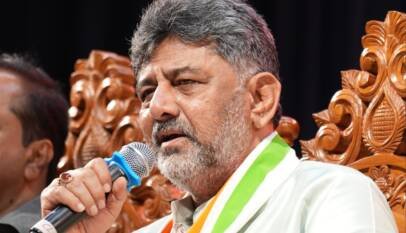
Shivakumar Says Congress United, Assures Women Will Get Cabinet Berth
Bengaluru, Aug 2026 : Karnataka Chief Minister D.K. Shivakumar on Monday sought to dismiss …