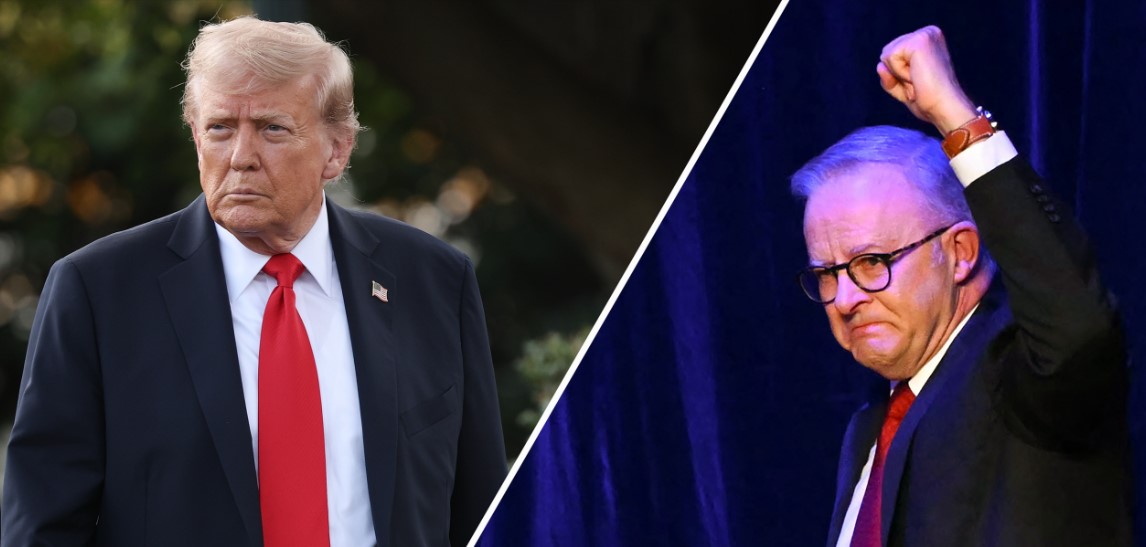
Australia – US White House meeting would focus on AUKUS and Rare Earth.

On October 20th, Australia’s Prime Minister Anthony Albanese is flying to Washington, to meet U.S. President Donald Trump at the White House. While the US President and Australian Prime Minister have interacted over the phone four times previously, they have only met in person once, in mid-September on the sidelines of the UN General Assembly in New York.
With cognizance to the importance of the U.S. – Australian alliance and the historical closeness between the two nations, industry experts has raised questions as to why Albanese had not secured a meeting earlier in the administration. And yet, despite a number of unresolved trade and defence issues, the relationship has remained relatively consistent even during the last 10 months of global upheaval, likely reducing the urgency in both the nations to facilitate a meeting.
While Australia is steadfast on its approach to seek tariff relief from the US, alongwith ensure that AUKUS (a trilateral security partnership between Australia, the United Kingdom, and the United States) continues to enjoy Donald Trump’s support. The United States and Australia have a security alliance, close cultural ties, and more than a hundred years of partnership. A good meeting between the two leaders will affirm the nations’ shared history, while setting the stage to make substantive progress across several issues, primarily security, trade, and economic cooperation.
On the other side, the United States is likely to focus on increasing access to critical minerals, mitigate threats to supply chains, while discussing the threat posed to the Indo-Pacific region by China, alongwith pushing Australia on its trade diversification strategy and defence spending.
The Australian Prime Minister has an uphill task in managing the growing unease in Australia about the trajectory of the United States. The majority of Australians agree that the alliance with the United States benefits Australia, despite the personal unpopularity of Trump in Australia. Polling shows a near 20% decline in trust in the United States over the past six months, even as the overwhelming majority of Australians continue to understand and support a strong alliance with the United States.
However, Albanese will certainly be seeking to avoid any kind of “Zelinsky issue”; Given Trump’s unpredictability, his inclination to pressure allies he thinks are not sufficiently pulling their weight, and uncertainty surrounding the future direction of AUKUS, there is always the possibility that the meeting could get uncomfortable for Australia, particularly if Trump decides to press Albanese on Australia’s current level of defence spending.
Although, there are disagreements between Australia and the United States on specific policy and international issues; however, it is not likely that these will be a primary focus in the meeting. These issues range from the social media ban for teens set to come into effect in December in Australia, Australian government subsidies to the health care and pharmaceutical industries, and international issues, such as Australian recognition of Palestinian statehood and Albanese’s support for clean energy and championing of issues related to climate change.
While the intent behind the meeting is to bolster Australia – U.S. cooperation, it is also set against the backdrop of the imposed tariffs on Australia, a significant area of contention. With a 10% tariff on most Australian exports, Australia sits at the lowest end of U.S. imposed tariffs. Nevertheless, the Australian public, business community, and political leadership of all stripes have taken exception to the leverage of any amount of tariffs on Australia, a country that runs a trade deficit with the United States.
Responding to the April 1 “Liberation Day” tariffs, Prime Minister Albanese claimed that “the U.S. Administration’s tariffs, have no basis in logic, and they go against the basis of our two nations’ partnership”, and labelled them “unfriendly”. Prime Minister Albanese will likely advocate for relief from new and existing U.S. tariffs, including those imposed on Australian steel and aluminium. Australia is seeking exemptions or modifications to these policies, which impact Australian exports, and Albanese will likely point to measures taken by the Australian government, such as the recent lifting of Australia’s biosecurity ban on U.S. beef. Additionally, this meeting will likely result in the initiation of closer critical mineral supply chain cooperation between Australia and the United States.
China’s near chokehold on critical minerals and rare earth materials, both of which are vital for defence and clean energy technologies, is a top priority for both Washington and Canberra. While China’s ability to cut off access to this vital resource has long been identified as a critical vulnerability, Australia, US, and many other countries have struggled to figure out the mechanisms, financial incentives, and policy settings to break Beijing’s control of the mining and processing of these materials.
Despite a clear and urgent imperative for a coordinated response among allied nations, progress has been slow. While both the United States and Australia have recognised the issue and engaged in high-level discussions including the 2023 Australia-United States Climate, Critical Minerals and Clean Energy Transformation Compact, these efforts have yet to translate into the large-scale investment and concrete action needed to build resilient and secure supply chains.
There is a natural synergy between the two nations: Australia possesses vast mineral reserves, the United States has the capital markets to bring more of those resources to market, and both countries have a pressing need to diversify their supply and processing capabilities. But as of now, deeper collaboration to mitigate the geopolitical risks posed by China’s market dominance has not yet materialised.
AUKUS, the defence agreement to provide Australia with conventionally-armed, nuclear-propelled submarines and advance collaboration on critical strategic technologies, has been the nucleus of U.S.-Australian cooperation over the past several years. Questions surrounding the future of AUKUS have persisted, and has increased, since the new U.S. administration took office, after news leaked in June that the U.S. Department of Defence (recently renamed the Department of War) was conducting a review of AUKUS, and that the review would be led by Elbridge Colby, the U.S. under secretary of war for policy, who had previously expressed skcepticism about the agreement.
In the context of AUKUS and the ongoing review, several issues might be raised in the meeting. These include Australia’s financial commitment to the deal in the context of broader defence expenditures, Australia’s recent and upcoming payments to boost U.S. submarine production capacity, and funding and progress on the buildout of the Submarine Rotational Forces-West facility in Perth. The discussion may also cover the ownership of the Port of Darwin and how AUKUS can contribute to the deterrence of China. While there are a number of critical adjustments necessary to guarantee the sustainability and effectiveness of AUKUS, the most important thing that Albanese will be seeking is a public show of support from Trump.
President Trump has repeatedly urged its allies, including Australia, to increase their defence spending, potentially to as much as 3.5% of GDP. Secretary of War Pete Hegseth echoed this call when he met with his Australian counterpart Richard Marles in Singapore at the Shangri-La Conference. Australia currently spends 2.0% of its GDP on defence, a number which has risen in absolute terms but held steady as a percentage of gross domestic product, although it is set to rise to 2.3% within the next ten years. During the federal election campaign, this was an issue of disagreement between the major parties, with the centre-right Coalition calling for defence spending to rise to 2.5% of GDP by 2029, and 3.0% within the next decade.
Likely, Australia will indemnify its recent commitment to build up the Henderson Defence Precinct in Perth and invest in autonomous undersea vehicles, contributions to the coproduction of guided weapons systems, and housing of U.S. military bases in Australia amounts to a significant contribution in defence and, in fact, represents more than the amount it spends as a percentage of its GDP.
Prime Minister Albanese has also made the point that his government does not consider GDP% as a parameter for defence spending, and will determine its own defence spending based on procurement needs. Australian officials are also likely to point out that if they calculate their defence expenditures according to the NATO standard, they actually spend closer to 2.8% of their GDP on defence. Prime Minister Albanese will stress the role that Australia plays in the region, pointing to the security deals it has undertaken, including, most recently, with Papua New Guinea.
Team Maverick




Virat Kohli Powers RCB to Back-to-Back IPL Titles with Dominant Win Over Gujarat Titans
Ahmedabad, May 2026 : Royal Challengers Bengaluru (RCB) successfully defended their Indian…

Virat Kohli Powers RCB to Back-to-Back IPL Titles with Dominant Win Over Gujarat Titans
Ahmedabad, May 2026 : Royal Challengers Bengaluru (RCB) successfully defended their Indian Premier League …