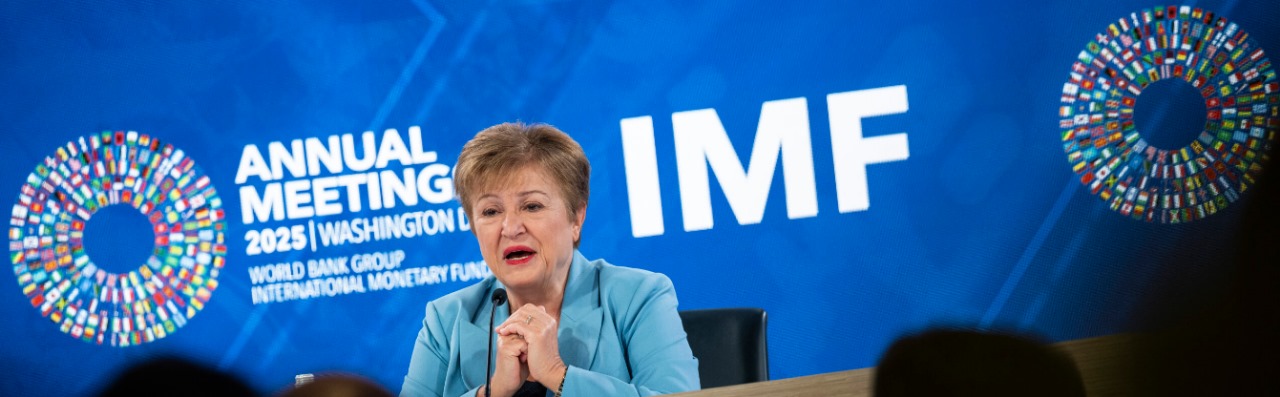
The looming crispy Autumn Air in Washington whispering, Is this the calm before the economic storm?

Despite spiralling global debt, US-generated trade frictions, and stubborn inflationary pressures, global growth has held up far better than most feared when the same group met in April. The IMF this week raised its 2025 global growth forecast to 3.2%, up from 2.8% in April, as the world economy thus far has shrugged off worst-case scenarios of runaway tariffs and cascading financial shocks.
When the world’s finance ministers and central bank governors roll into town for the annual meetings of the International Monetary Fund (IMF) and the World Bank, it’s a good time to take the measure of the global economic mood. The best way to view this week’s gathering is through a split screen of relief and anxiety.
Momentary stability seems less durable in a world threatening to break into fragments, as global trade growth of 2.4%, and declining is running behind overall global growth figures, which is a sway from long-running trends that many economists reckon is unsustainable.
The World leaders & economists are worried about the global economic trajectories, and are left to navigate a solution if:
- we are only seeing a temporary reprieve before tariff-driven inflation and slowdowns bite harder?
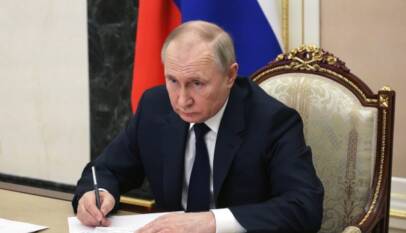
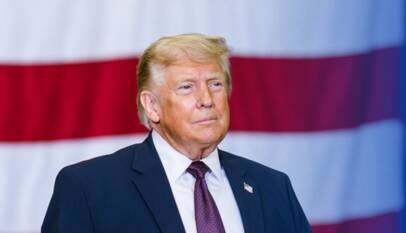
- the tariff war escalates with China, with Beijing having announced sweeping new export controls on rare earths and President Donald Trump threatening to instate a 100 percent tariff on Chinese goods?
- mounting public and private debt, now above 235 percent of global gross domestic product, becomes a debt shock as growth stumbles and interest payments rise—hitting emerging markets and poorer nations hardest?
- monetary tightening, inflation pressures, and fiscal fatigue ultimately undermine economic
expansion?
- trade fragmentation, which are regionally oriented supply chains, eroding global trading systems, confounding conventional models and results in everyone growing more slowly?
The International Monetary Fund (IMF) itself warned that markets may be underestimating risks tied to tariffs, debt, and financial vulnerabilities. “Buckle up: Uncertainty is the new normal, and it is here to stay”, said Kristalina Georgieva, managing director of the IMF, in her keynote speech ahead of the annual meetings. “Before anyone heaves a big sigh of relief, please hear this: Global resilience has not yet been fully tested”.
In particular, she pointed to that reliable harbinger of global uncertainty: surging global demand for gold. “Spurred by valuation effects and net purchases, partly reflecting geopolitical factors, holdings of monetary gold now exceed one-fifth of the world’s official reserves”, she said.
To be sure, Trump administration officials don’t have a lot of patience for those wringing their hands about potential economic dangers. They see US growth as stronger than expected, and as a matter of their policies, they regard global growth as resilient, and they see that tariffs have proven far less inflationary than doomsayers predicted. With most global policymakers balancing between relief and anxiety, count Trump officials more as triumphant.
On the other side stand European and other global financial leaders who see economic tensions surging and believe that debt, China, tariffs, artificial intelligence (AI) uncertainties or some toxic mix of all that could bring about a tipping point. European Investment Bank (EIB) President Nadia Calviño goes even further, saying this week at the Atlantic Council that she has “the impression that the rest of the world is moving on” from reliance on US decisions, especially on issues such as trade and climate. “There’s a very strong commitment to the multilateral framework, very strong determination to pursue win-win partnerships around the world”.
The EIB’s own survey shows that Trump tariffs are slowing down investments, but that the pain is being felt more by US companies than European ones, “which are proving to be quite resilient for the moment”.
Few conversations this week didn’t either begin or land on AI as an accelerant both of economic growth and fragility. But you would have been disappointed if you were listening for great new ideas about how best to regulate, shape market structures, and ensure the technological dividends of AI spread beyond the United States, China, and a handful of other locations where AI is entering the business bloodstream most rapidly.
Georgieva spoke about how most countries lack regulatory, ethical, or labour frameworks to cope with rapid AI diffusion. Many central bank governors and finance ministers agreed that AI, and the fourth industrial revolution it represents, could have as large an impact on the sources of global growth and employment as did the first industrial revolution, which moved so much of humanity from farmlands to factories.
Beginning roughly in 1760, the Industrial Revolution was a period that moved the world to more widespread, efficient, and stable manufacturing processes. New knowledge and innovation resulted in vast economic growth, as economic historian Joel Mokyr, who won the 2025 Nobel economics prize on Monday, and others have documented and examined. This revolution also accelerated political change, giving birth to communism, fuelling modern capitalism, and creating the economic and social conditions that were the context for two world wars and the Cold War that followed. The economic, political, and societal impact of AI will be no less, and just as uncertain in its impacts on everything from economic competition to the future of war.
The Atlantic Council’s GeoEconomics Center was created for just this kind of period, working alongside more than a dozen of our centres with the conviction that one can’t separate macroeconomic forces from national security impacts. In that spirit, the Council brought together seventy meetings in the US capital this week, convening dozens of central bank governors and finance ministers.
That IMF-World Bank crowd will leave town this weekend with uncertainty about what the world will look like when they return in the spring. What’s clear is that they, particularly Trump administration officials, have agency in either building upon the scenarios that have brought momentary relief or further contributing to global anxieties.
By the close of this week’s meetings, the prevailing sentiment settled on something like this: We’ve been luckier than expected, but luck isn’t a sustainable policy response. Delegates’ cautious optimism was tempered by their knowledge that an external shock or a series of policy missteps could tilt the balance rapidly. I heard more than one voice describe this moment as the calm before a storm, or a lull before a calamity, depending on the actions of world leaders in the weeks ahead.
Georgieva listed several reasons the world economy has withstood strains from multiple shocks thus far: Improved policy fundamentals have cushioned against shocks. The private sector has adapted as trading conditions have changed. Tariff hits turned out to be less than initially feared, as most countries avoided tit-for-tat trade wars with the United States. And supportive financial conditions, including attractive interest rates, have provided added resilience. What’s unclear is how long these advantages can last.
She further asserted that, “over the next six months, what I’ll be watching is whether big AI investment bets pay off, whether trade tensions turn worse, whether debt cracks deepen, and whether markets can sustain equity valuations equal to the internet bullishness of twenty-five years ago. I’ll also want to know whether leaders can find a sufficient sense of common cause to steer us through any trouble”.
This week’s consensus was that business as usual is over, due to factors ranging from Trump’s tariffs and AI to global economic fragmentation and geopolitical conflict. There also was a rough consensus that if the world is to reach a new equilibrium and avoid a major crisis, then it would require the full attention of policymakers and international institutions to manage a fast-changing and increasingly fractured world.
Team Maverick





Prashant Kishor to Contest Bankipur Bypoll, Jan Suraaj Eyes Breakthrough in BJP Stronghold
Patna, July 2026 : Election strategist-turned-politician Prashant Kishor will contest the …
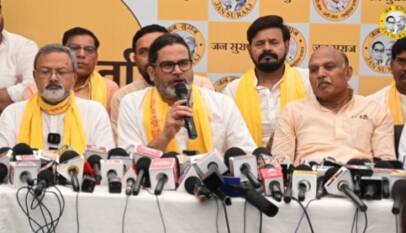
Prashant Kishor to Contest Bankipur Bypoll, Jan Suraaj Eyes Breakthrough in BJP Stronghold
Patna, July 2026 : Election strategist-turned-politician Prashant Kishor will contest the upcoming by-election from …