Japan set to adopt the path of reciprocity backed by new US – Japan Treaty.

Oct 2025 : As President Donald Trump prepares for a visit to Japan at the end of October, it is worth mentioning the new US defence paradigm that is emerging in East Asia. It is succeeding primarily on the basis of strong and effective relations with Japan, the most dynamic allied power in the region. Encouraged by US, Japan is committing monetary and military capacity to the administration’s vision for deterrence in Asia. These steps are setting the US-Japan alliance on a path more likely to withstand future challenge from China. The logic, espoused by President Trump, is straightforward: ‘reciprocity over dependency’.
President Trump and his team have recognised Japan’s latent economic capacity, and are leveraging it to its strategic end. Last month, the United States and Japan finalised a trade deal that included Japan’s pledge to invest $550 billion into the United States. Over a reasonable timeframe, it is realistic to expect Japan to meet this commitment.
These commitments, proffered in the form of equity, loans, and guarantees through Japan’s sophisticated fit-for-purpose overseas lenders, will be aimed squarely at infusing strategic industries in the US that underpin military deterrence such as shipbuilding, semiconductors, energy export infrastructure, and critical minerals with new cash. The crucial point is that these investment commitments in key sectors should underwrite a portion of the additional US defence capacity necessary for ensuring the future resilience of the military deterrent in Asia.
While the economic team has been leveraging Japan’s financial capacity to shore up the long-term military deterrent, this administration’s leaders in the Pentagon clearly appreciate Japan’s centrality to today’s East Asia defence architecture.
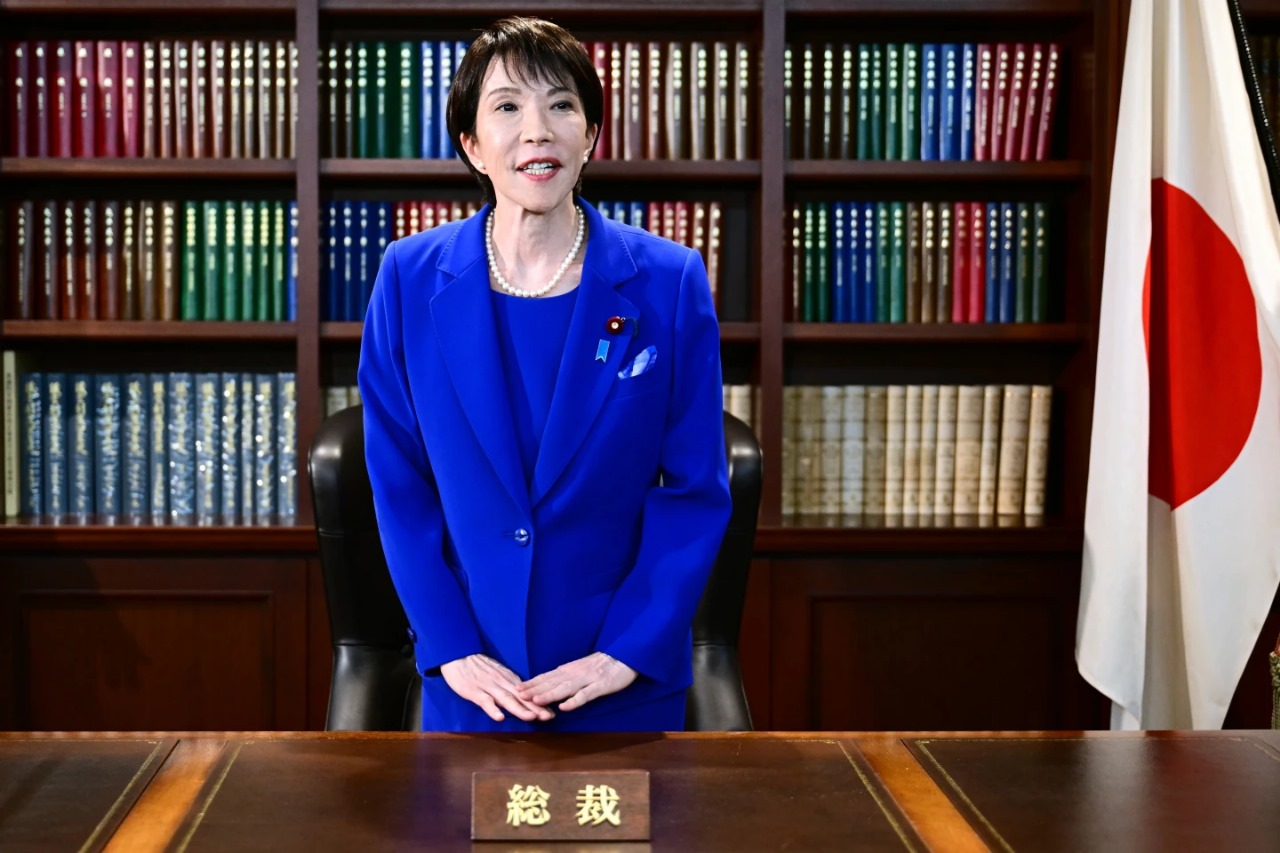
For Sanae Takaichi, the most important thing is how to establish a good relationship with Trump, since it is an important reason why Shigeru Ishiba stepped down was that the world far off from Japan started believing that he failed to properly handle relations with the United States. Trump even forgot his name, which undoubtedly made public opinion question his ability to handle relations with the United States.
A 2023 CSIS war game simulating Taiwan scenarios found that without access to Japanese operating bases, the United States cannot credibly contest Chinese military power in North and Southeast Asia; with Japanese basing access, US fighters can reach, operate in, and return from Taiwan’s airspace without refuelling. As Secretary of War Pete Hegseth stated earlier this year, “Japan is our indispensable partner in deterring communist Chinese military aggression”,
Furthermore, the election of Sanae Takaichi as the Prime Minister of Japan demonstrates that Japan do not recoil from the Trump administration’s expectation that Japan grow strong and reciprocal in its dealings with Washington. Takaichi has said a Taiwan contingency would constitute a “Japanese emergency”, given the island’s strategic centrality to Japan’s sea lanes, food and energy security, and technological dynamism.
Other than the United States, Japanese Prime Minister Sanae Takaichi has visioned the issues of Taiwan; she has successfully stepped into the shoes of her predecessor, the former Prime Minister Abe Shinzo, inheriting his policy positions on a range of issues, including Taiwan. Takaichi elaborated on this formula a couple of months ago while visiting Taiwan. She clarified that because Japan is an island country, any regional conflict that threatens sea routes, including a conflict in the Taiwan Strait could threaten Japan’s food and energy security and pose an existential risk to Japan.
While consolidating Japan’s diplomatic ties with Taiwan, Prime Minister Takaichi has reiterated that, Japan, Taiwan, Australia, India, Philippines, and other countries, including nations from Europe, should form a “quasi-security alliance” or a stronger network to protect each other’s security and safety and jointly maintain their security guarantees.
In a sharp contrast, China has flagged concerns over Sanae Takaichi’s leadership. On Chinese social media, Takaichi is labelled as “anti-China” and an “extreme right-winger”. Chinese critics accuse her of smearing China, denying the Nanjing Massacre, exaggerating the so-called “China threat”, and stoking controversy over Taiwan. Analysts in Beijing are particularly wary that Takaichi could challenge the “three red lines”: Taiwan, territorial disputes, and historical interpretation. Economically, she has already promoted “decoupling” initiatives, advocating supply chains that bypass China during her tenure as Japan’s first minister of economic security.
After the normalisation of diplomatic relations between China and Japan in 1972, Taiwan and Japan ceased to have so-called “diplomatic” relations. As for visits under the guise of private vacations, there are different understandings and perceptions between China and Japan. This difference could lead to certain actions, such as Takaichi’ private visit to Japan. According to Chinese experts, such a development would undoubtedly impact Sino-Japanese relations and could even destabilise the relationship.
However, major decisions like constitutional amendment and launching wars are difficult for any Japanese leader to accomplish under the current system. Therefore, China needs to remain vigilant and observe carefully, along with should not overinterpret or become alarmed, mistakenly believing that Sanae Takaichi’s coming to power signals a resurgence of militarism and, by extension, that peace in East Asia will be untenable.
Team Maverick


TN CM Vijay Likely to Launch New Ration Card Distribution on Birthday
Chennai, June 2026 : Tamil Nadu Chief Minister C. Joseph Vijay is expected to launch the d…

TN CM Vijay Likely to Launch New Ration Card Distribution on Birthday
Chennai, June 2026 : Tamil Nadu Chief Minister C. Joseph Vijay is expected to …