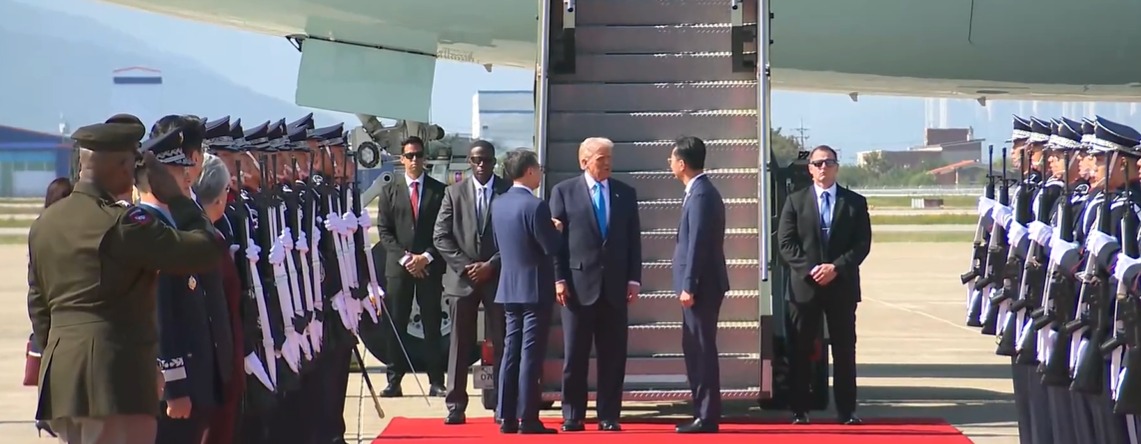
Trump Arrives in South Korea Ahead of Crucial Summits with Lee and Xi at APEC Meet

Key Points:
- Trump begins his first Asia tour of his second term, prioritizing trade and investment discussions.
- Framework trade deal with South Korea remains unfinished amid disagreements over investment details.
- Upcoming Trump–Xi meeting in Gyeongju could shape the next phase of the U.S.-China trade standoff.
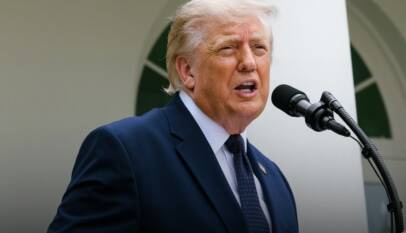
Seoul, Oct 2025 : U.S. President Donald Trump arrived in South Korea on Wednesday for a two-day state visit, marking the start of a pivotal round of diplomacy ahead of high-stakes summits with South Korean President Lee Jae Myung and Chinese President Xi Jinping during the Asia-Pacific Economic Cooperation (APEC) gathering in the southeastern city of Gyeongju.
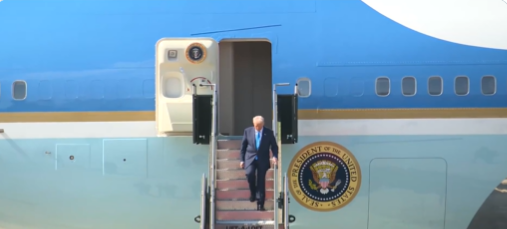
This is Trump’s first Asia tour of his second term, and his visit to the U.S. ally comes amid global market turbulence and heightened trade tensions. The American leader has made it clear that his focus is on securing trade and investment deals that can stabilize markets and strengthen U.S. manufacturing.
After departing Tokyo aboard Air Force One earlier in the day, Trump landed at Gimhae International Airport in Busan, where he was greeted by South Korean officials before flying to Gyeongju for talks with President Lee.
Trade Deal in Focus
Trump and Lee are expected to hold their second summit in two months later Wednesday. Their discussions are expected to center on a framework trade agreement initially reached in July, under which South Korea pledged $350 billion in investments in the U.S. in exchange for Washington’s commitment to reduce its “reciprocal tariffs” from 25 percent to 15 percent.
However, the deal has yet to be finalized due to differences over key details such as the investment structure, timelines, and profit-sharing mechanisms.
Trump said last Friday that the agreement was “pretty close to being finalized.” But President Lee, speaking to Bloomberg the same day, offered a more cautious outlook. “The method of investment, the amount, the timeline, and how we share the risks and dividends — all of these remain sticking points,” he said, according to Yonhap News Agency.
Both governments are under domestic pressure to conclude a deal. For Trump, an agreement would bolster his claims of reviving American industry and jobs. For Lee, ensuring equitable terms would help maintain domestic political support amid growing scrutiny from opposition parties.
Tense U.S.–China Dynamics
Beyond bilateral ties, Trump’s visit to South Korea carries broader geopolitical implications, particularly as he prepares for a highly anticipated meeting with Chinese President Xi Jinping on Thursday. This will be their first face-to-face encounter since 2019, and analysts are watching closely for any sign of a thaw in the U.S.–China trade war.
The two largest global economies have been locked in escalating tensions, most recently over China’s export controls on rare earth materials, vital to the production of fighter jets, electronics, and robotics. In response, Trump has threatened to impose additional 100 percent tariffs on Chinese imports beginning November 1.
Trade friction has deepened further after China halted soybean purchases from the U.S., a move that has alarmed American farmers, a key Trump voter base. Washington has also been pressing Beijing to crack down on fentanyl exports, which U.S. officials blame for the country’s opioid crisis.
Despite these tensions, Trump struck an optimistic tone last week. “When we leave South Korea, I think we’ll end up with a very strong trade deal,” he said. “Both of us will be happy.”
North Korea Question Lingers
Trump’s presence in South Korea has also reignited speculation about a possible meeting with North Korean leader Kim Jong-un. The two leaders last met in 2019, after earlier summits in Singapore (2018) and Hanoi (2019).
Those meetings, which sought to negotiate denuclearization in exchange for U.S. sanctions relief, ultimately collapsed without an agreement. Still, Trump has indicated a willingness to re-engage Kim “if it leads to progress.”
“The door is always open,” Trump said last week, hinting he might extend his stay in South Korea if Pyongyang signals interest. So far, North Korea has not responded to the overture.
As Trump embarks on a crucial leg of his Asia tour, expectations are high but uncertainty looms — over whether his efforts in Seoul and Gyeongju can deliver the diplomatic and economic breakthroughs that have so far eluded Washington’s Asia strategy.
Team Maverick.





India Must Develop Indigenous Weapons for Strategic Autonomy, Says Defence Secretary
New Delhi, July 2026 : Defence Secretary Rajesh Kumar Singh has stressed that India’s long…
India Must Develop Indigenous Weapons for Strategic Autonomy, Says Defence Secretary
New Delhi, July 2026 : Defence Secretary Rajesh Kumar Singh has stressed that India’s …