Trump Escalates Pressure on Venezuela, Declares Airspace Closed Amid Rising Military Tensions

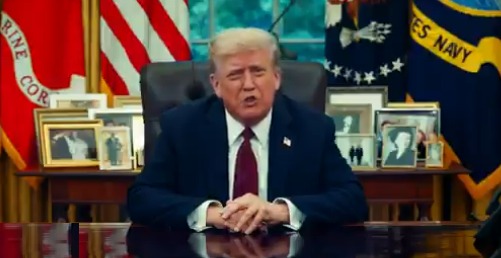
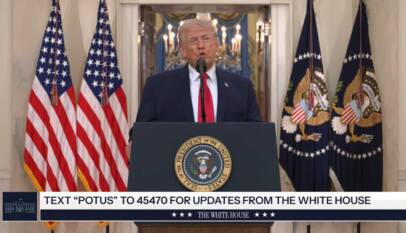
New York, Nov 2025 : Days after reportedly holding a direct phone conversation with Venezuelan President Nicolas Maduro, US President Donald Trump has intensified his campaign against Venezuela, declaring the country’s airspace “closed in its entirety” and signalling the possibility of further military escalation.
In a brief but pointed post on Truth Social on Saturday afternoon, Trump stated: “Please consider THE AIRSPACE ABOVE AND SURROUNDING VENEZUELA TO BE CLOSED IN ITS ENTIRETY.” The warning was directed not only at airlines and pilots but also specifically at “Drug Dealers, and Human Traffickers”, aligning the move with his broader agenda against illegal migration and narcotics trafficking.
For several weeks, the US has been striking vessels in international waters suspected of moving drugs, reportedly destroying more than 20 and causing over 80 fatalities. Announcing a shift in tactics, Trump said on Thursday, “We’ll be starting to stop them by land,” adding that land-based operations were “easier” and would begin “very soon.” These remarks were part of his Thanksgiving message to the military.
Venezuela swiftly condemned Trump’s declaration, calling it “hostile and unjustified”, and denounced the move as reminiscent of colonial-era posturing. Caracas said it would defend its sovereignty against any external aggression.
Meanwhile, the region around Venezuela has seen an increased US military presence. The area is currently swarming with US Navy assets, including the aircraft carrier USS Gerald Ford, and approximately 15,000 US military personnel have been deployed.
The New York Times, citing unnamed officials, reported that Trump and Maduro recently spoke by phone and even explored the possibility of a direct meeting. Secretary of State Marco Rubio — known for his hardline stance against Maduro — was also on the call, according to the report. However, neither Washington nor Caracas has officially confirmed the conversation.
Media reports have suggested that Maduro may have offered concessions to the US, including access to Venezuela’s extensive oil reserves, while insisting that he be allowed to retain power for two more years — a condition analysts say Trump is highly unlikely to accept.
Tensions escalated further last week when the US designated the Venezuelan organisation “Cartel de los Soles” as a foreign terrorist organisation, alleging that Maduro himself was its leader. This designation potentially provides Trump with a legal and political narrative that any action against Venezuela is focused on countering terrorism and drug trafficking rather than waging war.
Such a framing could help Trump argue that congressional authorisation — required for a formal declaration of war — is unnecessary. It may also allow him to maintain his public stance against foreign wars and regime-change operations, shielding himself from accusations of warmongering as he continues to promote his eligibility for the Nobel Peace Prize.
Responding to rising concerns, Senate Democratic Leader Chuck Schumer warned the administration: “Under our Constitution, Congress has the sole power to declare war — not the president.” He criticised Trump’s strategy, saying, “President Trump’s reckless actions towards Venezuela are pushing America closer and closer to another costly foreign war.”
As tensions intensify, both regional stability and US-Venezuela relations hang in a precarious balance.

Peddi Review: Ram Charan Powers an Ambitious Sports Epic Rooted in Rural Pride and Personal Identity
Hyderabad, June 2026 : Indian star Ram Charan steps into unfamiliar yet emotionally rich t…

Peddi Review: Ram Charan Powers an Ambitious Sports Epic Rooted in Rural Pride and Personal Identity
Hyderabad, June 2026 : Indian star Ram Charan steps into unfamiliar yet emotionally rich …