The Nations Relishing Long Awaited World Cup Returns.

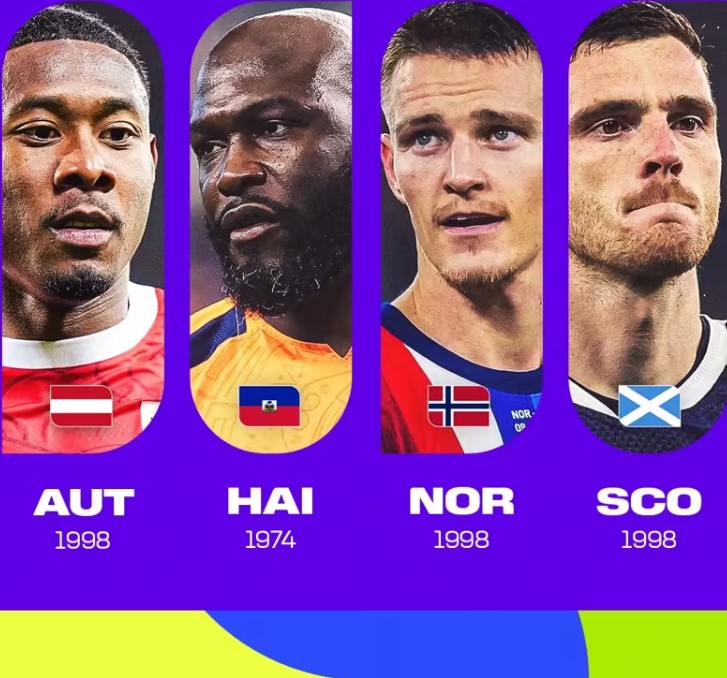
December 2025: Ahead of Friday (05th December 2025) final draw, FIFA looks at Austria, Haiti, Norway and Scotland and how they returned to the FIFA World Cup after long absences.
The old adage that ‘absence makes the heart grow fonder’ was borne out on 18 November. On that single momentous day of qualifying, wild celebrations erupted in Glasgow, Oslo, Port-au-Prince and Vienna as four proud football nations returned to the FIFA World Cup after more than a “quarter of a century”, or in one case “half a century” after looking on from the sidelines.
The 05th December’s final draw now looming large, FIFA delves at the teams with particular reason for relishing their long-awaited involvement.
Austria; Length of absence is of 28 years.
How they fared last time: Though 03 of their France 98 Group B matches were tight and competitive, Herbert Prohaska’s side fell behind in each of them. Stoppage-time goals in all three earned them draws against Cameroon and Chile, but couldn’t prevent a 2-1 loss to Italy that ended their last-16 hopes.
Star Player Then: Though past his pomp by the time France 98 rolled around, Toni Polster fortified his reputation as an Austrian icon. Already the team’s captain and all-time record marksman, the 34 years old became their first scorer in the ’98 finals when he smashed home an injury-time equaliser against Cameroon.
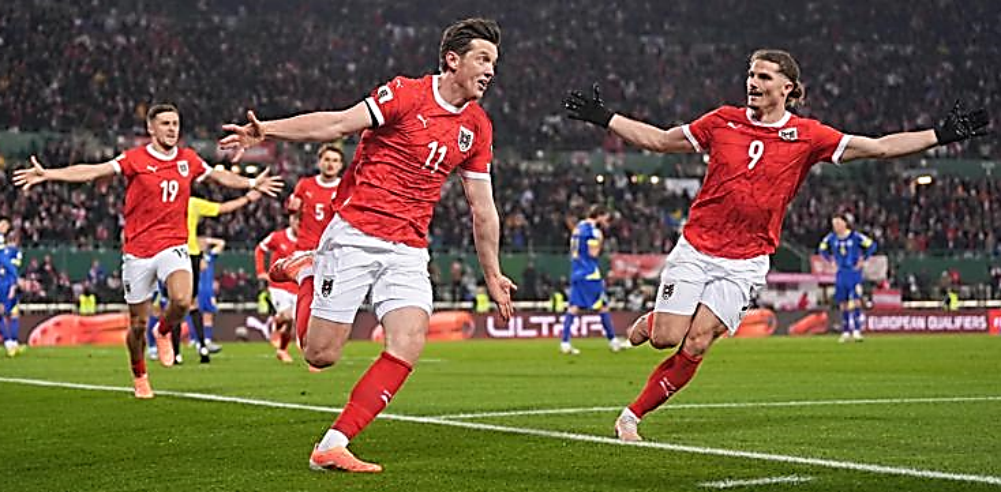
How they qualified this time: Austria hit the front early in Group H, with key wins at home to Romania and away to Bosnia and Herzegovina. It was in November 2025, when their first points were dropped, that had culminated when they fell behind at home to the second-placed Bosnians and needed a late equaliser from Michael Gregoritsch to avoid dropping into the UEFA play-offs.
Star Player Now: Christoph Baumgartner, Konrad Laimer and Marcel Sabitzer are all powerful performers, while the evergreen Marko Arnautovic struck eight times during qualifying to surpass Polster and become Austria’s all-time leading scorer. But captain David Alaba, when fit, remains the team’s key man, bringing all the class and intelligence that, for the past decade and more, has made him of Europe’s elite players.
Haiti; Length of absence is of 54 years.
How they fared last time: Having qualified for a maiden World Cup by winning the Concacaf Championship for the first time in their history, Haiti found themselves in a formidable group at the 1974 finals that included Italy, Argentina and a Poland team that would go on to finish third. Three defeats duly followed, but goals against the Italians and Argentinians nonetheless brought pride to the nation.
Star Player Then: Emmanuel Sanon was responsible for both Haiti’s goals in 1974, and his strike against Italy was especially memorable. Beyond the athleticism and skill, he showed in racing through and rounding Dino Zoff, he became the first player to score past the iconic keeper in international football for over two years.

How they qualified this time: After coming through the second round, Haiti prevailed in a tough third-round section that included Costa Rica and Honduras, taking four points from Los Ticos en route before sealing their place with a 2-0 win over Nicaragua.
Star Player Now: The hero of Haiti’s fairy tale qualifying campaign, Duckens Nazon struck six times – including a second-half hat-trick to rescue a point against Costa Rica. That tally left the well-travelled striker joint-top scorer in the Concacaf preliminaries and on the cusp of eclipsing Sanon as his nation’s all-time leading marksman.
Norway; Length of absence is of 28 years.
How they fared last time: After drawing against Scotland and Morocco in their opening two matches at France 98, Norway knew that an unlikely victory over holders Brazil would be required to qualify from Group A. That, much to everyone’s surprise, was exactly what Egil Olsen’s side got, as they came from behind to beat Ronaldo and Co with two late goals, setting up a Round of 16 tie with Italy, which they narrowly lost.
Star Player Then: Despite having Ole Gunnar Solskjaer to call upon, Egil Olsen put his trust in another Premier League star, Chelsea’s Tore Andre Flo, to lead Norway’s attack. The giant striker was perfectly suited to Olsen’s direct style and scored a fine goal spark that fateful comeback against Brazil.
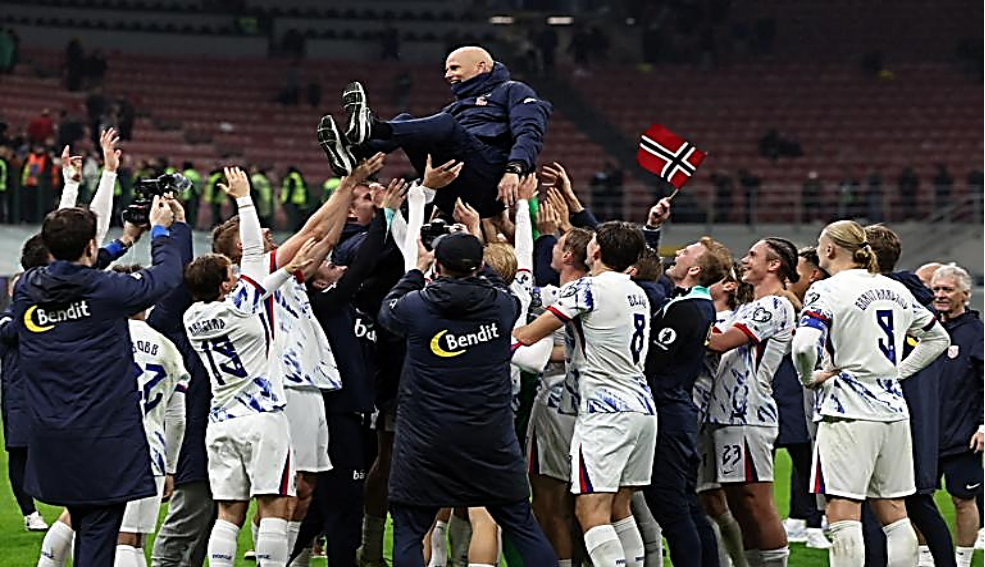
How they qualified this time: Few teams reached the 2026 finals in more impressive style than the Norwegians, who didn’t drop a single point and racked up 37 goals; 07 of those against four-time champions Italy, en route to topping Group I.
Star Player Now: While Martin Odegaard is the team’s captain and one of the finest midfielders in the game, even the Arsenal star would likely admit that there is no seeing past Erling Haaland in this category. The Manchester City striker, who became Norway’s record scorer at the age of just 24, struck 16 times across eight World Cup 2026 qualifiers to fire his nation back to the finals.
Scotland; Length of absence is of 28 years.
How they fared last time: Scotland returned home from France 98 having finished bottom of Group A and collected just a single point. After narrowly losing to Brazil in the tournament’s opening match and drawing 1-1 with Norway, their fate was sealed with a 3-0 defeat to Morocco.
Star Player Then: There was no talisman, or clear standout, in the team Craig Brown took to France. John Collins, a classy left-footed midfielder who had just won the French title with Monaco, was perhaps the closest, and opened the Scots’ account with a well taken penalty against Brazil.
Team Maverick.




Bulgaria Wins EUROVISION 2026.
Vienne, Austria; May 2026: In the most surprising finale of the megaevent EUROVISION 2026,…

Bulgaria Wins EUROVISION 2026.
Vienne, Austria; May 2026: In the most surprising finale of the megaevent EUROVISION 2026, …