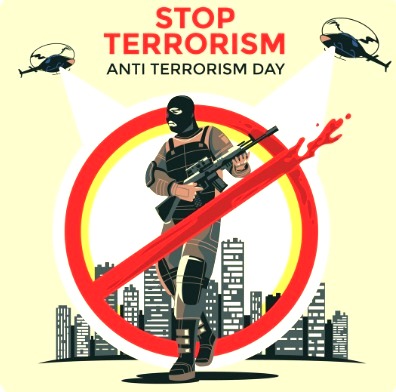
Is The World Experiencing The Emergence of IS 2.0?

December 2025: The last weekend when the global Jewish Community were busy celebrating their spiritualism in the form of ‘Hanukkah’, 03 American troops were killed by an IS gunman in Syria, and a massacre targeting Jews celebrating Hanukkah at Bondi Beach in Sydney, Australia. The latter attack was committed by a father-and-son duo who took a monthlong trip to the southern Philippines in the weeks before the attack, raising the possibility that the attackers were trained or directed by members of the Islamic State East Asia, the group’s Southeast Asian affiliate.
IS’s weekly publication Al-Naba, however, claims the attack was inspired by the group but not directed by it. Other recent terrorist plots that were disrupted by authorities in Poland and Germany, potentially inspired by IS, indicate that the threat remains persistent and global.
Despite U.S. President Donald Trump’s claim in 2019 that IS has been defeated, the reality is far more complex. While the threat from the group has been significantly attenuated, especially from its apex during the height of its so-called caliphate between 2014 and 2018, the nodes in IS’ global and highly decentralised network remain potent enough to conduct sophisticated terrorist attacks.
The group sometimes directs its own attacks, as with the mass shooting in Moscow in March 2024 that killed 149 people, or inspires violent extremists to act on its behalf, as seen in the attack in New Orleans that killed 14 revellers on New Year’s Day 2025. Even if most of the group’s plots have been less sophisticated in recent years compared to the November 2015 coordinated attacks in Paris, which caused 130 fatalities and hundreds of injuries, lives continue to be lost in vehicle-ramming attacks, shootings, stabbings and IED explosions.
The IS’ have continued refinement of multimedia content, regular publications and interactive forums allowing its ideology to resonate far beyond its rank-and-file.
In 2024, by far the most deaths attributed to IS occurred in the Sahel, followed by Iraq and Syria, Central and South Asia, and elsewhere in sub-Saharan Africa. Even after the group’s territorial proto-state in Iraq and Syria was reduced to rubble in 2019, it had metastasised elsewhere, morphing into a geographically dispersed but networked entity with a clear organisational structure, funding streams and logistics networks. The group has embedded itself in conflict zones and areas of limited state governance around the world, forming local branches that it calls wilayat, or provinces. These units carry out sustained campaigns that inflict severe civilian harm, but which don’t attract extensive media attention in the West. They can also serve as attractive hubs for foreign fighters seeking combat experience, which they can later use in external operations outside the group’s provinces.
As of September 2025, the Office of the Director of National Intelligence estimates that IS has between 8,800 and 13,100 fighters globally, including 1,500 to 3,000 in Iraq and Syria. The core group in Syria remains potent, even in a reduced form. In Northeastern Syria, the Kurdish-led Syrian Democratic Forces, which bore the brunt of the fighting against IS during the height of the 2014-2019 campaign against the group has yet to be integrated into the interim government’s security forces following the ouster of dictator Bashar al-Assad last year.
This delay, along with disputes about bringing territory in Northeastern Syria under the Damascus governance, is laying bare the pockets of insecurity that IS can easily exploit. The group has proven vengeful, ramping up its attacks inside Syria after the interim government joined the Global Coalition Against Daesh and conducted raids to arrest IS militants.
Outside the Middle East, the Islamic State Khorasan Province, which is based in Afghanistan and known as IS-K, has proven to be the group’s most operationally capable branch in terms of external operations, as illustrated by the high-fatality attack in Moscow in 2024 and a separate incident that year that used bombs to kill at least 95 people in Kerman, Iran. IS-K continues to produce high-quality propaganda aimed at radicalising its followers in Central Asian nations and their diasporas, and pushing supporters to conduct acts of terrorism.
In Africa, the Islamic State Sahel Province has also demonstrated its intent to conduct external attacks, including a foiled plot in Morocco earlier this year. The low level of counterterrorism pressure in the region makes this group, as well as the group’s West Africa Province, especially dangerous. The IS Somalia Province, nestled in the Cal Miskaad mountains, is also a cause for concern, drawing half of its fighters from abroad and serving a crucial role in IS finances. Islamic State Mozambique Province, nestled in Mozambique’s northern province of Cabo Delgado, continues to target civilians and requires ongoing military support from Rwanda to counter. The Islamic State Central Africa Province has also been waging a sectarian campaign targeting Christians in the Democratic Republic of Congo.
These provinces do not operate independently from each other. The Islamic State maintains a command-and-control apparatus through its General Directorate of Provinces, which was developed after the group began planning for its post-caliphate future, enabling the group’s network to function as a force multiplier. The General Directorate oversees a network of regional offices, each responsible for coordinating IS provinces within their geographical scope.
Through this structure, funding can flow from one province to another, filling gaps and bootstrapping struggling affiliates. The relatively small al-Karrar Office in Somalia, the regional office overseeing parts of East, West and Southern Africa, has had an outsized impact on IS’ finances as a whole through this arrangement. The U.S. Treasury has indicated that the group generates significant cash flow—as much as $2 million in the first half of 2022, through extortion, illicit taxation schemes, import duties, livestock cultivation and agriculture. In addition to funding, these small yet highly efficient nodes in IS’ global network can provide its fighters with logistical support and training.
While these regional hubs play an important role in IS’ global presence, the group’s external operations today in the West are primarily inspired by IS, rather than enabled or directly executed by it. This trend is directly linked to IS’ strong digital presence, which since the group’s early days has firmly established it as the most prolific actor in the online jihadist space. Its continued refinement of multimedia content, regular publications and interactive forums allow its ideology to resonate far beyond its rank-and-file. At the height of the “caliphate”, its slick videos sought to radicalise and lure foreign fighters to Syria and Iraq, whereas its latest propaganda materials now are mostly focused on inciting attacks against Western targets.
Practical guidance on target selection, material acquisition and operational security, regularly updated for new technological tools such as AI, is easy to come by. The proliferation of official IS and IS-aligned media outlets has been accompanied by amateur and professional translation collectives that seek to amplify the group’s content. In the spring of 2023, an IS collective called Fursan al-Tarjuma, or Knights of Translation, brought together various pro-IS propaganda outlets and made them accessible in over 18 languages.
While some social media platforms regularly purge IS-linked content and accounts, the whack-a-mole dynamics of content moderation persist, as sympathizers find ways to circumvent the most advanced content-detection tools. Apart from mainstream social media platforms, IS relies on digital infrastructure that remains difficult or even impossible to disrupt. These tools including the Tor network, a privacy-focused internet network that conceals the source of communication by routing traffic through multiple volunteer-run servers, and self-hosted chat platforms like Rocket Chat.
In IS’s propaganda materials, soft targets are often promoted as symbolic, with significant potential for publicization. For example, pro-IS media outlets have called for attacks at the 2024 Paris Olympics, but also film festivals, concerts and cultural festivities in Europe. European Christmas markets remain an attractive target, and after the Sydney attack, there are growing concerns that we could see more IS-inspired or even IS-directed terrorism in the final days of this year. In its latest al-Naba magazine, IS has singled out the holiday season in Belgium as a potential target for lone attackers. A plot targeting a Christmas market in Bavaria was disrupted earlier this month, as was another plot targeting a Christmas market in Poland.
One of the most challenging aspects of countering a global network like IS, is that even when counterterrorism authorities make significant progress in weakening some of the organisation’s affiliates, as in Southeast Asia, the group is never truly defeated. Even small remnants can remain potent enough to help facilitate terrorist attacks. This makes counterterrorism somewhat of a thankless task: There is little fanfare when authorities thwart attacks and prevent plots from succeeding, yet high-profile incidents like the one that took place in Sydney inevitably lead to finger-pointing and accusations of an intelligence failure.
The Islamic State’s geographically dispersed network of provinces, coupled with an external operations posture that now produces mostly inspired rather than directed attacks, has two implications for counterterrorism that need to be heeded:
First, sustained kinetic pressure remains necessary to curb the group’s expansion in regions such as the Sahel and Somalia. This means withdrawals of U.S. military resources from these areas must be fully aligned with U.S. counterterrorism strategy.
Second, there is a continued necessity to focus on suppressing online terrorist content and strengthening prevention programs aimed at early stage radicalisation.
IS remains a formidable and adaptive adversary, but it is far from invincible. Given that it relies on an international network, it will take a globally coordinated, well-resourced effort to erode its capabilities.
Team Maverick.




BJP Fields Three Former Trinamool MPs for West Bengal Rajya Sabha Bypolls
Kolkata, July 2026 : In a significant political development ahead of the upcoming Rajya Sa…

BJP Fields Three Former Trinamool MPs for West Bengal Rajya Sabha Bypolls
Kolkata, July 2026 : In a significant political development ahead of the upcoming Rajya …