PM Modi Calls Somnath Temple the Eternal Symbol of India’s Indomitable Spirit, Reflecting on 1,000 Years of Faith and Resilience

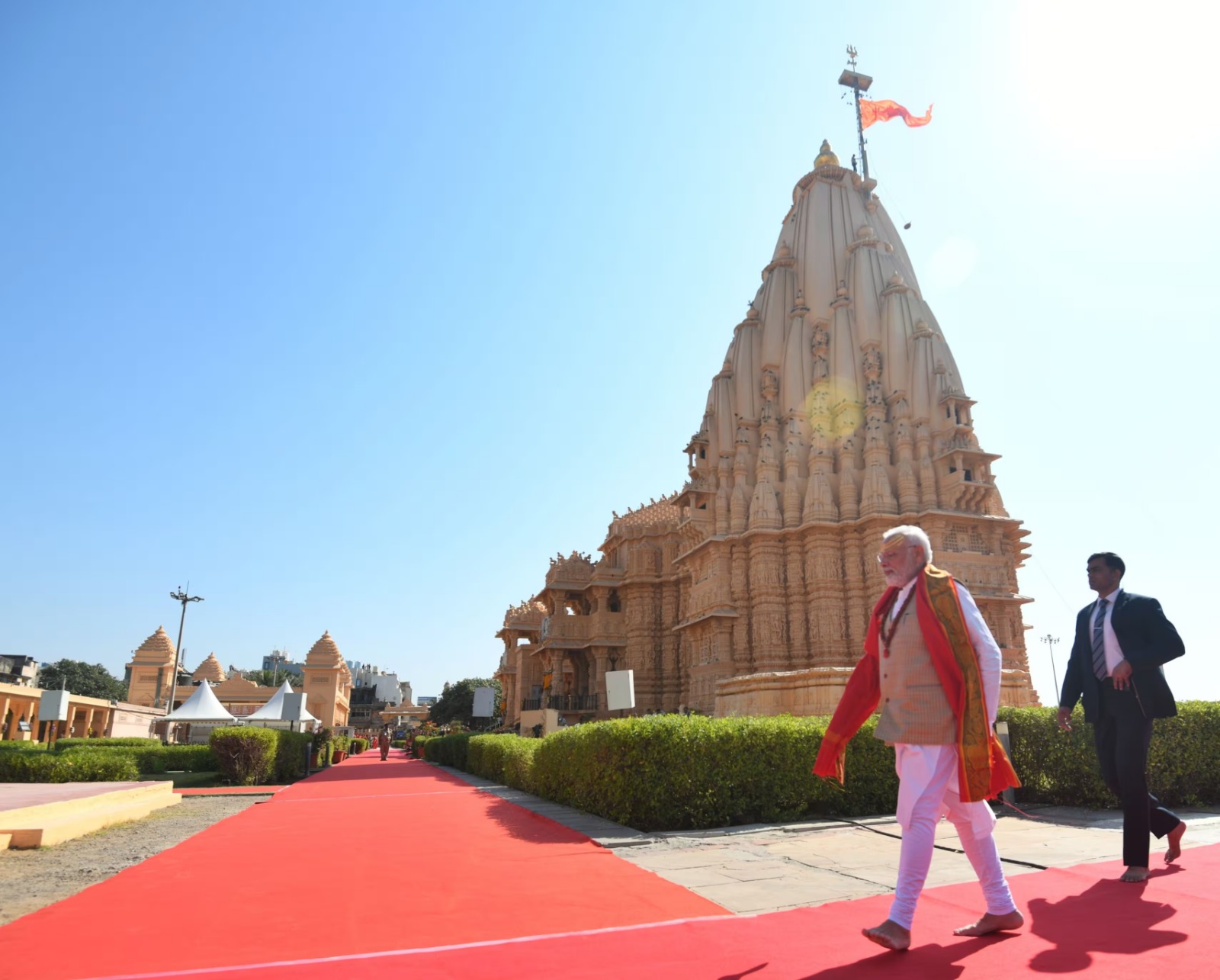
Joan 2026 : Prime Minister Narendra Modi on Monday described the Somnath Temple as the eternal proclamation of the Indian soul, asserting that while hatred and fanaticism may destroy for a moment, faith and conviction in goodness have the strength to create for eternity. Speaking on the thousand-year legacy of the shrine, Modi highlighted the historical significance of Somnath, its repeated destruction by invaders, and the enduring civilisational spirit it symbolizes.

Pointing out that 2026 marks a millennium since the temple’s first recorded attack in January 1026, PM Modi reflected on the resilience of the Indian people and the temple’s continued prominence despite centuries of adversity. “Somnath… hearing this word instils a sense of pride in our hearts and minds. It is the eternal proclamation of India’s soul,” Modi wrote in a detailed blog post. He added that the temple, located on the western coast in Gujarat at Prabhas Patan, holds profound civilisational and spiritual importance as the first among the 12 Jyotirlingas mentioned in the Dwadasha Jyotirling Stotram.
The Prime Minister explained that according to a Sanskrit shloka, simply having ‘darshan’ of the Somnath Shivling ensures liberation from sins, the fulfilment of righteous desires, and attainment of heaven after death. He recalled the turbulent periods in which the temple was repeatedly attacked, emphasizing that the invaders’ goal was destruction rather than devotion. “It was in January 1026 that Mahmud of Ghazni attacked this temple, seeking to destroy a great symbol of faith and civilisation through a violent and barbaric invasion. Yet, a thousand years later, the temple stands as glorious as ever because of the countless efforts to restore Somnath to its grandeur,” Modi said.
He also marked another milestone in 2026, noting that it would be 75 years since the reconstructed temple was reopened to devotees. “On May 11, 1951, in the presence of the then President of India, Dr Rajendra Prasad, the restored Somnath Temple once again opened its doors,” the Prime Minister recalled.
Describing the brutality of the first invasion, PM Modi said the cruelty inflicted upon the people of Prabhas Patan and the destruction of the shrine have been extensively documented. “When one reads these accounts, the heart trembles. Each line carries grief, cruelty, and a sorrow that refuses to fade with time,” he said. He noted that Somnath’s spiritual importance and coastal location strengthened the societal morale, given the town’s thriving economic and maritime activity.
“Yet, I am proud to state unequivocally that the story of Somnath, a thousand years later, is not defined by destruction. It is defined by the unbreakable courage of crores of children of Bharat Mata,” Modi emphasized. Recounting repeated medieval attacks, he highlighted that these efforts were often part of broader attempts to subjugate India’s people and culture. “But every time the temple was attacked, great men and women stood up to defend it, often making the ultimate sacrifice. Generation after generation, the people of this great civilisation rebuilt and rejuvenated Somnath,” the Prime Minister added.
PM Modi paid tribute to Ahilyabai Holkar for her pivotal role in restoring temples across India, including Somnath and Kashi Vishwanath. “It is our privilege to have been nurtured by the same soil that nurtured greats like Ahilyabai Holkar, who made noble efforts to ensure devotees could once again pray at Somnath,” he said.
He also reflected on Swami Vivekananda’s visit to Somnath in the 1890s, quoting his 1897 lecture in Chennai where Vivekananda stated that temples like Somnath reveal more about India’s history and spirit than volumes of books. “These temples bear the marks of a hundred attacks and a hundred regenerations, reflecting the national life force that continually rises stronger from destruction,” Modi wrote.
The Prime Minister recalled the responsibility of rebuilding Somnath after Independence, which fell upon Sardar Vallabhbhai Patel. Patel’s visit to the site during Diwali in 1947 reportedly left him deeply moved, catalyzing the reconstruction initiative. Modi said, “On May 11, 1951, a grand Somnath Temple was opened to devotees in the presence of Dr Rajendra Prasad.” He also noted the reluctance of then Prime Minister Jawaharlal Nehru to associate top constitutional authorities with the event, stating, “Pandit Nehru did not want the Honourable President or Ministers to participate, claiming it would create a bad impression of India. But Dr Rajendra Prasad stood firm, and the rest is history.”
PM Modi also highlighted K.M. Munshi’s critical support for Sardar Patel in this endeavour, referencing Munshi’s book Somanatha: The Shrine Eternal as an informative and educative work reflecting India’s belief in the eternal spirit of its civilisation.
“There can be no better example of our civilisation’s indomitable spirit than Somnath, which stands gloriously, overcoming odds and struggles,” Modi stated. He drew parallels with modern India, noting the country’s emergence as a global centre of growth after centuries of invasions and colonial exploitation. “Our value systems and the determination of our people have made India the focus of global attention. The world looks at India with hope and optimism,” he wrote.
The Prime Minister highlighted Somnath’s historical role in bringing together people from diverse backgrounds, citing the visit of Jain monk Kalikal Sarvagna Hemchandracharya, who praised liberation from worldly afflictions after praying at the temple. Modi emphasized that even today, Somnath continues to awaken profound spiritual insight.
Concluding his reflections, PM Modi observed that a thousand years after the first attack, the sea at Somnath continues to roar with the same force. “The waves that touch the shores of Somnath tell a story. No matter what, like the waves, it kept rising again and again. The aggressors of the past are now dust in the wind, remembered only for destruction,” he wrote.
“Somnath stands radiant, reminding us of the eternal spirit that could not be diminished by the attack of 1026. It is a song of hope, teaching us that while hate and fanaticism may destroy for a moment, faith and conviction in goodness can create for eternity,” Modi added.
Drawing a broader lesson for the nation, the Prime Minister said that if Somnath could rise repeatedly after relentless attacks, India too can reclaim its historic glory. “With the blessings of Shree Somnath Mahadev, we move forward with renewed resolve to build a Viksit Bharat, guided by our civilisational wisdom and working for the welfare of the entire world,” he concluded
Jai Somnath!

Andreeva Becomes Youngest French Open Champion in Over Three Decades
Paris, June 2026: Russian teenager Mirra Andreeva completed a remarkable rise in world ten…

Andreeva Becomes Youngest French Open Champion in Over Three Decades
Paris, June 2026: Russian teenager Mirra Andreeva completed a remarkable rise in world tennis …