Armaments Bureau Chief Confirms Taiwan-US Joint Plan To Produce 155 MM Shells.

Taipei, Taiwan; January 2026: The head of the Armaments Bureau told lawmakers on 12th January 2026, that Taiwan and the United States plan to jointly produce 155mm artillery shells because the munition has proven to be in high demand during the ongoing Ukraine-Russia war and is considered useful for Taiwan’s self-defence.
Lieutenant General Lin Wen-hsiang, head of the Bureau under the Ministry of National Defence (MND) responsible for arms procurement and weapons development, made the remarks during a legislative session when lawmakers asked him to give an example of Taiwan’s partnership with its allies in producing munitions. Given the strong demand for 155mm artillery shells in Ukraine’s defence against the Russian invasion, and in light of Taiwan’s own defensive needs, Taiwan and the U.S. plan to jointly produce 155mm shells.
Once the cooperation has proven successful, the collaboration could be expanded to other types of munitions, he said, adding, however, that he could not provide further details due to the sensitivity of the matter.
Taiwan and its closest arms provider, the U.S., have been in talks to co-produce munitions and weapon systems for several years. During a U.S. Senate Armed Services Committee hearing in November, Alexander Velez-Green, the nominee for U.S. Deputy Under Secretary of Defence for policy, told senators that joint weapons production should focus on projects that are relatively less complex and within Taiwan’s existing capabilities.
“Appropriate co-production or similar opportunities should focus on less technically complex capabilities for which Taiwan has existing workforce and production infrastructure”, he said during the November 06th committee session. Meanwhile, speaking during the same legislative hearing on Monday, Defence Minister Wellington Koo defended the MND’s decision to purchase munitions overseas, saying domestically made shells are not cheaper than those acquired internationally.
Lieutenant General Lin added that in the case of M855 steel-core ammunition procured by Taiwan, the military’s current domestic production cost is NT$16.18 (US$0.51) per round (with a budgeted amount of NT$18.86), while the winning bid price for foreign procurement is NT$15.53. The bid price is lower than the NT$16.18 approved by the Office of the Deputy Chief of the General Staff for Logistics, Lin said, therefore, overseas procurement is not more expensive.
Koo explained that the MND purchases shells and munitions, including, most recently, US made M855 bullets, because demand has increased after Taiwan extended compulsory military service to one year from the previous four months and stepped up the frequency of reservist training and live-fire exercises. Taiwan’s military have used 23.4 million rounds of ammunition in 2021, while in 2025 the figure more than doubled to 58.81 million rounds, Koo said.
The 155mm artillery shell remains the backbone of modern land warfare. It is the NATO-standard calibre for heavy artillery and is used extensively by U.S. and allied forces for long-range fires, counter-battery missions, area denial, and suppression of enemy manoeuvre formations. For Taiwan, this calibre is particularly relevant as the island modernizes its ground forces with U.S.-supplied artillery systems, including the M109 family of self-propelled howitzers. These platforms provide Taiwan with mobile, survivable firepower that can support defensive operations against amphibious landings, airborne assaults, or sustained pressure on key terrain.
For Taiwan, which faces the realistic prospect of prolonged hostilities or a maritime blockade in a crisis with China, reliance solely on overseas deliveries of heavy ammunition represents a critical vulnerability. Joint production offers a pathway to mitigate this risk by anchoring part of the supply chain closer to the point of use.
From an operational perspective, artillery plays a central role in Taiwan’s defensive doctrine. While Taiwan is investing heavily in precision strike systems and asymmetric capabilities, conventional fires remain indispensable for slowing enemy advances, disrupting logistics, and imposing attrition on a numerically superior adversary. In a cross-Strait scenario, Taiwanese artillery units would likely be tasked with sustained defensive fire missions over extended periods. This reality makes ammunition availability not merely a logistical concern but a decisive factor in combat endurance.
The co-production arrangement also reflects a broader strategic alignment between Taipei and Washington. By integrating Taiwan into U.S. standard ammunition production processes, both sides strengthen interoperability while reinforcing political and military signalling. For the United States, supporting localised production reduces pressure on its own ammunition stocks, which have been strained by commitments to allies and partners globally. For Taiwan, it represents a tangible deepening of defence cooperation that goes beyond platform sales and into long-term war-sustaining capacity.
The strategic timing of this cooperation is particularly noteworthy. Taiwan has significantly increased its training tempo, extended conscription periods, and expanded reserve activities, all of which have driven higher ammunition consumption in peacetime. At the same time, China’s growing military pressure, including large-scale exercises and blockade scenarios, has heightened awareness in Taipei of the need for self-sustaining defence capabilities during the early and most critical phases of a conflict.
Ultimately, the joint production of 155mm artillery shells is a sober acknowledgment that modern deterrence is built as much on logistics and industrial capacity as on advanced platforms. For Taiwan, ensuring a steady supply of heavy ammunition strengthens its ability to resist coercion and sustain combat operations if deterrence fails. For the United States, it reinforces a key partner’s resilience while contributing to a more distributed and robust allied defence industrial base. In the evolving strategic landscape of the Indo-Pacific, this cooperation represents a practical and strategically sound investment in long-term stability.
Team Maverick.






Maharashtra Shuts Schools Across Several Districts as Heavy Rain Alert Triggers Safety Measures
Mumbai, July 2026: Authorities across several districts in Maharashtra have declared a hol…
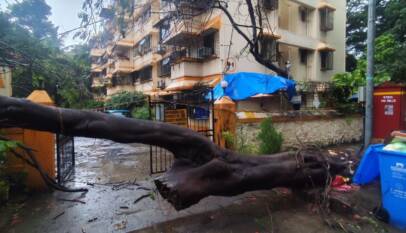
Maharashtra Shuts Schools Across Several Districts as Heavy Rain Alert Triggers Safety Measures
Mumbai, July 2026: Authorities across several districts in Maharashtra have declared a holiday for …