China’s Approach On Global South Experience A Paradigm Shift After Africa Ceded Donkey Export.

January 2026: Since 2014, the Export of African donkey’s to China slowly commenced, and by 2020 the export figures started reaching the astronomical heights. However, trade experts experienced the reason for such a growth of Chinese demand for donkeys. China’s outlier and relatively sudden interest in a donkey skin trade derived from contemporarily skyrocketing demand for an ancient and elite type of traditional Chinese medicine (TCM) compound known as “Ejiao”. The key active ingredient in Ejiao is collagen extracted from donkey skin. Rapid growth in Chinese demand for Ejiao drove consumption in China to some 04 million to 06 million donkey hides a year, up from an estimated 400,000 in 2000, and an industry turnover now of more than US$ 01 billion.
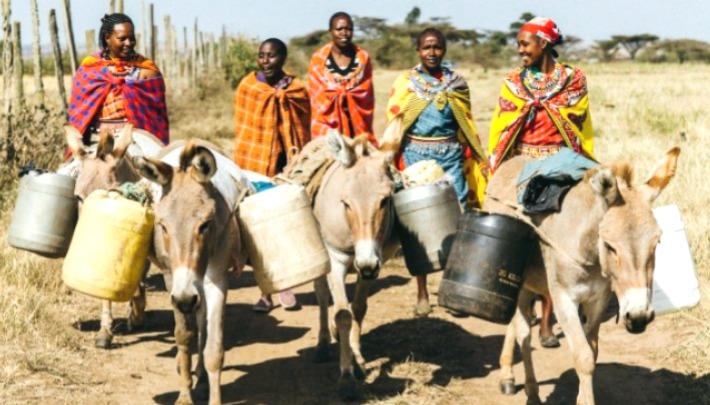
Africa’s issues arising with the donkey trade included theft of donkeys, unlawful and inhumane slaughter of donkeys, the unsustainably large number of slaughters, and that these impacts, in turn, stalled, if not regressed, socioeconomic mobility of the poorest segments of African society. Women, especially, are impacted by the loss of donkeys, and related diminished agricultural productivity and income. Donkeys, meantime, are slow to breed, making stolen donkeys difficult to replace and the rate of trade unsustainable.
The AU moratorium necessitated changes in and implementation of regulations to protect donkeys. PADCo and the African Union (AU) had noted that farming donkey hides is scientifically unsustainable also because of widespread cross-border smuggling, leading to an alarming decline in the donkey population.
The Specialised Technical Committee called for a continent-wide common position and moratorium on donkey slaughter for the skin trade, the development of a Pan-African strategy and action plan for donkey species development, and an accelerated and coordinated resource mobilization with regional bodies and international partners to conserve and sustainably manage donkeys and other working equid populations in Africa.
An African Union (AU) summit in February 2024 imposed one of the most unusual trade actions in the history of international commerce. Taking into cognizance the recommendations of the inaugural Pan-African Donkey Conference (PADCo) held in December 2022, the AU’s 55 heads of state united to halt trade in a troubling corner of the otherwise booming China-Africa relationship, which was the emergence of Chinese imports of Africa’s donkeys since 2014.
Nearly two years in, the AU moratorium is being implemented with varying speed both legislatively and related implementation. There is, however, widespread increased awareness of the need to protect donkeys and donkey-reliant communities. Organizers of the inaugural PADCo convened the second PADCo in Ivory Coast in May 2025 to discuss related issues and to push forward progress on the moratorium. Having myself participated in the two PADCo meetings, it became even more evident that China’s response to the AU moratorium impacted the efficiency, ease, and costs of implementing the moratorium, and the chances of it having its intended effect. While China is indeed not directly responsible for governing Africa’s resources, it is far better economically resourced to govern itself in the first instance.
The official Chinese policy response to the AU moratorium has been centralised and broad, as well as provincially ordered and industry-specific. Overall, there has been an emphasis on reforming the industry’s supply chain and quality focus, including policies that focus on increasing China’s supply of donkeys.
For example, at the central government level, China’s cabinet-level State Council announced in June 2024, just a few months after the AU announced the moratorium, detailed plans for innovative development of TCM, including supporting leading Chinese medicine enterprises to develop a full industry chain layout and to accelerate the development of a traceability system for the donkey hide gelatine supply chain. The State Administration of TCM followed up quickly with measures and standards with the focus again on improving TCM supply chains.
At the provincial level, particularly the eastern province of Shandong, where Ejiao production predominates, a series of far more specific industry announcements focused on donkey husbandry, calling for the development of indigenous donkey supply and the formation of the Shandong Donkey Industry Innovation Alliance, is aimed at surmounting the scientific barriers to donkey breeding and farming. It brought in partners from the provincial horse and donkey research institutes with a goal to promote efficient collaboration and innovation in donkey-related industries.
A very targeted step was the announcement of “Several Measures on Accelerating the High-Quality Development of the Donkey-Hide Gelatine Industry” in June 2024. Its goals include that, by 2035, Shandong should be home to three to five leading Ejiao production enterprises with collective output exceeding RMB100 billion annually, implying industry consolidation is in policy sights. By 2030, the plan called for Shandong province’s donkey industry to double from the current level of 21,000 heads, and then double again by 2035.
The State Administration for Traditional Chinese Medicine and online retailers have also invested in an information campaign to ensure correct medicinal use of Ejiao. This includes awareness of the widespread presence of fake Ejiao, which is typically Ejiao not made from donkey hides, and guidelines on the correct medicinal consumption of Ejiao.7 These efforts seek to diminish excessive consumption of Ejiao.
The AU’s moratorium has also, and more philosophically, prompted contemporary reflection in China as to the nation’s optimal sources of protein and husbandry investment decisions over time. In November 2025, the Shandong Provincial Animal Husbandry and Veterinary Bureau held a seminar on the development of the donkey industry that fostered broader debate.
In an online post, the bureau noted, “Unbred, primitive donkey breeds used for meat consumption naturally cannot compete with commercialised breeds in terms of growth efficiency and meat yield. This necessitates dedicated policy and technological project support from relevant fields to address the shortcomings in the industry’s development, such as the breeding of superior breeds, the socialised production service system, and deep processing”.
Chinese media was quick to cover the AU’s decision. Initial coverage described the AU’s act as a ‘closed-door policy’, likened to African trade protectionism. But things changed. In a matter of months in 2025, open debate on China’s donkey shortage began to question the unsustainability of the donkey trade and awareness that China’s rising incomes and health consciousness drove the uncontrolled consumption of Ejiao.
The topic went viral in China in November 2025 when an article about China’s donkey shortage carried a double meaning in its title, “My country has no shortage of cattle and horses, but it lacks?”. The double meaning refers to cattle and horses tending to be less stubborn or willing to kick back compared to donkeys, a metaphoric allusion to China’s domestic capacity for participatory politics.
In line with an official push for a higher-quality and more sustainable Ejiao industry, Dong’e Ejiao, the dominant brand and producer in the Ejiao market, said it had some 50 to 60 million hides in inventory, signalling that the moratorium was not of immediate concern. Nonetheless, the moratorium brought an immediate jump in the price of donkey hides and a drive to find new international donkey-hide sources.0
Nearly two years after the moratorium was announced, the Ejiao industry has emphasised donkey breeding and new donkey-hide sources, improved trade diplomacy, and elevated its focus on product innovation and diversification. In November 2024, Dong’e Ejiao hosted its 09th International Donkey Industry Development Conference under the theme of “Focus on the development of the donkey industry and cooperate for a win-win future”.
Representatives from universities and research institutes from 20 countries, including Pakistan and Brazil, as well as some African countries, took part in the event. Dong’e Ejiao has also since signed a formal agreement with the China Agricultural University to find means of empowering donkey farmers and donkey breeding.
Beyond Africa, the Ejiao industry has prominently forged a new hide sourcing and donkey breeding deal with Pakistan. Building on a legacy of strong China-Pakistan bilateral ties, and Pakistan being home to the world’s second-largest population of donkeys, has agreed to export 216,000 donkeys’ hides and meat annually. There may yet, and hence, be a backlash against the trade in Pakistan too. Unlike when the trade took off in Africa, however, there is a parallel, if independent, push by Chinese manufacturers to set up factories and transfer scooter-manufacturing capabilities to Pakistan as a form of exchange, which may concurrently diminish local demand for donkeys, solving some troubling elements of the trade.
Trade ties between African nations and China are fast-growing and mostly politically smooth. Together with coincidental timing of China presently facing deep structural trade tensions with many high-income countries, the AU’s stand of February 2024 in favour of the continent’s donkeys arrived as a shock for China, even if the moratorium itself was not directed at the world’s second-largest economy and a self-styled champion of the Global South.
As one online post itself noted, “China did not intentionally harm donkeys; demand is traditional, and the problem lies in trade chain regulation”. The AU’s proactive, socially conscious, and pro-environment moratorium was not just a wake-up call for China and its Ejiao industry, but may also serve to instigate greater reflection and governance of global resources, food supply chains, and relations with the Global South.
Team Maverick.







Japanese F-2 Fighter Reloaded With New Large Stealth Cruise Missile Under Its Wings.
Gifu Air Field, Kakamigahara City, Japan; August 2026: Yesterday (Friday – 31st July 2026)…

Japanese F-2 Fighter Reloaded With New Large Stealth Cruise Missile Under Its Wings.
Gifu Air Field, Kakamigahara City, Japan; August 2026: Yesterday (Friday – 31st July 2026) …