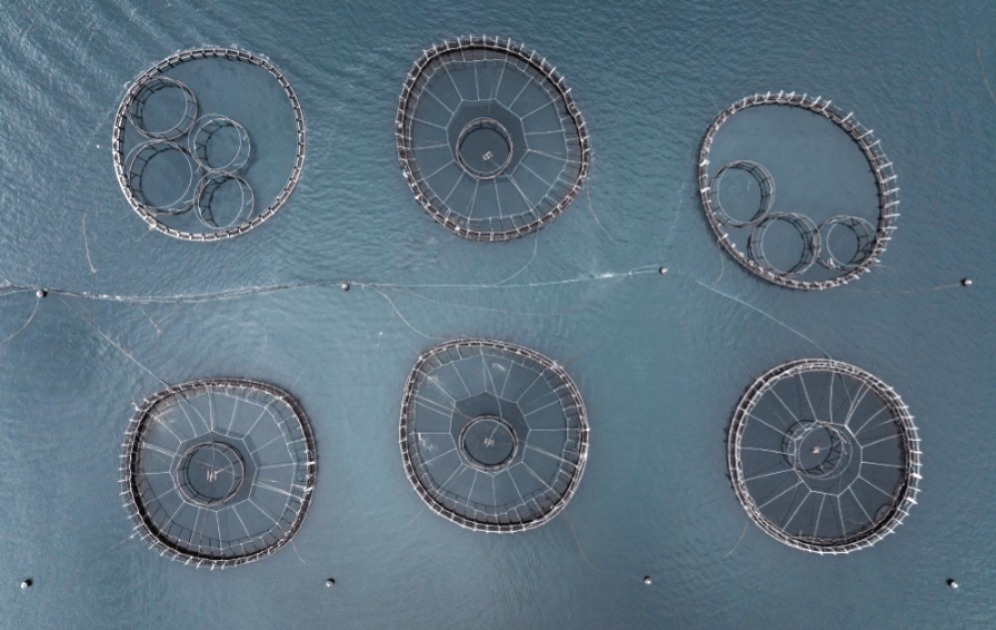
99% Of Atlantic Salmon Is Farmed In Sea Cages.

Reykjavík, Iceland; January 2026: Iceland’s Parliament has released its long-awaited Aquaculture Bill (S-252 /2025) for public comment until January 26, setting up a showdown between the government’s vision of regulated expansion and conservationists demanding an end to sea cage farming.
Minister of Industries Hanna Katrín Friðriksson describes the bill as taking “environmental considerations and animal welfare into account”, with incentives for closed-containment systems and sterile salmon. But critics say the legislation fails to mandate the modern technology needed to protect Iceland’s fjords and wild salmon, allowing unlimited expansion with inadequate penalties for pollution and escapes. As a result, “the costs of sea cage salmon farming are socialized, falling to the public, while profits are privatized and sent overseas”, according to Elvar Fridriksson, CEO of Iceland’s North Atlantic Salmon Fund.
Why is the Bill so important: With more than 65% of Icelanders opposing sea cage salmon farming and just 13.9% in favour, this bill will determine whether Iceland protects its pristine reputation or risks it for an industry that employs 200-300 people. Moreover, the timing is particularly significant as the industry faces multi-million dollar penalties for environmental breaches in Chile, bans in the United States, and phase outs in parts of Canada. Meanwhile, at home, one of Iceland’s two largest salmon farming operations faces police investigation for alleged violations of local animal welfare regulations, while another confronts a landmark lawsuit seeking revocation of its sea cage farming permits.
Across the world, humans are alienated towards salmon because of its nutritional contents particularly the Omega 3, making it one of the world’s most farmed and consumed fish. To keep up with consumer demand, hundreds of industrial salmon farms have set up their sea cages off Norway, Scotland, Iceland, Atlantic Canada, British Columbia, the U.S., Tasmania, and Chile over the past 50 years. These lucrative farms produce Atlantic salmon at an accelerated pace, but their harvest comes at a steep price. Wherever the industry goes, wild Atlantic salmon are the first to suffer irreversible consequences, the first link in a chain reaction of environmental harm.
Wild Atlantic salmon populations have plummeted in all salmon-farming countries, and the greatest declines have occurred near farms along salmon migration routes. There are now significantly more salmon in captivity than the estimated three million Atlantic salmon in the wild. A single salmon farm can crowd 2.2 million fish into 10 to 12 sea cages, enormous mesh pens that retain fish while permitting water to circulate.
Because they are underwater, sea cages are hidden from public view, concealing the death, disease and environmental degradation that emanate from them. (Land-based salmon farms, it should be noted, offer a promising alternative to ocean farms. These indoor facilities grow salmon in tanks that, unlike sea cages, can be kept clean and secure).
Sea cages are a controversial component of salmon aquaculture. Alaska, Washington and California in the United States, as well as Argentina, have banned salmon farms, citing conclusive evidence that they are unsustainable as well as detrimental to wildlife, ecosystems and economies worldwide.
Across the decades, as the quest for salmon has bolstered, a lot could be learnt about the reality of sea cages. It has been demonstrated that wherever sea cages operate, wild salmon numbers decline and marine ecosystems are polluted. Furthermore, farmed salmon regularly escape and spawn with wild Atlantic salmon, compromising their gene pool. To add woos to the worries, flesh-eating sea lice, disease-carrying bacteria, pesticides, antibiotics and feces float out of sea cages and pollute the surrounding ocean environment, harming marine life. As it has been reported – between 2012 and 2022, 865 million farmed Atlantic salmon died prematurely in sea cages, a staggering waste of life that further illustrates the unsustainability of this industry.
What needs to be explored is how eating farmed salmon affects human health. But studies show that ocean-farmed salmon contain microplastics, polychlorinated biphenyls (PCBs) and antibiotic-resistant bacteria, all of which may be linked to a range of health problems, including cancer, thyroid disease, infertility, autism, antibiotic resistance and more.
In addition to polluting the environment, salmon farming is inherently unsustainable because the large amount of wild fish it takes to feed the salmon in the farms results in a net loss of protein from the ocean. To feed farmed salmon, giant trawlers off the coast of West Africa haul in tons of small fish that are ground into feed. Ninety percent of these wild fish could help feed Africans. In this way, sourcing food for ocean-farmed Atlantic salmon not only contributes to the industry’s large carbon footprint but also takes protein off the plates of people who need it.
Now, the Icelandic Agricultural Bill that has been presented, sets no binding limit on total fish biomass in Iceland’s fjords. New sea cage zones can still be licensed, no new fjords receive protected status, and genetic risk assessments remain advisory rather than mandatory, subject to the whims of politically appointed overseers. Carrying-capacity assessments are structured to enable growth rather than limit it.
Currently, approximately 30 million farmed salmon would be permitted in Iceland’s fjords while only 60,000 wild salmon return to the country’s rivers annually, a ratio that alarms scientists tracking the 75% decline in wild Atlantic salmon populations since 1970.
De facto property rights for foreign corporations. The bill creates “Laxahlutur” quotas that establish property-like rights, potentially forcing Iceland to compensate foreign corporations if licenses are later reduced. In a viral op-ed, Vala Árnadóttir, an Icelandic Wildlife Fund board member and attorney, warned: “the salmon quota converts a temporary licensing system into a permanent rights system, whether operating licenses are temporary or permanent. It shifts the risk from the companies to the state and taxpayers”.
Combined with permits lasting up to 16 years with renewals, this could lock Iceland into sea cage farming for decades. At the same time, the bill merely incentivises safer technology through fee discounts rather than mandating closed-containment or land-based systems. Iceland is internationally recognised as uniquely positioned to lead in land-based aquaculture, with abundant renewable energy, naturally filtered seawater, and proximity to international shipping routes yet sea cages remain the default option under this legislation.
Suvro Sanyal – Team Maverick.







CM Yogi directs action on 2,200 proposals: Budget to be released by July 15, projects to be launched on the ground from August 15
CM takes a tough stand during PWD review, warns of action over delays in pending projects …

CM Yogi directs action on 2,200 proposals: Budget to be released by July 15, projects to be launched on the ground from August 15
CM takes a tough stand during PWD review, warns of action over delays in …