The Gaza War Has Frozen The India-Middle East-Europe Economic Corridor (IMEC).

January 2026: The G20 Summit in Delhi, in the month of September 2023, envisaged The India-Middle East-Europe Economic Corridor (IMEC), as a game-changing geo-economic megaproject. But as it is widely acclaimed that – What Man Proposes, God Disposes, the aghast Gaza War that had broken immediately a month later, followed by the West Asian War have abruptly frozen the prospect of the said IMEC.
However, the reduction of those conflicts gave rise to optimism that Saudi Arabia would normalise ties with Israel like it reportedly planned to do prior to their outbreak as the political prerequisite for building IMEC. After all, without the normalisation of Israeli-Saudi ties, there can be no logistical connection between IMEC’s Emirati and Israeli Mideast anchors across the West Asian landmass. Saudi Arabia requires Israel at least making superficial concessions on Palestinian independence, however, which Israel under Prime Minister Benjamin Netanyahu is opposed to doing after the latest wars. This dilemma might therefore derail IMEC yet again unless the US mediates a creative compromise or gets one of them to back down.
However, that is apparently far away from realisation as a result of three fast-moving developments in December 2025. The first was Israel’s recognition of Somaliland’s 1991 redeclaration of independence as a sovereign state, which Saudi Arabia have fiercely opposed. The Somaliland recognition will bring about long-overdue historical justice, advance shared values and security interests, and promote regional stability and development.
Meanwhile, recognising Somaliland’s redeclaration of independence would discredit complaints about its MoU with Ethiopia. In brief, it preemptively averts the latent domestic and international crises stemming from Ethiopia’s landlocked status, thus ensuring regional stability instead of continuing to risk a series of conflicts. Continuing to withhold recognition of both could be interpreted by some actors as tacit approval to attack Somaliland.
The Saudis’ growing ties with Muslim Brotherhood-aligned Turkiye, Qatar, and Iran; the Gaza War that broke out after October 07th; and the Ummah’s widespread support for Hamas, the Muslim Brotherhood’s Palestinian branch, contributed to the Kingdom coming to see the group in a new light.
One of the pillars of Saudi foreign policy has hitherto been its opposition to the Muslim Brotherhood, which it deems a terrorist group, yet they’re now on the same side in Yemen. The Muslim Brotherhood praised the Saudis’ bombing of the Southern Transitional Council (STC) and has even participated in the fighting against it in East Yemen, which the STC recently obtained control over.
This development paralleled the Saudis’ rapprochement with the Turkish-Qatari Tandem and then with its Iranian nemesis, all three of which back the Muslim Brotherhood, with the first’s support long being well known while the latter’s only rose to the fore of regional attention after October 07th. About that, the consequent Gaza War importantly hardened reformist Crown Prince Mohammed Bin Salman’s (MBS) position towards Israel, which had actually been pretty friendly behind the scenes up until then.
While it was argued that Israel was motivated more by its rivalry with Turkiye than its one with Iran (whose Houthi allies still control North Yemen), a related motivation could have been to ensure the security of maritime trade with India in the absence of IMEC.
That’s reasonable if Israel tacitly accepted by then that the normalisation of ties with Saudi Arabia won’t happen as a result of pressure upon it by the international Muslim community (Ummah) over the humanitarian consequences of the Gaza War. Shortly afterwards, Saudi Arabia militarily aligned with the Muslim Brotherhood’s Yemeni branch against UAE-backed South Yemen despite considering the group as a whole to be terrorists, after which South Yemen was swiftly conquered by the Saudis’ Yemeni allies.

Israel just finished a war with the Brotherhood’s Palestinian branch, Hamas, so the aforementioned development would have understandably led to a further deterioration of trust in the Saudis. In parallel, the Saudis demanded that the UAE withdraw from South Yemen within 24 hours, which it did. That ultimatum also described the UAE’s actions in South Yemen as a threat to Saudi national security. Even though they didn’t come to blows in South Yemen, trust between them is now absolutely destroyed.
Accordingly, even if Israeli-Saudi ties were to normalise in spite of Saudi anger at Israel over its recognition of Somaliland, new Israeli distrust of the Saudis over their military alignment with the Muslim Brotherhood in Yemen, the Ummah’s pressure on Saudi Arabia, and new Saudi-Emirati tensions would still undermine tangible progress on building IMEC. India’s trade with Israel and Europe will therefore remain reliant on traditional maritime routes since IMEC’s future is once again in doubt.
In fact, given how serious Saudi Arabia’s problems with the UAE and Israel are, IMEC might never get off the ground at all. India might then strengthen its ties with those two afterwards since it could consider them to be more reliable partners, especially after Saudi Arabia’s mutual defence pact with India’s Pakistani nemesis last September that Turkiye now wants to join too.
In September 2025, Saudi Arabia and Pakistan have signed a “Strategic Mutual Defense Agreement” (SMDA). According to their joint statement, it “aims to develop aspects of defense cooperation between the two countries and strengthen joint deterrence against any aggression. The agreement states that any aggression against either country shall be considered an aggression against both”.
Both Pakistan and Saudi Arabia wants to “save face” after Israel’s attack on Qatar and remind fellow Muslims about the importance of more intra-Ummah military-technical cooperation, not set the stage for an Israeli-Pakistani nuclear standoff or Saudi Arabia imposing an oil embargo on India like some suspect.
It doesn’t specify any duty to employ military force in their support, however, thus making it similar to Article 5 in terms of strategic ambiguity. Many observers believe that US ally Saudi Arabia was shaken by America’s inability or refusal to stop Israel’s bombing of Hamas in Qatar despite having a major airbase there.
It’s therefore supposedly trying to deter Israel via nuclear-armed Pakistan, which it’s bailed out several times in the past and who’s one of its other traditional military partners. The apparent quid pro quo is that Saudi Arabia should support Pakistan in any future clash with India such as by possibly cutting off oil shipments until hostilities cease.
On 19th January 2026, Randhir Jaiswal, spokesperson of the Ministry of External Affairs has posted on his official X handle, the list of outcomes from the visit of HE President Of UAE.

The end of IMEC might then result in an Emirati-Indian-Israeli bloc formed in opposition to the emerging Saudi-Pakistani-Turkish one.
Suvro Sanyal – Team Maverick.

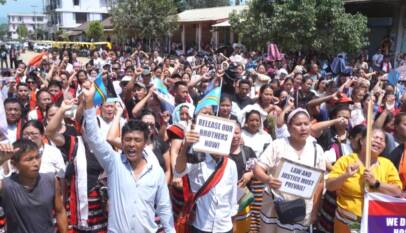
Uttarakhand Villagers Protests Drinking Water Crisis In Devprayag.
Devprayag; May 2026: Plagued by a severe drinking water shortage, residents of Hinsariyakh…

Uttarakhand Villagers Protests Drinking Water Crisis In Devprayag.
Devprayag; May 2026: Plagued by a severe drinking water shortage, residents of Hinsariyakhal village …