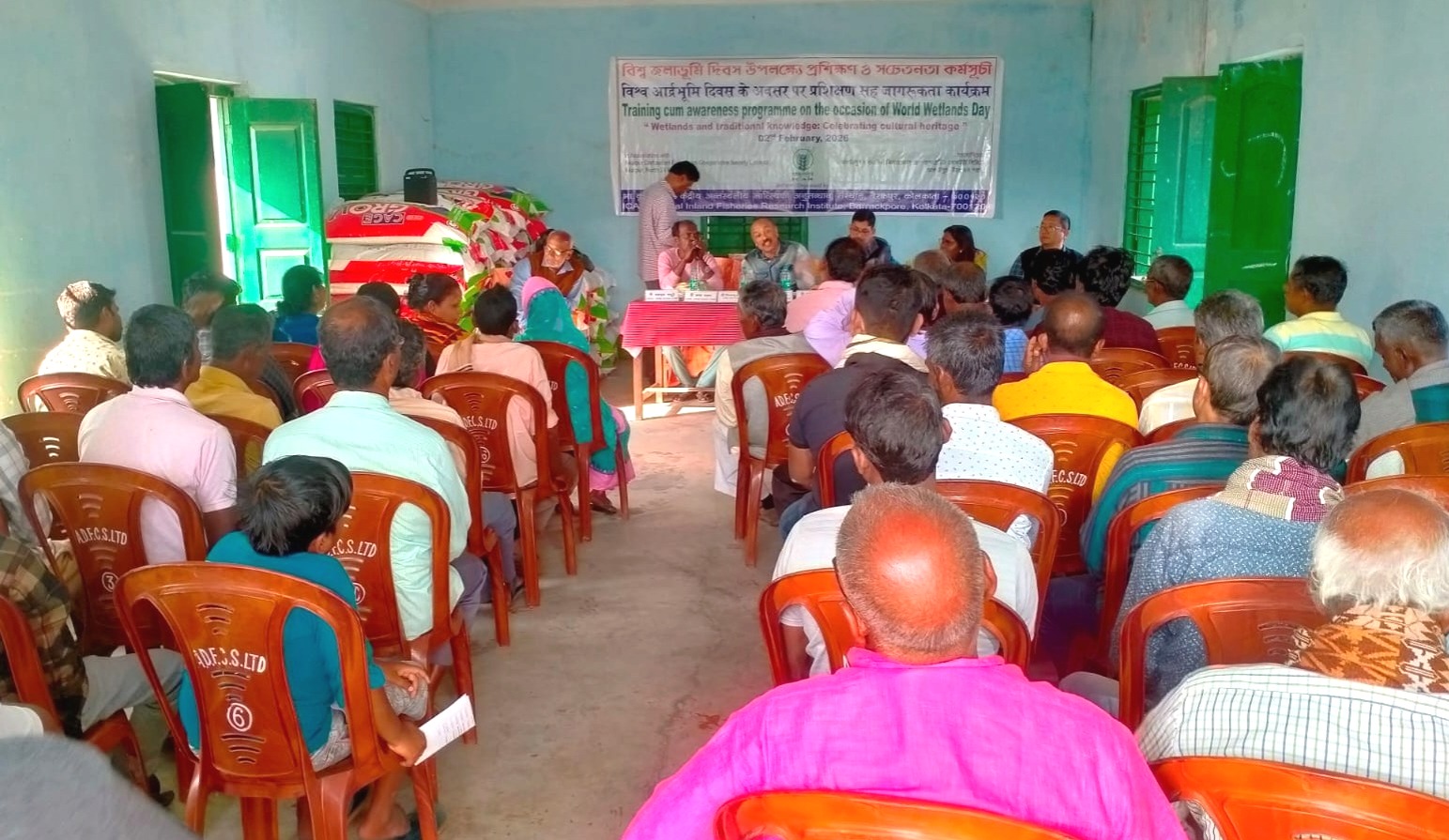
ICAR-CIFRI Observes World Wetlands Day, Reaffirms Commitment to Conservation and Community Livelihoods

Barrackpore, West Bengal; February 2026: The ICAR–Central Inland Fisheries Research Institute (ICAR-CIFRI) observed World Wetlands Day today 02nd February 2026 at Akaipur, North 24 Parganas, West Bengal, reaffirming its commitment to the global theme “Wetlands and Traditional Knowledge: Celebrating Cultural Heritage”. The programme highlighted the intrinsic link between wetlands, biodiversity conservation and the traditional knowledge systems of local communities.
Addressing the gathering, Dr. Asit Kumar Bera, Scientist, ICAR-CIFRI, emphasised the integration of advanced technologies such as drone-based mapping, fish health management tools and pollution monitoring systems for scientific wetland management. He noted that these innovations complement CIFRI’s ongoing research on wetland ecology and biodiversity, enabling the formulation of sustainable and climate-resilient management strategies.
Dr. Ranjan Kumar Manna, Scientist, ICAR-CIFRI, underscored the critical ecological functions of wetlands and called for collective action to address key challenges affecting Akaipur beel, including declining water depth due to siltation from decomposed floating macrophyte mats and reduction in wetland area caused by encroachment. He stressed the need to ensure adequate wastewater inflow during pre-monsoon periods to maintain hydrological balance and preserve wetland services that mitigate extreme climatic events.
Scientists highlighted the importance of wetlands as breeding and nursery grounds for fish, providing shelter and abundant food resources essential for early life stages. Conservation of wetland biodiversity, they emphasised, is fundamental for sustaining fish populations and ensuring long-term fisheries productivity.
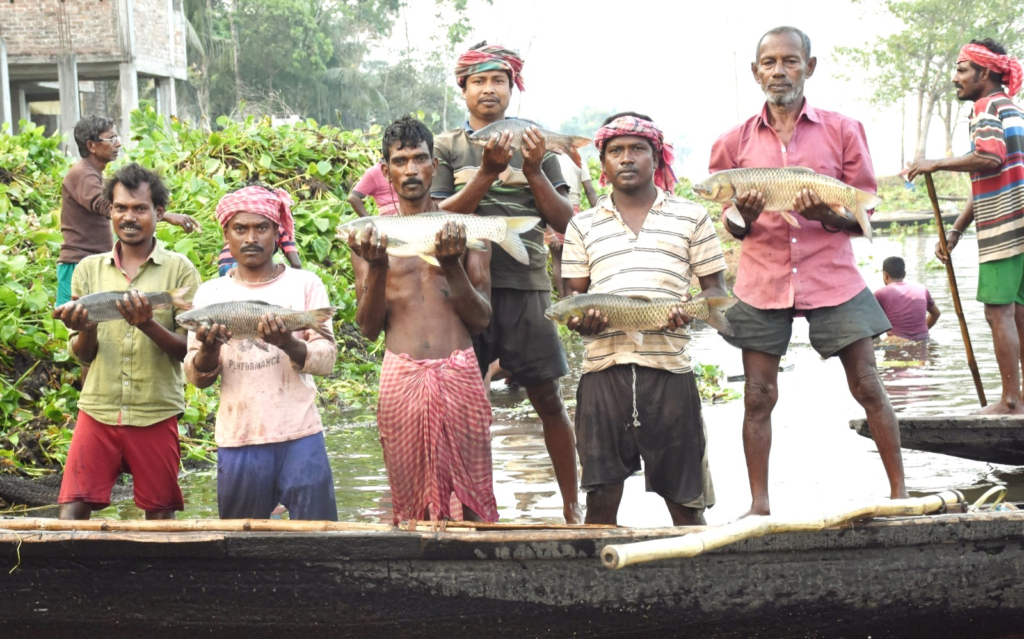
As part of its inclusive development initiatives, ICAR-CIFRI has adopted clusters of beels in North 24 Parganas, Nadia and Murshidabad districts under the Scheduled Caste Sub Plan. Through culture-based fisheries, the programme supports economically vulnerable beel fishers while aligning with the Sustainable Development Goals. Pen culture was introduced without compromising wetland biodiversity, with inputs such as HDPE pens, fish seed, feed and coracles provided to fisher cooperatives. Species including Indian Major Carps, Sarputi and Grass Carp recorded growth rates of 35–40 grams within four months before release into the wetlands.
Team CIFRI, in collaboration with the Akaipur Darbashini Fishermen Cooperative Society, highlighted the role of trophic interactions, river connectivity and aquatic macrophytes in sustaining wetland ecosystem services. Fishers were encouraged to actively participate in conservation and restoration efforts to address siltation and encroachment for sustainable fish production.
The Scientist–Farmers Interaction Meet witnessed participation from over 100 fishers, reinforcing the message that scientific innovation, traditional knowledge and community engagement together are key to sustainable wetland conservation. The ongoing ICAR-CIFRI-led East Kolkata Wetlands project, funded by the East Kolkata Wetlands Management Authority, continues to promote ecological and socio-economic sustainability for nearly 200,000 beneficiaries while conserving this Ramsar Site of global importance.
Team Maverick.


Trump Vows Continued Military Pressure on Iran, Expresses Doubts Over Diplomacy
Washington, Aug 2026: US President Donald Trump has vowed to maintain military pressure on…

Trump Vows Continued Military Pressure on Iran, Expresses Doubts Over Diplomacy
Washington, Aug 2026: US President Donald Trump has vowed to maintain military pressure on …