Shiv Sena (UBT) Questions Mandatory Voting Debate, Flags Deeper Crisis in India’s Electoral System

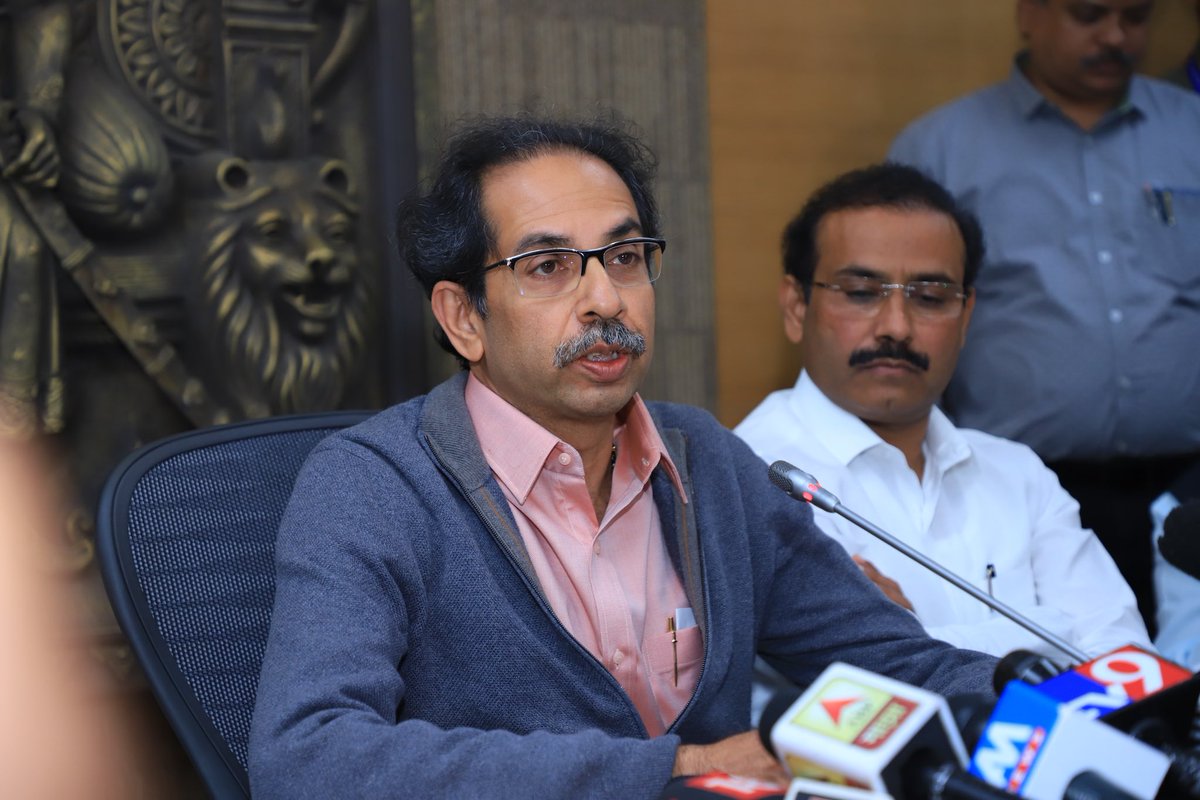
Mumbai, Feb 2026 : The Shiv Sena (Uddhav Balasaheb Thackeray) has reacted sharply to recent observations by the Supreme Court of India on the idea of mandatory voting, arguing that such a measure would do little to strengthen democracy unless the country’s electoral system itself is fundamentally reformed. While acknowledging the judiciary’s intent to boost democratic participation, the party maintained that compulsory voting would be ineffective in what it described as a system “trapped in the jaws of a dictatorial and corrupt regime.”
The response came through an editorial published on Friday in the party’s mouthpiece, Saamana, following remarks by Chief Justice Surya Kant and Justice Bagchi. The judges had suggested that mandatory voting could be explored as a way to address declining participation, particularly among educated and affluent voters in urban areas, a trend they said contrasts sharply with consistently higher turnout in rural regions.
The editorial agreed that the court’s identification of a “voting paradox” was realistic, noting that despite decades of voter awareness drives and electoral reform initiatives, the turnout gap between urban and rural constituencies has remained largely unchanged. However, it posed a fundamental question: would making voting compulsory automatically strengthen democracy?
According to the Thackeray-led Sena, the answer lies not in compulsion but in restoring trust in the electoral process. The editorial claimed that the credibility of the Election Commission of India has eroded over time due to alleged discrepancies in voter lists, manipulation of turnout figures, instances of vote theft, and controversies surrounding Electronic Voting Machines (EVMs). “The transparency of elections has been lost, and the very breath of democracy is being stifled,” it said, arguing that such systemic issues undermine the spirit of free and fair elections.
While describing the Supreme Court’s suggestion as “not wrong in principle,” the editorial asked whether democracy could truly be empowered when elections “from Delhi to the smallest lanes” are perceived to be under the grip of an authoritarian and corrupt system. It went on to call for what it termed a complete cleansing of the electoral process, including a return to ballot papers in place of EVMs. Addressing the judiciary directly, the editorial posed a pointed question: “My Lord, will this happen?”
The piece further reflected on India’s electoral history since Independence, noting that debates around urban-rural voting patterns and stagnant turnout percentages have persisted across decades. Despite numerous reforms, it said, the basic picture has not changed significantly. In that context, the editorial conceded that linking the constitutional right to vote with efforts to strengthen democracy is not inherently flawed, and that the idea of mandatory voting can be seen as well-intentioned. However, it stressed that such a step would remain symbolic unless deeper structural concerns are addressed.
The Thackeray camp also launched a broader political attack, accusing the ruling Bharatiya Janata Party of using “Sama, Dama, Danda, Bheda”—persuasion, inducement, coercion and division—to consolidate power. It alleged that dissenting voices are routinely branded as traitors and that there is a systematic effort to weaken or eliminate opposition parties.
“Today, neither democracy nor its four pillars remain intact,” the editorial asserted, lamenting that challenges raised against these issues often end up in prolonged legal battles marked by “Tariqh pe Tariqh” or endless court adjournments, without meaningful resolution.
In conclusion, the Sena argued that mandatory voting represents a form of “dreamy idealism” that cannot succeed unless decisive action is taken against what it described as a compromised system. Until institutions regain independence and public confidence, the editorial said, compulsion at the ballot box would fail to revive the democratic spirit the Supreme Court seeks to protect.



Punjab Kings Crush Mumbai Indians by 7 Wickets; De Kock’s Ton Goes in Vain
Wankhede Stadium, April 2026 : Punjab Kings continued their dominant run in the Indian Pre…

Punjab Kings Crush Mumbai Indians by 7 Wickets; De Kock’s Ton Goes in Vain
Wankhede Stadium, April 2026 : Punjab Kings continued their dominant run in the Indian …