Union Minister Dr. Mansukh Mandaviya Inaugurates Fifth Regional Conference on Labour Codes in New Delhi

Centre and States Must Work as Equal Partners for Effective Implementation of Labour Codes: Dr. Mandaviya
India’s Labour Reforms Received Global Recognition from ILO, ISSA and Leading International Publications, says Dr. Mandaviya
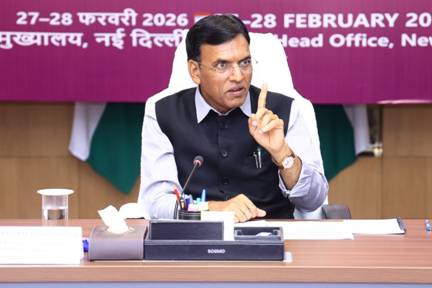
The Ministry of Labour & Employment commenced the fifth Two-day Regional Conference with States/UTs on Labour Codes and other aspects at the Employees’ Provident Fund Organisation (EPFO) Headquarters in New Delhi today. Dr. Mansukh Mandaviya, Union Minister for Labour & Employment and Youth Affairs & Sports, inaugurated the conference and delivered the keynote address at the event.
Ms. Vandana Gurnani, Secretary, Ministry of Labour & Employment, Senior Officers of the Ministry, representatives of the participating States/UTs including Assam, Arunachal Pradesh, Meghalaya, Manipur, Mizoram, Tripura, Sikkim, Nagaland, Uttarakhand and Delhi, along with senior officials of EPFO, Employees’ State Insurance Corporation (ESIC), VV Giri National Labour Institute (VVGNLI) were also present on the occasion.
Union Minister, Dr. Mansukh Mandaviya in his inaugural address, emphasised that in India’s federal framework, the Centre and States are equal partners and must work together in advancing labour reforms. He stated that a need had long been felt for comprehensive reforms in the country’s labour landscape to align it with the aspirations of a rapidly transforming economy. The four Labour Codes were enacted in 2019 and 2020 with the objective of aligning India’s labour ecosystem with international best practices, global benchmarks and the guidelines of organisations such as the International Labour Organisation (ILO), he said. The Minister noted that following the Codes being brought into effect on 21st November 2025, they have been welcomed by both workers and industry alike. He further added that India’s reform efforts have received recognition from key international organisations such as the ILO and International Social Security Association (ISSA), and have also been lauded by leading global publications including The Economist and The Financial Times, which acknowledged the Codes’ provisions for strengthening security for workers and building a modern workforce with safer, more permanent employment.
Highlighting the significance of the Regional Conference as a platform for synergy between the Centre and States/UTs, the Minister said it enables convergence of views and sharing of best practices for effective implementation of the Codes. He urged States to seek handholding support from the Centre wherever required, particularly in building robust IT infrastructure, and called upon them to provide inputs for strengthening the e-Shram portal to optimise delivery of benefits to unorganised workers across the country. He further underlined the importance of Pradhan Mantri Viksit Bharat Yojana (PMVBY) as an initiative to empower both small enterprises as well as employees, and encouraged the Central Labour Commissioners structure and state labour department to work closely for coordinated implementation.
Dr. Mandaviya also highlighted the tremendous potential of the North-Eastern States in driving industrial growth, expanding manufacturing and encouraging employment generation, in line with Prime Minister Narendra Modi’s vision of “Act East”. Expressing confidence that the two-day deliberations would further strengthen Centre–State collaboration, he conveyed his best wishes for the success of the Conference and reiterated the Government’s commitment to inclusive growth, enhanced worker welfare and ease of doing business.
In her remarks, Ms. Vandana Gurnani, Secretary, Ministry of Labour & Employment, welcomed the ten participating States and Union Territories, and gave a comprehensive overview of the framework and key objectives of the two-day Conference. Describing 21st November as a historic milestone in the journey of labour reforms, she noted that deliberations in the five previous Regional Conferences had been extremely productive. Emphasising that the Labour Codes aim to strike a balanced approach between strengthening workers’ welfare and reducing the cost of compliance for businesses, she highlighted key provisions of the Codes such as universalisation of minimum wages and of social security, mandatory issuance of appointment letters, and annual health check-ups for workers. In alignment with the changing world of work and contemporary realities, the Codes bring about greater flexibility and predictability for industries, she added.
The Secretary urged the participating States to actively evaluate and finalise the Rules under the four Labour Codes. She informed that a comprehensive Compliance Handbook has been compiled and released to provide clarity on compliance requirements and related provisions in simple language for better understanding by industries, alongside an exhaustive list of FAQs for the reference of all stakeholders. Stressing the importance of technology for effective implementation of the Codes, she highlighted that a robust IT system is being put in place at the Central level and will be offered to the States to facilitate seamless and transparent governance for workers and industries.
Ms. Gurnani called upon the States and UTs to participate in the discussions in a spirit of mutual learning, concluding her address with an emphasis that the Government emerge as a model employer, particularly with regard to contract workers under its domain.
The inaugural session was followed by detailed presentations by senior officers of the Ministry and the States/UTs outlining the progress made in finalizing Rules under the Labour Codes as well as the status of IT preparedness. The conference served as an important platform for deliberating on Rules and Regulations, identifying gaps and areas of divergence, expediting statutory notifications, and discussing the establishment of Boards, Funds, and other institutional mechanisms envisaged under the Codes. It also provided an opportunity for consultations on schemes proposed under the four Labour Codes, alongside focused discussions on digital platforms necessary to ensure their effective execution. Further, the conference emphasized the need for capacity building of field-level functionaries and enhancing awareness among States/UTs and other stakeholders regarding the objectives, structure, and implementation roadmap of the Labour Codes.




Shivakumar Says Congress United, Assures Women Will Get Cabinet Berth
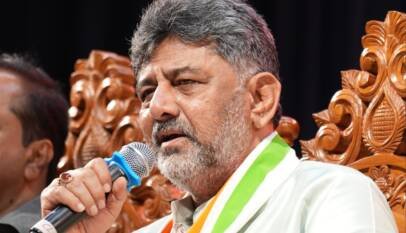
Bengaluru, Aug 2026 : Karnataka Chief Minister D.K. Shivakumar on Monday sought to dismiss…
Shivakumar Says Congress United, Assures Women Will Get Cabinet Berth
Bengaluru, Aug 2026 : Karnataka Chief Minister D.K. Shivakumar on Monday sought to dismiss …