Trump Urges Allies to Share Burden as US Intensifies Strikes on Iran, Secures Strait of Hormuz

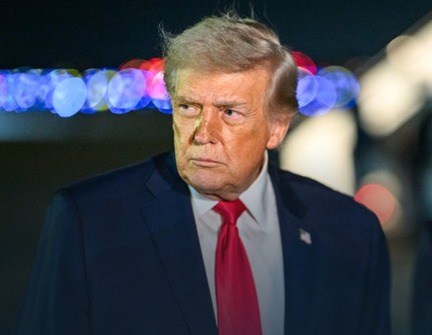
Washington, March 2026: Donald Trump on Monday sharply criticised several US allies for hesitating to support Washington’s efforts to secure the strategically vital Strait of Hormuz, even as he claimed that American forces had dealt a severe blow to Iran’s military capabilities through an ongoing campaign.
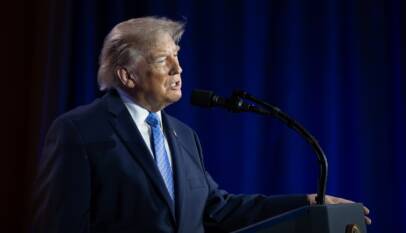
Speaking at the White House before a meeting with board members of the Trump Kennedy Centre, Trump said the United States had taken the lead in countering threats posed by Iran in the region, but insisted that nations more dependent on the waterway must contribute more actively.
“We strongly encourage other nations whose economies depend on the strait far more than ours,” Trump said, noting that the United States imports “less than one per cent” of its oil through the passage. He contrasted this with major Asian economies, stating that Japan relies on the strait for about 95 per cent of its oil, China for 90 per cent, and South Korea for around 35 per cent.
The President emphasised that despite limited dependence on the route, the US had borne the brunt of military operations aimed at ensuring freedom of navigation. “We don’t need oil, we have all the oil we need for ourselves,” he said, reinforcing his argument that other nations should step up their involvement.
US Claims Major Military Success Against Iran
Trump asserted that the US military campaign against Iran had intensified in recent days and significantly degraded Tehran’s capabilities. “Our powerful military campaign to end the threats posed by the Iranian regime continued in full force,” he said.
According to Trump, American forces have struck more than 7,000 targets across Iran since the conflict began, focusing on both military and strategic infrastructure. He claimed the operation had “literally obliterated” key components of Iran’s armed forces, including its air and naval power.
“They have been literally obliterated… the Air Force is gone, the Navy is gone,” he said, adding that “many, many ships have been sunk.”
Trump further stated that over 100 Iranian naval vessels had been destroyed in just over a week, including more than 30 ships capable of laying naval mines—assets considered crucial for disrupting global shipping.
“We’re hammering their capacity to threaten commercial shipping in the Strait of Hormuz,” he said.
He also claimed that the strikes had targeted missile and drone production facilities, resulting in a sharp decline in Iran’s offensive capabilities. “We’ve achieved a 90 per cent reduction in ballistic missile launches and a 95 per cent reduction in drone attacks,” Trump said.
Frustration With Allies
Despite the scale of US operations, Trump expressed frustration over what he described as reluctance among allies to contribute resources such as minesweepers or naval support.
“We have some countries where we have 45,000 soldiers protecting them from harm’s way,” he said. “And when we ask, do you have any minesweepers? The answer is, ‘We’d rather not get involved, sir.’”
The remarks echoed Trump’s long-standing criticism that the United States disproportionately shoulders global security responsibilities while allies benefit without contributing equally.
“I want people to remember that when I criticise protecting other countries,” he said, taking aim at what he described as “free-riding” by partner nations.
While he noted that “numerous countries” had expressed willingness to join efforts to secure the strait, Trump declined to identify them, saying only that some were “very enthusiastic.”
Mixed Responses From Key Allies
Trump offered a mixed assessment of responses from major allies. He said he had spoken with Emmanuel Macron and rated France’s willingness to assist as “an eight out of ten.”
However, he voiced disappointment with the United Kingdom, saying its response to earlier US requests for military support had been delayed.
“I was not happy with the UK,” Trump said, recalling that he had sought deployment of aircraft carriers but received support only after the most intense phase of the conflict had passed. “I need it before the war, not after,” he added.
White House Defends Campaign
Earlier, Karoline Leavitt defended the US military campaign, stating that it was benefiting not only the United States but also its allies across the globe.
“These other countries are benefiting greatly from the United States military taking out the threat of Iran,” she said, describing Iran as a long-standing security concern for Gulf nations, Arab partners, and Western allies.
Leavitt added that Iran’s missile programme had posed a direct and immediate threat to European allies as well as US military bases in the region, arguing that ongoing operations were critical to neutralising those risks.
Strategic Importance of the Strait
The Strait of Hormuz remains one of the world’s most critical energy chokepoints, carrying nearly a fifth of global oil shipments. Any disruption to traffic through the narrow waterway can have immediate and far-reaching impacts on global energy markets and international trade.
Tensions around the strait have historically escalated during conflicts involving Iran, often triggering spikes in oil prices and raising concerns about economic stability worldwide.
As the conflict continues, Trump’s remarks highlight a growing divide between the United States and some of its allies over burden-sharing in securing global trade routes. While Washington presses ahead with its military campaign, the question of broader international participation in safeguarding the Strait of Hormuz remains unresolved.
(The content of this article is sourced from a news agency and has not been edited by the Mavericknews30 team.)


End of an Era: Cristiano Ronaldo Bids Farewell to the FIFA World Cup After a Record-Breaking International Career
Dallas, July 2026 : One of football’s greatest chapters came to a close on Tuesday a…

End of an Era: Cristiano Ronaldo Bids Farewell to the FIFA World Cup After a Record-Breaking International Career
Dallas, July 2026 : One of football’s greatest chapters came to a close on …