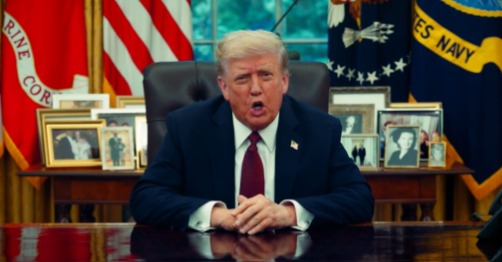
Trump Signals Possible Breakthrough in Iran Conflict Amid Conflicting Claims from Tehran

New York, March 2026 : US President Donald Trump on Monday expressed optimism about a potential breakthrough in the ongoing Iran conflict, claiming that significant progress had been made toward a settlement. However, his remarks were met with sharp denial from Iranian officials, highlighting a widening gap between Washington’s assertions and Tehran’s stance.
Speaking to reporters, Trump said that negotiations had reached an advanced stage, with “major points of agreement” already in place. He suggested that nearly all key issues—particularly those related to curbing Iran’s nuclear ambitions—had been addressed. According to him, at least 15 points were under discussion, including three central aspects focused on ensuring that Iran does not develop nuclear weapons.
The President’s comments had an immediate impact on global markets. Oil prices saw a decline, while stock markets responded positively, reflecting investor optimism over a possible de-escalation in tensions that have disrupted global energy supplies.
At the heart of the conflict lies the Strait of Hormuz, a narrow yet crucial maritime route through which nearly 20 percent of the world’s fossil fuel supply passes. Trump indicated that reopening the strait to full navigation could be imminent, adding that it might be jointly overseen by the United States and Iran’s leadership. He stressed that ensuring free passage through the strait has been a central demand of the US.
Trump also revealed that his special envoy Steve Witkoff and his son-in-law Jared Kushner had held discussions with Iranian representatives over the weekend and were expected to continue talks. However, he did not disclose the identity of the Iranian negotiators, only referring to them as influential figures within the country’s leadership.
Despite these claims, Iran firmly denied that any direct negotiations had taken place. Parliament Speaker Mohammad Bagher Ghalibaf dismissed the reports as “fake news” intended to manipulate global oil and financial markets. He accused the United States and its allies of spreading misinformation to divert attention from what he described as a difficult situation they are facing in the conflict.
Similarly, Iranian Foreign Ministry spokesperson Esmail Baghaei stated that Tehran had not initiated or requested talks with Washington. However, he acknowledged that indirect messages had been exchanged through “friendly countries,” suggesting the possibility of backchannel diplomacy.
One such intermediary could be Oman, which has historically played a mediating role in regional conflicts. Oman’s Foreign Minister Badr Albusaidi indicated that his country was actively working to ensure safe navigation through the Strait of Hormuz. In a conciliatory tone, he emphasized that the conflict was not initiated by Iran and warned that its continuation could worsen global economic instability.
Trump’s statements have also raised questions due to apparent contradictions with his earlier positions. Just last week, he had ruled out the possibility of a ceasefire, asserting that Iran had already been effectively subdued and that there were no credible leaders to negotiate with. Yet, in a post on his social media platform Truth Social, he described recent interactions with Iran as “very good and productive,” claiming that discussions over the past two days had been constructive and aimed at a comprehensive resolution.
In a notable shift, Trump announced that he would delay a previously threatened attack on Iran’s power infrastructure by five days. The strike had been contingent on Iran allowing unrestricted passage through the Strait of Hormuz. He attributed the postponement to the “positive tone” of ongoing discussions, signaling a willingness to pursue diplomacy over immediate military action.
However, the broader context suggests mounting pressure on the US administration. What was initially projected by Trump as a swift and decisive military campaign has evolved into a prolonged and complex conflict. Iranian retaliatory actions against US allies in the Gulf have heightened regional instability, while the partial closure of the Strait of Hormuz has triggered a global energy crisis.
These developments come at a politically sensitive time for Trump, as the US approaches mid-term elections that will determine control of Congress. Rising fuel prices, along with their ripple effects on the cost of essential goods, have become a significant concern for voters. This economic strain has increased pressure on the administration to find a resolution and prevent further escalation.
Trump’s recent remarks suggest a possible shift toward seeking an “off-ramp” from the conflict. While he continues to project confidence in achieving a deal, the absence of confirmed negotiations and Iran’s categorical denials underscore the uncertainty surrounding the situation.
As diplomatic signals and public statements continue to diverge, the path to resolving the conflict remains unclear. The coming days will be crucial in determining whether backchannel efforts can translate into formal negotiations and whether the fragile hopes of de-escalation can be sustained in a highly volatile geopolitical landscape.
(The content of this article is sourced from a news agency and has not been edited by the Mavericknews30 team.)






Prime Minister Modi Gives Maharashtra’s Development a New Direction: Chief Minister Devendra Fadnavis
Maharashtra Congratulates PM on Historic Longest Continuous Service New Delhi, June 2026: …
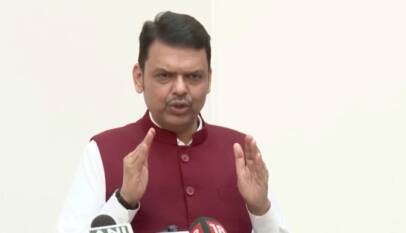
Prime Minister Modi Gives Maharashtra’s Development a New Direction: Chief Minister Devendra Fadnavis
Maharashtra Congratulates PM on Historic Longest Continuous Service New Delhi, June 2026: Maharashtra Chief …