Functioning and Security of Voting Machines (EVM)

Special Article – Assembly Elections 2024
The Election Commission takes all necessary precautions to ensure a transparent voting process. Key to this is the functioning and monitoring of the voting machines that register votes. Special emphasis is placed on the security of Electronic Voting Machines (EVMs). For the assembly elections, a total of 1,37,118 Voter Verified Paper Audit Trails (VVPATs) will be used.
In the Maharashtra Assembly constituency elections, EVMs and VVPATs will be deployed. This will include 2,26,624 Ballot Units (BUs), 1,26,911 Control Units (CUs), and 1,37,118 VVPAT systems across the state. The first level of checking for all these machines has been completed, with representatives from all political parties informed and invited to attend the inspection. To raise awareness and instill confidence in voters regarding the voting machines, the Election Commission has organized a large-scale public awareness program, which ran from September 10 to October 9, 2024. This initiative informed people about how to use the voting machines safely through mobile vans traveling across all districts. The program was successful, with significant public participation.
Creation and Design of EVMs
Electronic Voting Machines (EVMs) and VVPATs are manufactured by Bharat Electronics Limited (a public undertaking under the Ministry of Defence) and Electronics Corporation of India Limited (a public undertaking under the Department of Defence).
An EVM consists of two units: the Control Unit (CU) and the Ballot Unit (BU). Each ballot unit can accommodate up to sixteen candidates. To assist visually impaired voters, the numbers 1 to 16 are engraved in Braille next to the vote buttons on the right side of the ballot units.
Voter Verifiable Paper Audit Trail (VVPAT)
The Voter Verifiable Paper Audit Trail is a system that is attached to but independent of electronic voting machines. It enables voters to verify that their votes have been recorded accurately as they cast them.
Randomization Process of EVMs
All EVMs used in elections undergo a two-step processing procedure. The Electronic Voting Machine Management System (EMS), developed by the Election Commission of India, is employed to randomize EVMs and VVPATs. The first round of this process is conducted in the presence of representatives from recognized national and state political parties. This process ensures the allocation of EVMs and VVPATs by constituency or ward area. The initial round of this randomization process for the assembly elections has been completed in all districts of the state.
First, a randomized list of Electronic Voting Machines (EVMs) and Voter Verified Paper Audit Trails (VVPATs) is provided to nationally and state-recognized political parties, organized by assembly constituency and assembly ward. Once the list of contesting candidates is finalized, a second list of randomized EVMs and VVPATs, again organized by assembly constituency and assembly ward, is given to the contesting candidates. Before the introduction of the EVMs and VVPATs, a second randomization is performed in the presence of the contesting candidates to allocate and reserve machines for polling stations. A second randomized list of EVMs and VVPATs is then provided to the contesting candidates.
Commissioning of Electronic Voting Machines and VVPATs
EVMs and VVPATs used during polling are operated by district staff in the presence of contesting candidates. On the implementation day, the electronic voting machines and the secure room for the VVPATs are opened under video recording in the presence of the candidates or their representatives. Each VVPAT will contain symbols loaded through a Symbol Loading Unit (SLU). The symbols displayed on the VVPAT and the monitor will be visible simultaneously to the candidates and their representatives. Each EVM and VVPAT used for voting is checked by casting one vote for all candidates, accompanied by a note. Additionally, five percent of randomly selected EVMs and VVPATs are polled at a high volume, tallying the electronic results with the VVPAT ballots. Candidates and their representatives are permitted to randomly select five percent of the EVMs and VVPATs for absentee ballot voting. They are also allowed to sign the seals used to secure the EVMs and VVPATs. After activating the EVM and VVPAT, these machines are stored in a secure room using a double lock in the presence of the representatives.
On the day of allotting EVMs and VVPATs to the polling teams, the secure room is opened under video projection in the presence of the candidates and their representatives, and the machines are distributed accordingly.
Operation of EVMs on Polling Day
On polling day, 90 minutes before the actual polling time, a minimum of 50 votes will be cast at each polling station in the presence of polling agents appointed by the contesting candidates, ensuring that at least one vote is cast for each candidate. It will be verified that the electronic result of this preliminary voting matches the number of VVPAT ballots.
All records from preliminary polls in the control unit will be destroyed, and the VVPAT ballots from these polls will be kept in a black envelope and sealed with a pink paper seal. The Presiding Officer of the Polling Station will prepare a Voting Certificate to this effect. Before actual polling begins, the control unit will be sealed with a green paper stamp, a special stamp, and an instruction stamp. The VVPAT drop box (polling booth) will also be sealed with an address stamp. After polling concludes, the Polling Station Presiding Officer will press the “CLOSE” button on the control unit to end the polling. The EVMs and VVPATs will be stored in transport boxes and sealed with the instruction mark. Polling agents will be allowed to sign the seals used to secure the EVMs and VVPATs both before and after polling.
Polling agents appointed by the contesting candidates are permitted to remain in the polling booth to monitor the voting process. A copy of Form ’17C’, which contains details of voter information, EVM and VVPAT usage, along with the recorded votes in the EVM, will be provided to the polling agents.
Transport of Registered Vote EVMs and VVPATs from Polling Station to Collection Centre
After polling, the EVMs and VVPATs will be transported from the polling station to the collection center under security arrangements. Candidates and polling agents are allowed to follow the vehicles carrying these machines.
Storage of EVMs and VVPATs After Polling
The voted EVMs and VVPATs are stored in a secure room in the presence of candidates or their representatives. Candidates and their representatives are also allowed to affix their stamps on the locks of the secure room. A strict security system is implemented in this area, with at least one armed security officer from the Central Armed Police Force deployed at the location where the voting EVMs are stored. Additionally, provisions are made for CCTV surveillance. The secure room is equipped with double-layer security, with state armed police stationed inside. No unauthorized personnel are allowed to guard the secure room. If the entrance of the secure room is not visible, arrangements are made for unregistered polling stations, and no used reserve EVMs and VVPATs are kept separately in security.
Counting Day
The secure room containing the voter-registered machines is opened on the day of counting votes in the presence of candidates, their representatives, Election Officers, and Election Commission Inspectors, all under video surveillance. Votes are counted in the presence of the candidates and the counting agents appointed by them. In this manner, the security and functioning of the voting machines are closely monitored throughout the process.





Museums will be named after India’s National Heroes, not invaders: Chief Minister
Grand museum named after Chhatrapati Shivaji Maharaj being constructed at a rapid pace: CM…
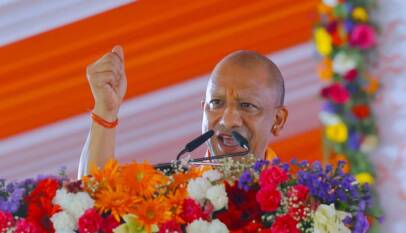
Museums will be named after India’s National Heroes, not invaders: Chief Minister
Grand museum named after Chhatrapati Shivaji Maharaj being constructed at a rapid pace: CM …