United States Tariffs leaves mixed repercussions within the country.

Asserting that a situation of confusion persists in the world after the recent imposition of reciprocal tariffs by the US, National Stock Exchange’s Managing Director and Chief Executive Officer Mr. Ashish Kumar Chauhan on Sunday said India is doing much better than other countries. He said that a clear situation is expected to emerge within the next one or two weeks as there will be negotiations and the duty structure will be stabilised.
Briefing the Press, after paying obeisance at the revered Mata Vaishno Devi Shrine atop Trikuta hills on the occasion of Ram Navami, the National Stock Exchange (NSE) chief said it seems that the Indian share market is doing much better than other countries post the US decision on reciprocal tariff.
“You must have seen the market for the last 2-3 days. America has made a decision on tax, which is applicable to every country in the world. They have also imposed new import duties for India, which is doing better than other countries”, he said.
Chauhan, who met Lieutenant Governor Mr. Manoj Sinha on reaching Jammu Saturday evening, said a clear picture about the future strategy of America and the world will be clear in the next week.
“It seems that India’s position is a bit heavy compared to other countries. A situation of confusion persists as of now. Many feel that some companies may face more losses. But overall, there will be negotiations and the duty structure will be stabilised. The situation should be clear in the next one or two weeks”, he said.
Both the stock market indices Sensex and Nifty declined over 2.5% last week, dragged primarily by weak global cues and renewed concerns over a trade war after the US tariffs.
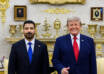
In the meantime, a scathing attack on the government over the imposition of tariffs by the United States, Congress general secretary Sachin Pilot on Sunday said that Prime Minister Narendra Modi should have worked out a constructive solution during his last America visit rather than just indulging in “photo ops” and exchanging gifts. He said that at a time the world is responding to the imposition of reciprocal tariffs by the US, the Indian government is merely buying time and leaving everything to fate. In an interview, the former minister for Corporate Affairs said the Indian government is accepting what has been given out and has not even offered a response.
“I would imagine, when the PM was in Washington in February, and had met the president of the US, instead of just photo shoots and exchanging gifts, something more constructive should have come out of it. If our relations are as strong as the two leaders claim, then we would not have been slapped with these steep tariffs. Clearly our exports will be severely hit, manufacturing was in any way on a downside, MSMEs are in for a shock…The economy will face severe stress due to resulting layoffs and job losses but unfortunately we have not had an adequate response or even an indication of how to navigate this situation“.
The government was caught napping and it seems under US pressure to sacrifice Indian interests, he alleged. Mr. Sachin Pilot have pointed out that many European countries have responded strongly and in fact, China will legally take action against the US in the WTO. While European countries have spoken of similar tariffs, Canada and Mexico have also indicated reciprocal imposition of higher counter tariffs but “we have not responded yet”, Pilot said.
It is unclear what the government intends to do but one what is reminiscent is that these trade wars are going to pose a huge problem whether it is inflation, manufacturing, productivity, transfer of technology, and all these would be impacted but despite Parliament being in session, an adequate response or assurance from the Indian government on how it will protect Indian interests is still at large. And this silence is adding to the uncertainty, as reiterated by the Congress leader.
Calling for a proper strategy to deal with the issue, Pilot said if the tariff proposal was in the pipeline, the Indian government should have communicated and dealt with it in a much more strategic manner than it has. “We are just basically accepting what has been given out and while the whole world is reacting, we are yet to respond“, he said.
Noting that India is now a more interconnected economy in the world, he said the US move will have an impact on India especially at a time when there is “record unemployment” since Independence.
“Our national debt burden has increased exponentially and while our economy is growing the rich-poor divide is at historic levels. A large portion of our labour force is engaged in trade and export related manufacturing and millions of those jobs are facing uncertainty, and yet the government has not come out with any creative ideas on how to tackle the consequences of these tariff wars“, Pilot said.
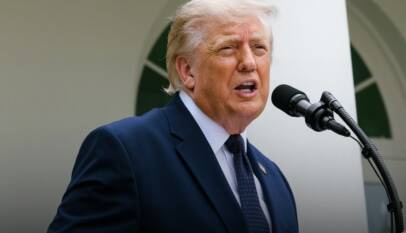
The US has announced 26% reciprocal tariffs on India, saying New Delhi imposes high import duties on American goods, as the Donald Trump administration aims to reduce the country’s trade deficit and boost manufacturing. The move is expected to impact India’s exports to the US. President Trump, in a measure to counter higher duties on American products imposed globally, announced reciprocal tariffs on about 60 countries.
Meanwhile, Seafood Exporters Association of India (SEAI) president Mr. G Pawan Kumar on Sunday said the reciprocal tariffs announced by US President Donald Trump will have a severe adverse impact on Indian seafood exports to the US market, whose value stood at USD 2.5 billion in 2023 – 2024. Out of the total seafood exports to the US, shrimps accounted for the lion’s share of 92% and India is the largest supplier of shrimps to the US, Kumar said. “This tariff will hurt all stakeholders in the value chain and cause all round distress,” Kumar told Press Correspondents.
The county will also falter in export performance in comparison to the South American nation Ecuador, which is levied only a 10% tariff, it is believed. Vietnam with a reciprocal tariff rate of 46% and Indonesia with 32% will concede a massive advantage to the South American country, he said.
According to Vizag-based Kumar, Ecuador is likely to replace India as the largest shrimp supplier to the US market. “It will be difficult for Indian seafood exporters to absorb this margin of 16% and compete with produce from Ecuador. The prevailing margins in this sector are 4-5% only“, he said. The higher tariffs come into effect from April 9 as 2,000 containers of seafood are currently in transit to the US market, he said. Mr. Kumar stressed that the tariff impact to be borne by exporters in India is estimated to be around Rs. 600 crores while an equal number of containers in cold storage are waiting for shipment. As export orders are on delivery at doorstep basis, the impact of tariff will have to be borne by exporters for goods in transit, said Kumar, adding that this will pose a huge additional burden on shippers.
Besides the reciprocal tariffs, Kumar said, there exists a 5.77% countervailing duty and 1.38%t anti-dumping duty levied by the US Department of Commerce on all shrimp imports.
Team Maverick


Deschamps Admits France Fell Short as Spain End World Cup Dream with 2-0 Semifinal Win
Arlington (Texas), July 2026 : France head coach Didier Deschamps admitted his side was ou…

Deschamps Admits France Fell Short as Spain End World Cup Dream with 2-0 Semifinal Win
Arlington (Texas), July 2026 : France head coach Didier Deschamps admitted his side was …