Govt Imposes Ban on Awami League Activities

In a major political development, the interim government has decided to impose a complete ban on all activities of the Awami League (AL), including its online presence, under the Anti-Terrorism Act. The ban will remain in effect until the International Crimes Tribunal completes the trial of the party and its top leadership.
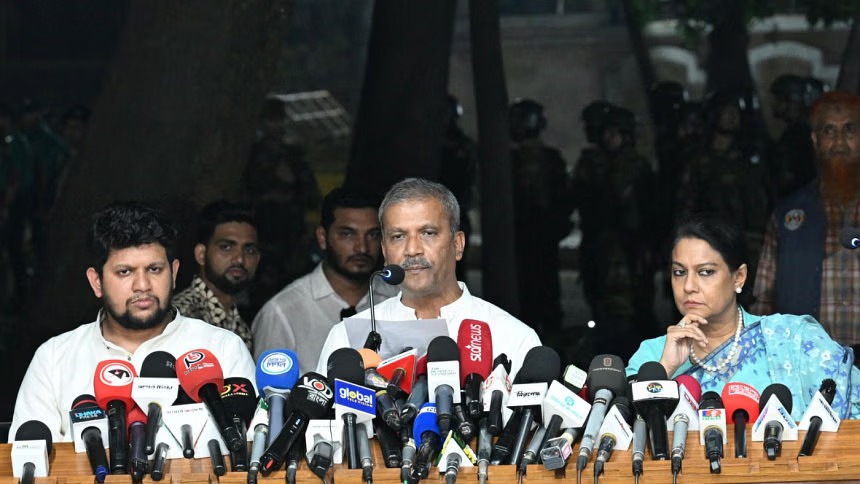
The announcement was made at a press briefing held last night by Law Adviser Asif Nazrul, following a special meeting of the council of advisers led by Chief Adviser Prof Muhammad Yunus. The decision comes in response to three days of mass protests demanding action against the Awami League for its alleged involvement in last year’s violent suppression of the July uprising.
As news of the government’s decision broke, protesters gathered at Shahbagh and outside the InterContinental Hotel erupted in celebration. These demonstrators, largely mobilized through social media and spearheaded by student and political groups, had been pressing the government to ban the party and begin trials for crimes committed during the unrest.
Nazrul stated that the ban was intended to “ensure national security, protect leaders and activists of the uprising, and safeguard plaintiffs and witnesses involved in the tribunal proceedings.” He added that a formal circular would be issued on the next working day.
Founded in 1949, the Awami League has long been one of the country’s most prominent political parties. However, its role in the crackdown on anti-discrimination protests last year has led to widespread criticism and demands for justice. The movement gained momentum after a United Nations Fact-Finding Mission revealed in a February report that between July 15 and August 5, 2024, over 1,400 people were killed in what it called “serious human rights violations and abuses.” These were allegedly committed by security forces and armed supporters of the Awami League in what the report described as a deliberate attempt to maintain power at all costs.
Former Prime Minister Sheikh Hasina, also the Awami League chief, fled to India on August 5. Many of the party’s top leaders have either gone into hiding or are currently in prison.
In a significant legal move, the council of advisers has also approved amendments to the International Crimes (Tribunals) Act, 1973. The updated law now allows for political parties, affiliated organizations, or support groups to be held accountable and punished for crimes under the tribunal’s jurisdiction. Information Adviser Mahfuj Alam confirmed via Facebook that this new provision was added to facilitate the trial of the Awami League as an organization.
The government also announced plans to publish the long-awaited July declaration within the next 30 working days. Law Adviser Nazrul, however, refrained from taking any questions during the press conference.
In late October, the government had already banned the AL’s student wing, Bangladesh Chhatra League, under the Anti-Terrorism Act 2009, following persistent demands from students protesting against institutional discrimination. The same month, the government reconstituted the International Crimes Tribunal, appointing a new chairman and two members to commence trials against individuals accused of crimes against humanity during the uprising.
To accelerate justice, a second International Crimes Tribunal was established on Thursday to handle the growing number of complaints and cases. At present, 22 cases are pending before the tribunal, and the ICT investigation agency has received 339 complaints related to the July atrocities.
Protests that ultimately led to the government’s decision had begun outside the chief adviser’s residence late Thursday night. Hasnat Abdullah, chief organiser (south) of the National Citizens’ Platform (NCP), had urged his followers via Facebook to gather and demand a formal ban on the Awami League. The protest later shifted to Shahbagh on Friday, where demonstrators blocked the main intersection and vowed to remain until their demands were fulfilled.
On Saturday, the protesters marched toward the InterContinental Hotel intersection, where the council of advisers was holding its meeting. They threatened to isolate Dhaka from the rest of the country if the government failed to act. Once the decision to ban the Awami League was announced, groups of jubilant protesters, including supporters of the NCP, Jamaat-e-Islami, and Islami Andolan Bangladesh, organized victory rallies across the city. They marched back to Shahbagh, chanting slogans against the Awami League.
While there was a festive mood among protesters, none of the movement’s leaders provided immediate comments on their next course of action. However, in a follow-up Facebook post, Hasnat Abdullah urged demonstrators not to leave the streets until leaders made a formal announcement regarding their future stance on the government’s decision.
NCP Convener Nahid Islam also took to Facebook to demand swift implementation of the advisory council’s decisions. “The fascist murderers across the country must be identified and brought to justice without delay. The Election Commission must revoke the registration of the banned Awami League,” he wrote.
The current government’s actions represent a dramatic shift in Bangladesh’s political landscape. Once seen as a dominant force in national politics, the Awami League now faces a complete political shutdown and a possible historical trial as an organization responsible for crimes against its own citizens. The coming weeks are likely to determine how far the interim government is willing to go in pursuing justice and maintaining order.

Pope Leo XIV Calls for Peace, Says Suffering of Innocents “Hurts All Humanity”
Vatican, March 2026 : Pope Leo XIV on Sunday expressed deep anguish over ongoing conflicts…
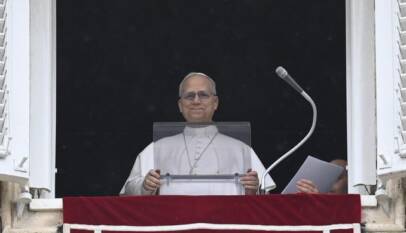
Pope Leo XIV Calls for Peace, Says Suffering of Innocents “Hurts All Humanity”
Vatican, March 2026 : Pope Leo XIV on Sunday expressed deep anguish over ongoing …