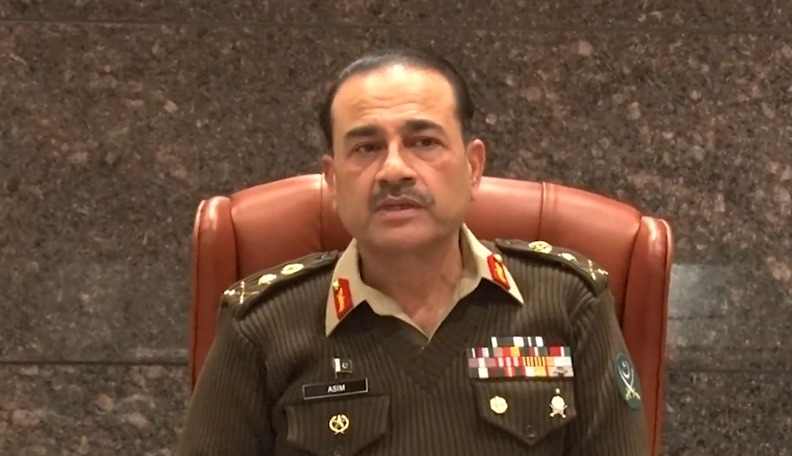
From Army Chief to Field Marshal: Munir’s Rise Deepens Pakistan’s Military Rule

The federal government in Islamabad, led by Prime Minister Shahbaz Sharif, recently conferred the rank of Field Marshal—the highest military title in the Pakistan Army—on General Asim Munir, the current Chief of Army Staff. Officially, this unprecedented honor was awarded in recognition of his “exemplary leadership” during the recent military confrontation with India. However, observers both inside and outside Pakistan view the promotion as a portent of deeper shifts in the country’s civil-military balance, where the armed forces have long exerted outsized influence over civilian governance. This event marks only the second time in Pakistan’s nearly eight-decade history that a general has been elevated to Field Marshal status, the first being General Ayub Khan in 1959, who subsequently ruled Pakistan as a military autocrat for more than a decade. The unspoken comparison between Munir and Ayub Khan offers a revealing glimpse into Pakistan’s evolving power dynamics and raises urgent questions about the future of democracy and state institutions in the country.
Historical Context: Ayub Khan and the Field Marshal Precedent
To appreciate the full weight of General Munir’s promotion, it is necessary to revisit the legacy of Ayub Khan. In October 1958, Ayub Khan led a military coup that ousted Pakistan’s civilian leadership and imposed martial law. By 1959, Pakistan’s President at the time, Iskander Mirza, bestowed upon Ayub the rank of Field Marshal—a rank that Ayub leveraged to consolidate power and legitimize his de facto rule. For the next decade, Ayub governed Pakistan as a military dictator, presiding over both significant economic growth and the brutal suppression of political dissent. His tenure exemplified how a Field Marshal in Pakistan could transcend purely military authority to steer the nation’s entire political ecosystem.
Although General Munir’s circumstances differ from Ayub Khan’s—most notably in that Munir has not staged a coup—the symbolism remains potent. Anyone familiar with Pakistan’s history will recognize that the elevation to Field Marshal often presages an enhanced role for the military in governance. This context underscores the seriousness of Munir’s promotion and explains why it has reverberated so strongly across media outlets and social circles within Pakistan.
The Trigger: Operation Sindoor and Military Confrontation
General Munir’s elevation coincided with heightened tensions between India and Pakistan following Operation Sindoor. On April 22, Lashkar-e-Toiba–affiliated militants—operating out of Pakistani territory—carried out a terror attack in Pahalgam, Jammu and Kashmir, killing 26 tourists. In response, the Indian Armed Forces launched Operation Sindoor on May 7, targeting terrorist infrastructure in Pakistan-administered Kashmir and within Pakistan itself. Over the subsequent two days, Indian forces conducted precision airstrikes against dozens of terrorist camps and expanded the operation to strike at least nine Pakistan Air Force (PAF) bases, as well as additional military assets, including air-defense installations in urban centers such as Lahore. Notably, PAF bases at Rafiqui and other locations incurred heavy damage, rendering them non-operational.
Islamabad’s official stance celebrated Munir’s leadership, framing the Pakistani response as strategic restraint rather than outright engagement. Despite suffering considerable material losses, the military publicly emphasized its readiness and deterrence capabilities. In such circumstances, bestowing the Field Marshal title on Munir served as a symbolic effort to portray Pakistan’s military as unified and unbowed. It aimed to shift public perception from vulnerability to resilience, rallying national sentiment behind both the General and the broader military establishment at a time when domestic morale was shaken by the economic crisis and political unrest.
Civil-Military Relations: Deepening Military Supremacy
Pakistan’s military has long held a hybrid role, straddling defense responsibilities and political influence. Since the country’s inception in 1947, the army has directly governed for nearly half of Pakistan’s existence. Even in ostensibly civilian-led governments, the military has frequently served as the ultimate arbiter of power, exercising influence behind the scenes. General Munir’s promotion thus reinforces this pattern: in Pakistan, the rank of Field Marshal is never a mere honorary accolade, but rather a signal of entrenched military primacy.
Over the past decade, civilian institutions have grown increasingly subservient to military oversight. The Inter-Services Intelligence (ISI), army generals, and Inter-Services Public Relations (ISPR) collectively shape policy and public discourse. From the flour mills of Punjab to the water boards of Sindh, professionals—both civilian and retired military—have assumed key positions in ostensibly civilian agencies such as the National Database and Registration Authority (NADRA), the Water and Power Development Authority (WAPDA), and the Pakistan Space & Upper Atmosphere Research Commission (SUPARCO). This pervasive interlocking of military and civilian roles obscures the line between civilian governance and military command, eroding the independence of bureaucratic structures that, in other democracies, serve as a check on executive power.
Munir’s elevation to Field Marshal thus serves a dual political purpose. On one level, it recognizes his military “achievements”—both in strategic planning and in restoring a semblance of equilibrium after Operation Sindoor. On a deeper level, it signifies institutional consolidation: civilian authorities, including the Sharif government and the National Assembly, have signaled compliance with the military’s preeminence. Rather than representing an act of deference, this compliance highlights a disturbing trend: the formal and informal civilian levers of power in Pakistan are increasingly hollowed out, with genuine decision-making authority concentrated in army headquarters in Rawalpindi.
Legitimacy Crisis: The Imran Khan Precedent
General Munir inherits an army that grapples with waning public legitimacy. For decades, Pakistan’s Army cultivated an image as the guarantor of stability—especially during times of political or economic turmoil. However, this image began to fray following the ouster of former Prime Minister Imran Khan in April 2022. Initially, Khan was perceived as the military’s favored candidate; his party, Pakistan Tehreek-e-Insaf (PTI), enjoyed an unspoken alliance with the generals that propelled him to power in 2018. Yet, fissures emerged over issues ranging from economic management to allegations of foreign policy divergence. In April 2022, a no-confidence motion—widely perceived as orchestrated by military leadership—pushed Khan from office. His subsequent arrest and the violent crackdown on his supporters provoked mass protests and invited global criticism, signaling a blow to the army’s reputation as an apolitical safeguard.
It was within this fraught environment that Munir was appointed Army Chief in November 2022. The General’s primary task has been to navigate the army through a period of internecine distrust and public skepticism. Elevating him to Field Marshal now represents another effort to shore up confidence in the military’s leadership. By portraying Munir as the architect of strategic resilience—both against India and in domestic affairs—Pakistan’s generals aim to recast the army as the indispensable custodian of national unity at a moment when civilian legitimacy remains in question.
Symbolism and Reality: Reading Between the Lines
Publicly, Islamabad frames Munir’s promotion as a celebration of military excellence. But beneath the surface, it is a strategic maneuver to buttress the military’s position as the ultimate power broker in Pakistan. On the economic front, Pakistan grapples with a severe crisis: the rupee’s continued depreciation against the dollar, runaway inflation, and heavy reliance on International Monetary Fund (IMF) bailouts. Domestic industries—agrarian, manufacturing, and services—have suffered from policy inconsistencies, weak governance, and foreign debt burdens. By conferring Field Marshal status on Munir, the government projects an image of strong leadership, thereby deflecting attention from economic woes.
But this façade cannot obscure the deeper structural vulnerabilities. Pakistan remains one of the most unequal nations in South Asia, with entrenched poverty, weak healthcare, and uneven educational access. Militancy persists in border regions, straining security forces and draining resources. Urban centers face escalating crime rates and infrastructure breakdowns, prompting middle-class unease. In this context, the Field Marshal appointment signals less a genuine remedy and more a tactic to reinforce narratives of control, even as fundamental crises simmer.
The Civilian-Military Tug of War
For decades, Pakistan has oscillated between military rule and shaky civilian interludes. Every military ruler—Ayub Khan, Yahya Khan, Zulfikar Ali Bhutto (who came to power via a coup as well), Zia-ul-Haq, and Pervez Musharraf—eroded democratic norms, manipulated constitutions, and co-opted civilian institutions to entrench their authority. Each return to civilian rule was inevitably accompanied by an uneasy power-sharing arrangement with the army. On paper, Pakistan’s 1973 Constitution enshrines the supremacy of an elected parliament, but in practice, the army repeatedly usurps real decision-making power—sometimes overtly, sometimes through subtle coercion.
Under Prime Minister Shehbaz Sharif, the lines between civilian and military authority appear blurrier than ever. Hereditary political dynasties—led by the Sharif and Bhutto families—have relied on tacit military support to gain office, surviving on a combination of populist rhetoric and patronage politics. In turn, the military receives carte blanche over national security, foreign policy, and financial oversight, with little civilian pushback. Munir’s promotion crystallizes this imbalance: by such public validation from civilian authorities, the army’s role is normalized, even exalted.
Looking Ahead: Prospects and Perils
In the short term, Pakistan’s establishment may succeed in projecting unity and strength. Stock markets might rally on the perception of stable military leadership; allied nations—particularly China and Saudi Arabia—might deepen diplomatic overtures, reassured by Pakistan’s single-minded focus on national security. Domestically, urban middle classes—long apprehensive about instability—may accept the Field Marshal honor as a necessary bulwark against chaos. For military personnel, Munir’s special rank could boost morale and reaffirm their privileged status.
Yet, the long-term consequences for Pakistani society and governance are far less sanguine. The promotion deepens the chasm between powerful elites—military officers, politicians, and bureaucrats—and ordinary citizens, whose voices are sidelined. With each successive military-backed civilian government, genuine accountability erodes, and citizens lose faith in electoral processes. Civil society groups, independent media outlets, and political activists face increased intimidation—arrests under anti-terrorism laws, restrictions on protests, and economic pressures. When an army chief becomes a Field Marshal because the civilian leadership crowns him, the message is clear: civilian authority is subordinate to military authority.
At a time when South Asia stands at new crossroads—chiefly due to shifting US-China relations, renewed Sino-Indian competition, and the Middle East’s evolving energy dynamics—Pakistan’s political stability becomes crucial not only for its own future but for regional security. Islamabad’s pivot toward China’s Belt and Road Initiative, coupled with financial bailouts from Riyadh, has tethered Pakistani interests to foreign powers. While Munir’s appointment may temporarily reassure these allies, it also signals that Pakistan’s foreign policy will remain heavily influenced by military imperatives, rather than by civilian oversight or economic pragmatism.
Who Guards the Guardians?
Perhaps the most pressing question raised by General Munir’s elevation is: Who holds Pakistan’s military accountable? In functioning democracies, even wartime commanders remain subordinate to civilian checks—parliamentary oversight, judicial review, and a free press. In Pakistan, however, successive armies have reframed themselves as the sole guardians of national unity, effectively immunizing themselves from public scrutiny. The Inter-Services Intelligence (ISI) has defied transparency calls, and the military’s budget remains largely opaque.
As a result, when an army chief is feted with an honor as rare as Field Marshal, the real locus of power shifts further away from public oversight. Parliament’s role in defense budgets and policy becomes an exercise in rubber stamping. Judicial challenges to military excesses are met with intimidation, as lawyers and judges learn to self-censor. Television anchors and newspaper editorial boards hesitate to critique army leadership for fear of lawsuits or license suspensions. Meanwhile, activists and whistleblowers face jail terms or forced exile. In short, the promotion of Asim Munir elucidates a broader malaise: Pakistan persists in its state-within-a-state reality, where democratic institutions exist only to legitimize military supremacy.
Conclusion: A Critical Juncture
The elevation of General Asim Munir to Field Marshal is far more than an honorific nod to his military service—it is a barometer of Pakistan’s political soul. By bestowing this rank, the civilian government tacitly acknowledges that the military remains the ultimate arbiter of national destiny. In doing so, it sacrifices opportunities for democratic renewal, economic reform, and social progress on the altar of security governance. For Pakistan to weather its manifold crises—economic stagnation, insurgency in its border regions, deepening inequality, and declining human development—the nation must reconcile the urgent need for stability with a long-overdue rebalancing of civil-military relations.
Farmers and factory workers, teachers and students, all share a stake in this reckoning. When the military’s role expands unchecked, citizens bear the cost—through limited freedom of expression, curtailed political participation, and fractured institutions. Field Marshal Asim Munir’s promotion thus symbolizes not only the apex of military recognition but also a critical inflection point: a reminder that in Pakistan, the question of “Who guards the guardians?” remains unanswered. If democratic aspirations are to survive, the country’s future leaders—both civilian and military—must redefine this relationship before it becomes a permanent affront to the promise of self-governance.
In sum, while the immediate impact of Munir’s elevation may be a bolstered sense of unity and deterrence against external aggression, the long-term implications are sobering. History cautions that unchecked military dominance in Pakistan inevitably leads to a stagnation of democratic processes and the hollowing out of civilian authority. As Pakistan’s political landscape steers through these uncertain waters, its greatest challenge may not lie in border skirmishes or economic bailouts, but rather in restoring the delicate equilibrium between its armed forces and its people.








Trump Vows Continued Military Pressure on Iran, Expresses Doubts Over Diplomacy
Washington, Aug 2026: US President Donald Trump has vowed to maintain military pressure on…
Trump Vows Continued Military Pressure on Iran, Expresses Doubts Over Diplomacy
Washington, Aug 2026: US President Donald Trump has vowed to maintain military pressure on …