Israel Destroys One-Third of Iran’s Missile Launchers Amid Ongoing Escalation

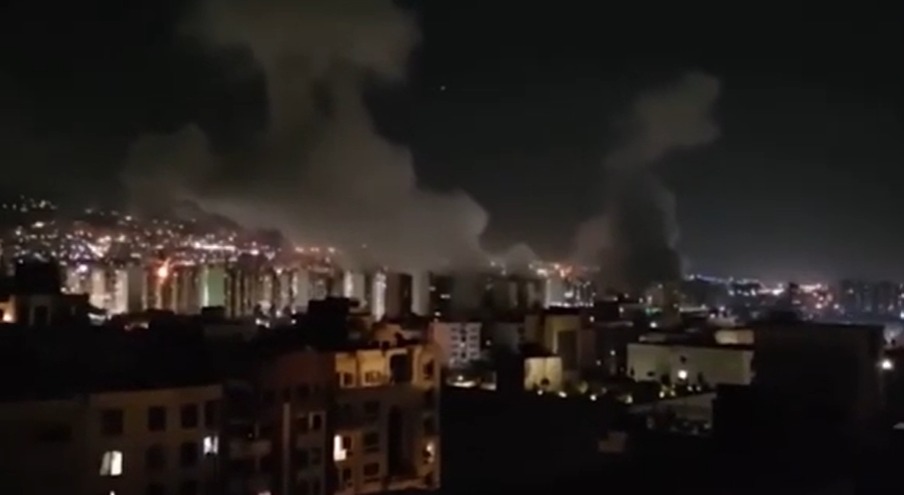
Israel’s military announced today that it has destroyed more than one-third of Iran’s surface-to-surface missile launchers as cross-border strikes between the two countries continued for a fourth consecutive day. The latest escalation follows a wave of Iranian missile attacks on Israeli cities earlier this week and deep Israeli airstrikes inside Iranian territory.
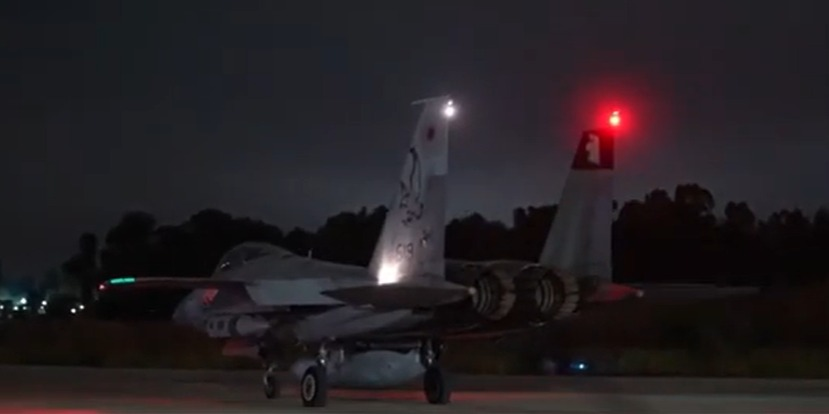
According to a statement from military spokesman Brigadier General Effie Defrin, since the onset of Israel’s operations on Friday, over 120 missile launchers belonging to the Iranian regime have been eliminated. This figure represents roughly one-third of Iran’s entire surface-to-surface missile arsenal.
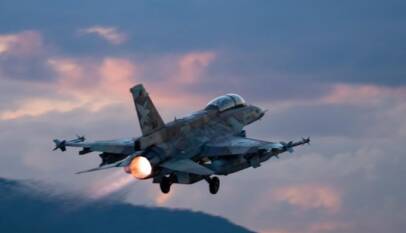
Defrin said that around 50 Israeli fighter jets and aircraft participated in the overnight offensive. The aircraft “identified and struck missile storage facilities and launchers that were prepared for immediate use against the state of Israel,” he noted. In one key operation, Israeli forces destroyed more than 20 missiles as they were being readied for launch from a site in central Iran, where much of Tehran’s missile infrastructure is concentrated.
Speaking at a press conference, Defrin declared that Israel currently enjoys “total air superiority in the skies over Tehran.”
The targeted Israeli strikes have reportedly had a significant impact on Iran’s offensive capabilities. According to an unnamed Israeli military official, the precision strikes helped cut in half the number of missiles launched at Israel, limiting Monday’s barrage to fewer than 50.
Iranian state media confirmed that several top military officials were killed in the Israeli air campaign. Among the dead are Brigadier General Mohammad Kazemi, the intelligence chief of the Islamic Revolutionary Guard Corps (IRGC), his deputy Hassan Mohaqiq, and a third intelligence officer, Mohsen Bagheri. All three were reportedly killed in Tehran.
Meanwhile, Iran’s Supreme Leader Ayatollah Ali Khamenei was relocated to a secure underground bunker in Lavizan, northeast Tehran, shortly after the Israeli offensive began. Sources suggest Khamenei and his family took refuge there in response to the Israeli assault. This marks at least the third time he has retreated to the bunker, having done so previously during Iranian offensives in April and October 2024.
A local Iranian newspaper reported that Israel intentionally chose not to target Khamenei on the first night of its operation, offering what it described as a “final opportunity” for Tehran to abandon its uranium enrichment program.
Israel’s military stated it had completed an extensive campaign of airstrikes targeting Iran’s weapons manufacturing infrastructure. The strikes hit facilities operated by the Islamic Revolutionary Guard Corps, its elite Quds Force, and other branches of Iran’s armed forces. “Several weapons production sites in Iran were hit,” said the Israel Defense Forces (IDF).
On the humanitarian front, Israel’s national emergency service, Magen David Adom, reported that eight people were injured in the most recent Iranian ballistic missile barrage. One person was lightly injured in Haifa, six others sustained minor wounds, and another person was slightly hurt near Kiryat Gat in southern Israel. Additionally, several civilians were treated for acute anxiety—four in Haifa and five in southern Israel—highlighting the psychological toll of the escalating violence.
In a related development, the IDF revealed that Iran had launched more than 100 unmanned aerial vehicles (UAVs) at Israel. “Iran sent more than 100 UAVs over Israel. We intercepted them,” the IDF said in a post on social media platform X.
As the conflict intensifies, both sides appear resolute in continuing military operations, raising concerns among international observers about the potential for a broader regional war.

New Financial Year to Bring Tax, Labour and Travel Reforms from April 1
Mumbai, March 2026 : A host of major financial and regulatory changes will come into effec…

New Financial Year to Bring Tax, Labour and Travel Reforms from April 1
Mumbai, March 2026 : A host of major financial and regulatory changes will come …