Thailand’s Government in Crisis: PM Paetongtarn Under Fire as Allies Abandon Coalition

Thailand’s government, led by Prime Minister Paetongtarn Shinawatra, is teetering on the edge of collapse after a major coalition partner, the Bhumjaithai Party, withdrew from the alliance on Wednesday night. The political crisis comes just ten months after Paetongtarn, daughter of the controversial former Prime Minister Thaksin Shinawatra, took office, and has intensified calls for her resignation.
The 38-year-old political newcomer is struggling with multiple challenges, including waning public support, economic instability, and a simmering territorial dispute with neighbouring Cambodia. The situation dramatically worsened after the leak of a June 15 phone call between Paetongtarn and Cambodia’s influential former leader Hun Sen, in which she sought a peaceful resolution to the border issue while appearing to undermine Thailand’s military leadership.
Bhumjaithai Party, the second-largest faction in the ruling coalition, said its exit was driven by concerns that the leak had compromised Thailand’s sovereignty and damaged the reputation of its armed forces. The party cited the government’s failure to uphold national dignity in the face of a foreign policy embarrassment.
As the political fallout spreads, other coalition partners — including the United Thai Nation (UTN), Chart Thai Pattana, and the Democrat Party — announced internal meetings to reassess their support. If either the UTN or the Democrats pull out, Paetongtarn would be left with a minority government, a situation many observers say is unsustainable.
The prime minister has yet to publicly comment on Bhumjaithai’s departure. However, she was seen arriving at government headquarters on Thursday amid heightened police security, signaling possible public protests in the capital. Meanwhile, Thailand’s stock market reacted sharply to the turmoil, with the benchmark index plunging by as much as 2.4% — its lowest level since April.
The leaked call revealed Paetongtarn urging Hun Sen not to listen to certain factions in Thailand, including an outspoken army general whom she dismissed as trying to “look cool.” She later defended her comments as part of a negotiation strategy and downplayed tensions with the military. Nonetheless, the fallout has prompted widespread concern over the government’s stability and foreign relations.
On Thursday, Paetongtarn convened a crisis meeting with top security officials, including the defence minister, army chief, and commander of the armed forces. In a press statement, she apologised for the leak and called for unity, stating, “We don’t have time for internal conflict. We must protect our sovereignty. The government fully supports the military in its mission.”
If Paetongtarn resigns, parliament will need to select a new prime minister from a limited pool of five candidates pre-nominated for the 2023 election. Another possible outcome is the dissolution of parliament and a new general election — a scenario that could benefit the opposition People’s Party, currently the most popular political force in Thailand.
The People’s Party, a successor to the Move Forward Party that won the most votes in 2023 before being dissolved by a court ruling, has called for immediate elections. “The leaked call was the final straw,” said People’s Party leader Natthaphong Ruengpanyawut. “We need a government that reflects the people’s will and can address the country’s deepening problems.”
Paetongtarn’s tenure has also been marred by persistent criticism over her father Thaksin Shinawatra’s behind-the-scenes influence. Though he holds no formal office, Thaksin remains a divisive figure in Thai politics and is frequently seen commenting on key policy matters since returning from self-imposed exile in 2023.
The current unrest has once again highlighted the enduring power of the Thai military in national politics. The army, which previously toppled Thaksin-aligned governments in 2006 and 2014, issued a statement reaffirming its dedication to democratic principles while stressing the importance of national unity.
“The army remains committed to the constitutional monarchy and to protecting the sovereignty of Thailand through lawful and institutional mechanisms,” the statement read.
With pressure mounting from both political allies and the public, Paetongtarn faces a difficult decision in the coming days — step down to allow a fresh leadership mandate, or risk deepening Thailand’s political instability.



Raghav Chadha Moves Delhi High Court Against Alleged Misuse of Identity Through AI and Deepfake Content
New Delhi, May 2026 : Rajya Sabha MP Raghav Chadha has approached the Delhi High Court see…
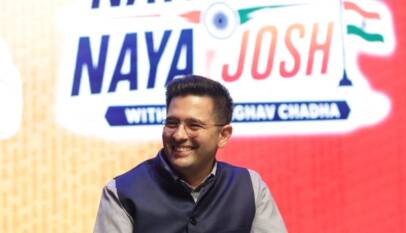
Raghav Chadha Moves Delhi High Court Against Alleged Misuse of Identity Through AI and Deepfake Content
New Delhi, May 2026 : Rajya Sabha MP Raghav Chadha has approached the Delhi …