Iranian Missile Devastates Israel’s Weizmann Institute, Destroys Decades of Scientific Research

World-renowned research facility suffers catastrophic damage; scientists race to salvage vital experiments amid flames and rubble
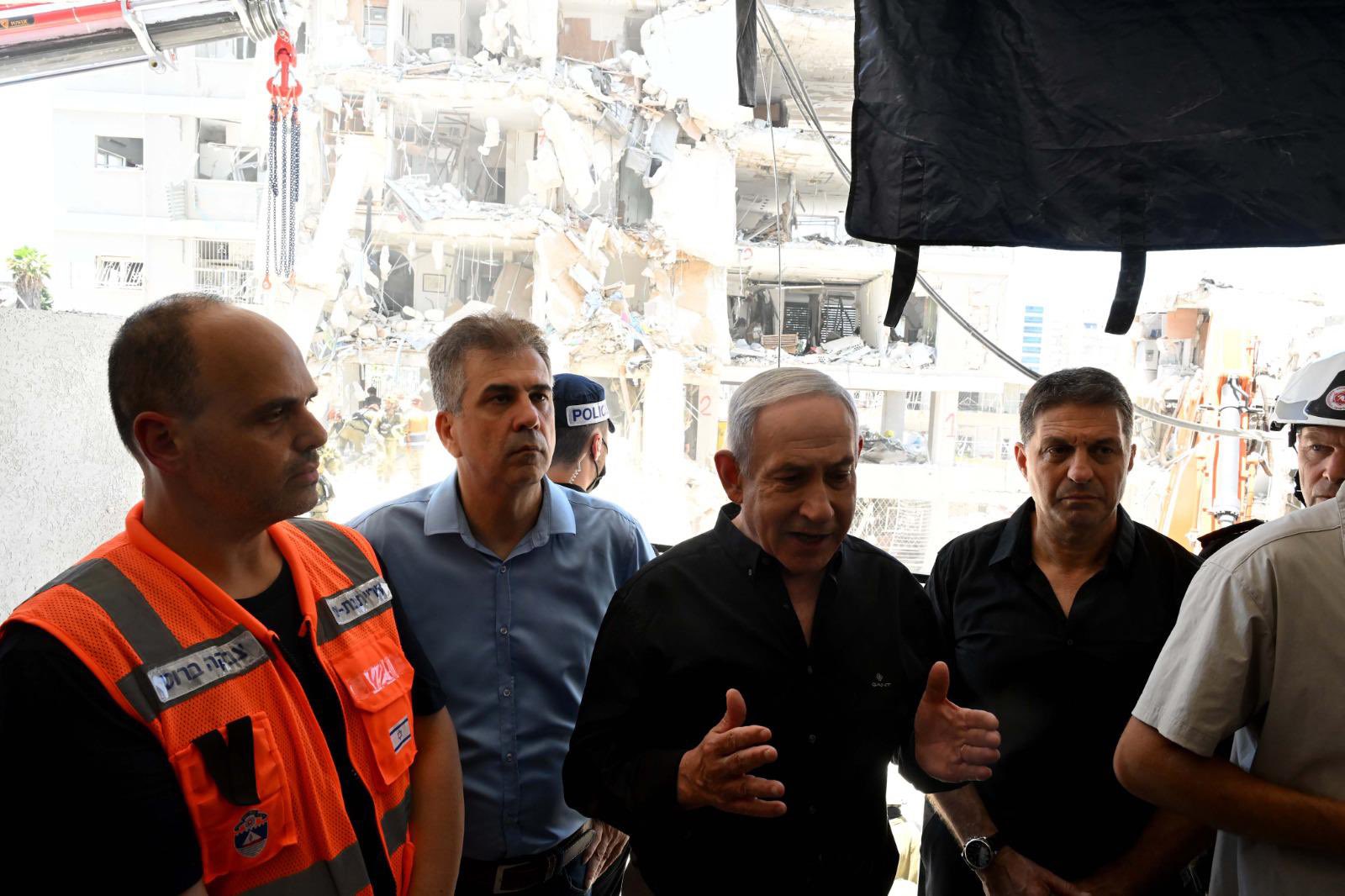
Rehovot, Israel : The prestigious Weizmann Institute of Science, Israel’s top research institution, has suffered severe damage after an Iranian missile struck its campus early Sunday morning. The attack obliterated a key building housing dozens of state-of-the-art laboratories and jeopardized years of advanced scientific work in medicine, genetics, and astrophysics.
The missile hit the campus located in Rehovot, on the southern edge of Tel Aviv, during the early hours when the facility was unoccupied, sparing any loss of life. However, a portion of the building completely collapsed, while the remaining sections were left with gaping holes, charred concrete, and twisted metal. Fires broke out immediately after impact, prompting researchers to enter the ruins in a desperate attempt to retrieve valuable research samples.
“We did our best to save as much of the samples as we could from the labs, from the buildings, while we were fighting the fire,” said physicist Roee Ozeri, the institute’s vice president for development and communications.
Founded in 1934, the Weizmann Institute is widely recognized as Israel’s premier science research center, home to 286 research groups, nearly 200 staff scientists, and hundreds of doctoral, postdoctoral, and master’s students. While most of its research is centered on medicine and fundamental science, it also has ties to national defense. In October 2024, the institute began a collaboration with Elbit Systems, Israel’s largest defense firm, to develop bio-inspired materials for defense applications.
Iran has not officially stated why the institute was targeted, but the strike comes amid escalating hostilities. Israel launched attacks against Iran last Friday, citing concerns that Tehran was on the brink of developing nuclear weapons. In response, Iran launched a series of missile and drone strikes, including the one that hit Weizmann. Iran maintains that its nuclear program is peaceful.
The ongoing conflict has taken a toll on both nations. Israeli strikes have reportedly killed key Iranian nuclear scientists and senior military figures, while Iranian retaliation has killed 24 civilians in Israel and damaged hundreds of structures, including a hospital in Beersheba.
Among the hardest hit at Weizmann was the laboratory of Professor Eldad Tzahor, who specializes in regenerative medicine with a focus on heart disease. “Everything is lost,” Tzahor said. “I would estimate that it will take us about a year just to return to a full year of research and get everything working again.”
The institute estimates the financial damage at between $300 million and $500 million. Many of the destroyed laboratories contained complex, high-cost equipment often shared among multiple research teams. The attack has devastated long-running projects and vital sample libraries that took years to develop.
Professor Jacob Hanna, a leading figure in embryonic stem cell research, described the destruction of his lab to the journal Nature. His laboratory’s ceiling collapsed, and the staircase was torn away. Fortunately, his team managed to save hundreds of precious mouse and human cell lines by quickly transferring them to backup liquid nitrogen tanks stored in the basement.
“I was always worried that if a war actually happens, I don’t want to lose these,” Hanna said.
The missile strike on Weizmann, one of the most respected scientific institutions in the world, has drawn widespread condemnation. Scientists around the globe have expressed solidarity with their Israeli colleagues, warning that such attacks threaten not just national security, but global scientific progress.
As cleanup begins, the true toll of the attack—on both scientific advancement and human effort—is only beginning to be understood. Yet, amid the rubble, researchers remain committed to rebuilding and continuing their work. “We have lost time and data,” said one scientist. “But we haven’t lost our purpose.”






More Than a Café: How MITTI Café is Brewing Hope, Dignity and Dreams at Rashtrapati Nilayam
Hyderabad, July 2026 : Tucked away inside the serene campus of Rashtrapati Nilayam in Boll…

More Than a Café: How MITTI Café is Brewing Hope, Dignity and Dreams at Rashtrapati Nilayam
Hyderabad, July 2026 : Tucked away inside the serene campus of Rashtrapati Nilayam in …