The Paradigm shift in Paytm’s operations.

After years of mounting losses and a series of regulatory setbacks, Paytm investors finally have something to look forward to. The fintech giant reported a consolidated net profit of Rs 122.5 crore for the quarter ended June 30, 2025 (Q1 FY26), a dramatic turnaround from the Rs 838.9 crore loss recorded in the same period last year.
Founder and CEO Vijay Shekhar Sharma attributed this achievement to a fundamental shift in business approach, emphasising better unit economics, significantly lower customer acquisition costs, and enhanced monetisation across the merchant ecosystem. Paytm believes it’s now a 50-60% contribution margin business and sees this as sustainable with future EBITDA gains coming largely from scale, not cuts. “We’re no longer focused on quarterly cost cuts“, Sharma noted during the earnings call. “We’re focused on increasing product depth, expanding internationally, and using AI across every touchpoint“.
And unlike previous quarters when Paytm used metrics such as “EBITDA before ESOP” in its financial reporting to show profits, the fintech giant wasn’t shy to flaunt its bottom-line. “This is the first quarter where we have thrown out every word which included EBITDA before ESOP”, Sharma announced during the earnings call. “Next quarter onward, we will stop giving the ESOP line, and it will be only the employee cost, so that we are maturing towards absolute, complete employee cost, including EBITDA. No more adjusted anything“.
Merchant payments: the profitable core Paytm’s merchant payments business is now operating at break-even despite offering zero Merchant Discount Rate (MDR) on UPI transactions. “Even without MDR, we are profitable. The payment business alone will become a bottom-line driver”, Sharma emphasised. He added that once MDR on UPI eventually returns, “today we are calling it break even, and tomorrow we are calling it large profit. So that’s why I keep saying, for both of our cores, we have a great business“.
The payments business generates revenue through subscription fees for Soundbox and POS devices, MDR from card transactions and EMI purchases, government incentives such as the UPI incentive scheme, and fees from banks for routing payment volumes. Of Paytm’s impressive base of over 13 million devices deployed across India, more than 1 million are full-stack POS terminals or card-enabled Soundboxes that contribute meaningfully through MDR on card transactions.
Moreover, Paytm recently raised rental fees on its devices and witnessed positive price elasticity, with churn rates remaining stable despite the price increases. “We went from Rs 100 to Rs 129 or Rs 149, and merchants stayed. There is a reverse elasticity by being large, because our products are far superior to the competition in the market. Everybody else is a Chinese copy. Our hardware, software stack, work out relatively better, and that gives our product a premium level in the market“.
The rise of RuPay credit card-on-UPI transactions has opened another revenue stream for Paytm, with MDR applicable on such transactions. “RuPay credit card on UPI actually earns MDR even today“, Sharma noted, describing it as “a source of net margin expansion“.
Financial services mixed fortunes Paytm’s lending business presents a tale of two very different narratives. On the merchant lending side, the story is overwhelmingly positive, with the business demonstrating strong growth and excellent asset quality, according to Deora.
However, personal loans remain in the doldrums, still suffering from the broader industry downturn that began over a year ago. The merchant lending business has performed so well that lending partners have voluntarily moved away from Default Loss Guarantee (DLG) models. “It is the same lenders who have decided to forego DLG-based math because they see the book performing great for their preferences”, Sharma explained.
Default Loss Guarantee (DLG) is a risk-sharing model where fintech’s absorb initial loan losses to encourage lenders to offer credit to underserved borrowers. As a result, direct expenses have declined sharply as the company no longer needs to set aside significant provisions for potential loan defaults, Deora explained. Despite lower disbursal volumes in some segments, lending revenue has continued to grow quarter-on-quarter. The business remains significantly below its peak levels from fiscal 2025, with management acknowledging that recovery has been slower than anticipated.
“Not significant recovery yet“, was Sharma’s candid assessment when asked about the personal loan market’s health. The company’s largest lending partner currently accounts for between 30% and 40% of total lending volumes, primarily concentrated in merchant lending. While this concentration might raise concerns, management views it positively, noting that newer partners are growing their volumes faster from smaller bases, suggesting gradual diversification over time. Looking ahead, Paytm is preparing for the return of its wallet and buy now, pay later (BNPL) products, which remain suspended due to regulatory restrictions. “When the personal credit comes back, BNPL will come back. We totally believe that will come back“, Sharma expressed confidently.
The company is also doubling down on artificial intelligence across all its operations. “Every customer product and every internal process should be AI first, and that’s something which we have been the posture of the company internally for the last one and a half years“. This AI-first approach is expected to drive further efficiency gains and enhance user experiences across the platform. International expansion represents another significant growth opportunity. While specific details remain under wraps, management hinted at pilot programmes for new product technologies and international market entry strategies.
Team Maverick


India-China Relations Gradually Normalising Since Kazan Summit, Says Jaishankar; Calls for Fair Trade and Border Stability
Manila, July 2026 : External Affairs Minister (EAM) S. Jaishankar on Wednesday said that I…
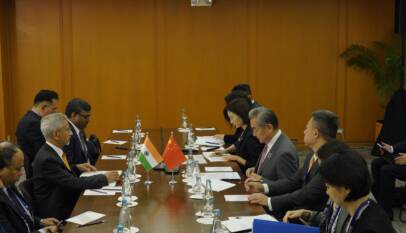
India-China Relations Gradually Normalising Since Kazan Summit, Says Jaishankar; Calls for Fair Trade and Border Stability
Manila, July 2026 : External Affairs Minister (EAM) S. Jaishankar on Wednesday said that …