Canada has witnessed a paradigm shift in the electoral process.

Unlike Americans, who vote directly for presidents, Canada’s parliamentary system indemnifies voting for the local representatives. The tariff and annexation threats from U.S. President Donald Trump dominated the discourse in Canada’s 2025 federal election, along with concerns revolving around affordability and housing, a pan-Canadian election at its best means, in effect, 343 local elections.
But what has prompted Maverick News to explore the information, is the fact that this is the first time that the Canadian Authorities had imposed a ban on the Media disallowing abundant news and coverage about the electoral process, resulting 80% of the Canadians complained of being not informed.
The Ottawa based nonpartisan think tank Public Policy Forum (PPF) has conducted a poll survey, wherein, 70% of the Canadian voters have expressed that more local news in their area would have made them better informed about the election. However, in reality the, the election was a two-party battle. The vote for the major parties was the highest since 1958 at a combined 85%.
About 2.7 million Canadians have access to multiple local media outlets. A separate study looking at the collapse of local news found that three of every five Canadian communities had a net loss of local media since 2008. The province of Newfoundland and Labrador suffered the most, losing three quarters of all its media outlets outside of the capital of Saint John’s.
Residents in one electoral district, known as a “riding” in Newfoundland and Labrador complained to the media that during the 2025 campaign, they didn’t see the candidates, nor did they read information about them. Their local newspaper The Packet was one of the outlets that shut down. It had stopped printing in March 2020 during the pandemic and permanently closed a year later in 2021.
There’s nothing out there anymore, It’s a wasteland. One can watch the national debate on TV, but there’s no local news of anything said in the report. What had taken the place of local news? Rumors, according to the report, including one that Conservative leader Pierre Poilievre would cut funding for an agency critical to the region’s economy.
What did the local Conservative candidate, civil engineer Jonathan Rowe, have to say about this incipient controversy? Well, no one in Bonavista knew because no one asked him — there is no trusted local news in the towns of Bonavista or nearby Clarenville the report notes. The report notes that “many Conservatives across the country,” including Rowe, bypassed news media and “campaigned solely on social media”. A local elected official said he has a more informal way of getting information out nowadays.
In Richmond, British Columbia, local news has not kept up with the growing population. (The city has 1.4 local news outlets per 100,000 people) When Richmond News was founded in 1977, it was one of three daily newspapers in the city. Now, its two rivals have folded and the Richmond News — which has two reporters, only one of whom lives in the community, went fully digital in 2023. Richmond News publisher Alvin Chow said the site receives an average of 500,000 unique visitors each month, but acknowledged he’s had difficulty bringing “old school” readers over to digital. After the 2023 move to digital, the Richmond News sponsored workshops in seniors’ homes to help them migrate. It didn’t work, the report notes. Chow said six months after the newspaper ceased printing, he was still fielding calls from people complaining their paper hadn’t been delivered.
Meta’s decision to block news on Facebook and Instagram has not prevented Canadians from attempting to use the platforms as an information source. Remarkably, 70% of Facebook users and 65% of Instagram users still say they are using those platforms to get their news, even though there was no news on them, according to the report. Another 14% said, Facebook most contributed to their vote decision-making, despite no news being present on Facebook.
Yellowknife, the capital of the Northwest Territories, is described as a fiercely independent and resilient city. With seven local news outlets, more than what it had in 2008, Yellowknife also has a local media scene that would be the envy of many other Canadian cities. With 33.6 news outlets per 100,000 people, it is the most engaged population having a voracious appetite for news, and plenty of local news outlets to sate it, according to the report. Residents reiterates that the need for news is fueled by the dominance of government in Yellowknife, coupled with its isolation and an attitude that if the community is not covered from within, no one else will do it. More than 60 people are engaged in local journalism in the community of 20,000.
Team Maverick






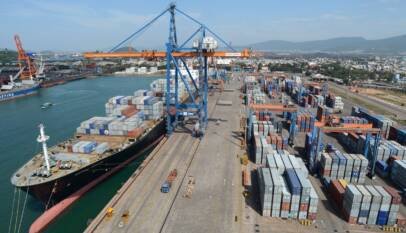
Delivery Of Second Indigenous Diving Support Vessel – ‘Nipun’
‘Nipun’ the second Diving Support Vessel (DSV), built by Hindustan Shipyard Limited&n…

Delivery Of Second Indigenous Diving Support Vessel – ‘Nipun’
‘Nipun’ the second Diving Support Vessel (DSV), built by Hindustan Shipyard Limited was delivered to the …