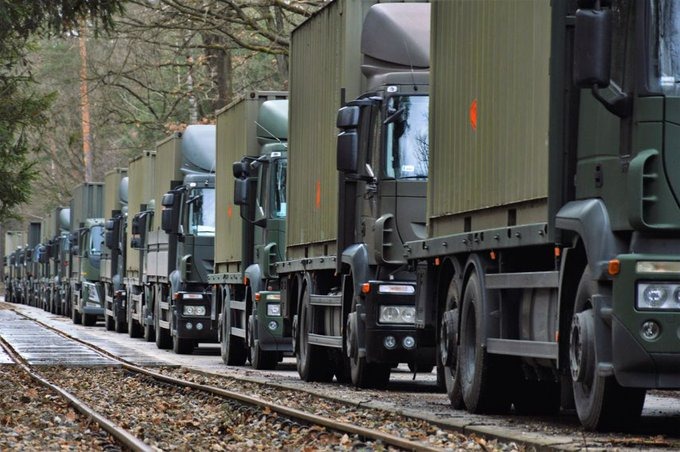
Poland secures largest EU defence loan with €43.7 billion for rapid rearmament and industrial expansion.

Sept 2025 : The European Union has completed the allocation of 150 billion euros in low -interest defence loans under the SAFE program, with Poland receiving the largest share, 43.7 billion euros. The headline figure landed just days after the MSPO defence exhibition wrapped up in Kielce, which was organised from 02nd. To 05th. September, 2025.
While the Poland’s defence industry and the Polish Armed Forces spent last week putting hardware in front of buyers and partners; this week Brussels allocates funds for long-maturity defence projects. It sets a clear frame: Warsaw is not only buying fast to close near-term gaps, it is also trying to lock in industrial depth for the next decade, and MSPO served as the shop window for that strategy.
A Polish system is the new Rosomak-L, an extended-hull evolution of Poland’s 8×8 family built by Rosomak S.A. under the PGZ umbrella. The vehicle on display paired the longer chassis with the Turra 30 SA remote turret, bringing a 30 mm cannon, a coaxial 7.62 mm machine gun, and Spike LR or LR2 anti-tank missiles into a fully enclosed, under-armour package. What stood out was the sensor stack: multi-mission radar, acoustic gunshot detection, and anti-sniper cueing tied into the fire control, which pushes effective engagement beyond 4 km in the right conditions.
Another Polish system that drew attention was Bluszcz, an unmanned mine-laying vehicle sized for tactical use but built with deliberate autonomy. The 4×4 platform can be teleoperated or run pre-planned routes and, crucially, it can seed up to one hundred MN-123 anti-tank mines per mission with programmable spacing and patterns. That turns a company commander into a terrain-shaping actor in minutes, not hours. In a fight where mobility corridors are contested by drones overhead and counter-battery radars on call, a compact vehicle that can quietly build a mine belt, then slip away, is essential.
MSPO also brought out Polish and partner innovations at sea and in artillery. WB Group’s Stormrider unmanned combat boat, developed at high speed and already trialled on the Baltic, hints at where coastal defence is going in the region: low-signature reconnaissance and strike craft that can patrol, shadow, and hit, while keeping operators ashore. On the artillery side, the presence of Ukraine’s 2S22 Bohdana, a 155 mm 52-caliber howitzer with combat credentials, underlined that industry and armies are converging on NATO standards for range and ammunition types. A lighter 105 mm self-propelled gun from South Korea’s Hyundai WIA rounded out the picture for rapid reaction units that need shoot-and-scoot firepower and easy air transport.
Putting all the components together and a pattern emerges. Rosomak-L gives Poland a protected, networked fighting vehicle that can find and fix threats with its sensors, then neutralize them with missiles or 30 mm fire, all while staying buttoned up. Bluszcz is about tempo and denial: laying complex obstacle sets at company level to funnel enemy armour into known grids, where artillery and loitering munitions can work. Stormrider extends that same logic to the littorals, offering picket-line surveillance, decoy options, and strike packages without risking a crew. These are practical systems designed to be fielded at scale, integrated into existing command networks, and maintained by a growing domestic base.
MSPO’s message was as much about production as performance. Poland has been signalling that it intends to anchor more manufacturing at home, from tracked and wheeled vehicles to munitions. Plans to select partners for new ammunition plants, including lines for 155 mm projectiles and propellants, fit the broader push to erase the bottlenecks exposed since 2022. The SAFE loans add a financing lever with a long grace period that can underwrite expansions in factories, test ranges, tool sets, and the supplier tiers that sit below the big names. It matters because industrial agility, not just signed contracts, decides whether an army can replenish stocks and rotate damaged equipment without losing operational rhythm.
Poland has always enjoyed being the blue-eyed of NATO’s frontline and acts like it. Warsaw has already pushed defence spending above any ally when measured as a slice of GDP and is signalling more to come. The government’s pitch to Brussels was that long-dated loans would speed up air and missile defence layers, artillery and ammunition, drone and counter-drone suites, along with cyber and logistics infrastructure. The EU’s calculus runs in parallel. With the United States urging Europe to carry more of the load and Russia and Belarus sustaining military pressure, the bloc needs both capabilities and the factories to sustain them. SAFE was designed to do that, and the European Investment Bank’s evolving stance on security-and-defence financing has created additional paths for dual-use and supply-chain projects inside the Union. None of this replaces national choices, but it does lower the cost of capital for countries building capacity quickly.
Seen from Kielce, the loan allocation news does not land in a vacuum. It lands on a show floor full of systems that are ready or near-ready and a domestic group of companies that want the green light to scale. If Poland converts the headline amount into concrete orders for vehicles, sensors, boats, and especially ammunition, the effect will be felt in real units and real brigades, not just in spreadsheets. The last week offered a snapshot of what is coming. The next year will test whether the industrial machine, backed by European financing, can deliver at the speed the security situation demands.
Team Maverick






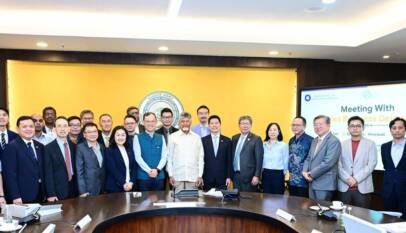

Adani group visits Hon’ble Deputy Chief Minister and Energy Department, Govt. of Odisha
Bhubaneswar, July, 2026 : Kharavel Bhawan, representatives from the Adani Group delivered …
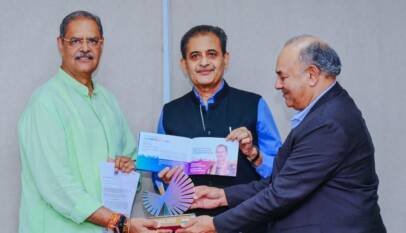
Adani group visits Hon’ble Deputy Chief Minister and Energy Department, Govt. of Odisha
Bhubaneswar, July, 2026 : Kharavel Bhawan, representatives from the Adani Group delivered a comprehensive …