Nepal in Turmoil: Calls for Ex-Chief Justice as Interim Leader Amid Deadly Protests

Kathmandu, Sept 2025 : Nepal remains on edge after a week of unprecedented political and social unrest that forced Prime Minister KP Sharma Oli to resign, left parliament in flames, and plunged the Himalayan nation into its worst crisis in two decades.
President Ramchandra Paudel on Thursday appealed for calm and assured citizens that efforts were underway to find a constitutional solution. “All parties should remain confident that a solution to the problem is being sought as soon as possible,” he said. His own presidential office was among the buildings torched during the upheaval.
Army patrols streets under curfew
For the second consecutive day, the army enforced a strict curfew in Kathmandu and other cities. Soldiers patrolled the otherwise deserted streets of the capital as shops, schools, and government offices remained shuttered. Essential services have begun to resume slowly, but the atmosphere is tense and uncertain.
Army chief General Ashok Raj Sigdel has taken an unusually direct political role, launching talks with political figures and representatives of the so-called “Gen Z movement”, a loose umbrella group of largely young protesters at the heart of the demonstrations.
The unrest began Monday after the government briefly banned social media platforms, a move widely seen as an attempt to suppress criticism. Demonstrations quickly spiraled into nationwide anger over corruption, economic stagnation, and lack of accountability. At least 19 people were killed in clashes with security forces during the crackdown.
By Tuesday, protests had escalated into open revolt. Government offices, hotels—including a Hilton property—and other prominent buildings were set ablaze. Amid the chaos, more than 13,500 prisoners escaped from jails across the country. Security forces say only around 250 fugitives have been recaptured, with Indian border officials confirming that many may have fled across the frontier.
Protesters demand reform, not power
Leaders of the youth-led protest movement insist their demands are about systemic reform rather than personal power.
“Our first demand is the dissolution of parliament,” Sudan Gurung, a prominent activist, told reporters. “My humble request to everyone, including political parties: please don’t send the same old leaders. We don’t need positions in government—we need real reform.”
The unrest has tapped into deep-seated frustrations in Nepal. The World Bank estimates that more than 20 percent of young people aged 15–24 are unemployed, while per capita GDP stands at just $1,447. These chronic economic challenges have intensified the anger fueling the current protests.
Oli’s downfall and political vacuum
The immediate political casualty of the crisis was Prime Minister KP Sharma Oli. The 73-year-old veteran of Nepalese politics, who had served as prime minister four times, resigned on Tuesday after his home was set ablaze. His current whereabouts remain unknown.
According to the constitution, President Paudel should invite the leader of the largest parliamentary party to form a new government. However, much of the political establishment has vanished from public view, either in hiding or stripped of credibility in the eyes of the protesters.
Who will lead the interim government?
In the absence of a clear successor, protesters and civil society voices have floated the idea of an interim government led by a respected, non-partisan figure. Former Chief Justice Sushila Karki, Nepal’s first woman to hold the post, has emerged as the leading candidate.
“Right now, Sushila Karki’s name is coming up to lead the interim government—we are now waiting for the president to make a move,” said Rakshya Bam, a youth activist who participated in Wednesday’s army-led consultations.
Karki, 73, has cautiously welcomed discussions on her potential role. She told AFP that experts need to come together to chart the path forward, while reminding all sides that “parliament still stands.”
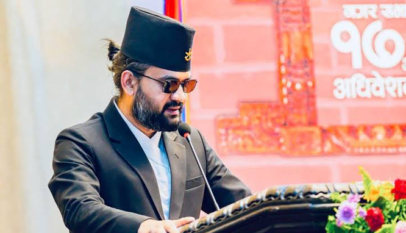
Kathmandu Mayor Balendra Shah, a 35-year-old former rapper and engineer who has gained popularity among younger Nepalis, was also suggested as a possible interim leader. However, Shah publicly endorsed Karki, writing on Facebook: “I fully support the proposal of Sushila Karki. The job of this interim government is to hold elections, to give a new mandate to the country.”
A decentralised movement with divisions
Observers caution that the protest movement itself is not unified. Journalist Pranaya Rana noted that divisions are inevitable: “It is natural in a decentralised movement like this that there are going to be competing interests.”
Still, the widespread appeal of reforms—and the symbolism of installing a respected outsider like Karki—suggests that protesters may rally around the idea of a caretaker government tasked only with restoring order and holding fresh elections.
The road ahead
For now, Nepal remains in a fragile state of limbo: parliament burned, thousands of prisoners on the loose, and its traditional political class in disarray. Whether the army and the president can steer the country toward a legitimate interim arrangement will determine if this turbulent moment becomes a turning point—or the beginning of prolonged instability.
Team Maverick.

Kerala Chief Minister V.D. Satheesan Offers Prayers at Kollur Mookambika Temple
Kollur, July 2026 : Kerala Chief Minister V.D. Satheesan on Saturday visited the renowned …
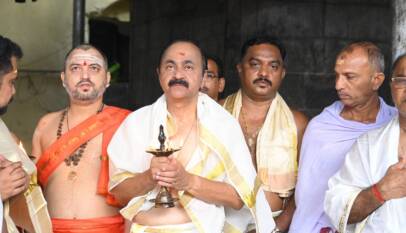
Kerala Chief Minister V.D. Satheesan Offers Prayers at Kollur Mookambika Temple
Kollur, July 2026 : Kerala Chief Minister V.D. Satheesan on Saturday visited the renowned …