Why inclusive language matters for poverty research.

Language shapes understanding, influences policies, and affects how people experiencing poverty are perceived. Using inclusive language is not simply a matter of style, rather it is central to ensuring our work respects dignity and reflects lived realities.
Let us delve into these three phrases:
- People who earn less
- People who are paid less
- People living on a lower income
Each of these phrases refers to economic disadvantage, but each also frames the situation from a different perspective. The first focuses on the individual’s earning ability, the second shifts responsibility toward the employer or system, and the third paints a broader picture of life conditions.
The basic meaning of each statement is similar, but each has a different message. The differences are subtle, but they matter. Language shapes how we think, what we notice, and ultimately, how we act.
Inclusive language means choosing words with intention while considering both their explicit meaning and the assumptions they may carry. It is about communicating with empathy, respect, and clarity. It is a way of considering both the explicit and implicit meaning of the words we use. Importantly, it is not at odds with objectivity in research: in fact, it is an extension of critical thinking that aims to improve the quality, usefulness, and impact of our work.
Here are five reasons why language matters for poverty research:
1) Poverty is about people: Poverty is, by definition, all about people: It is the experience of being ‘poor.’ Every data point represents a real person, a lived reality – an individual’s employment, education, health, how many children they have, and more.
And poverty is dynamic. The profile of who is ‘poor’ (and in what ways) shifts depending on the context and as a person’s circumstances change. A household that is below a given poverty line one day may not be the next. For instance, analysis from the Data and Evidence to End Extreme Poverty research programme shows that, even where overall poverty rates appear unchanged, the reality of people experiencing poverty may have changed considerably over time.
So rather than essentialising poverty as a static state or identity, our language should reflect the fact that poverty is experienced, and experienced by people. Using expressions such as “people experiencing poverty” rather than “the poor” avoids a dehumanising shorthand. It centres personhood over labels and helps place dignity at the centre of our work. Using inclusive language in this way doesn’t just humanise, it avoids marginalising. It reminds us: people are not their circumstances.
2) Power shapes language: In recent years, global events have brought issues of race, power, and inequality to the fore and reignited debates within the development sector about decolonising aid. Language is part of that conversation.
No matter how objective we aim to be, the words we use influence how people think, feel, and behave. They shape the world around us. Language has the power to reinforce certain narratives or ideologies, sometimes unintentionally. If we want our work to support social change, then the words we choose must align with that ambition.
As a practice of being more intentional in the words we use, inclusive language invites us to recognise and challenge the implicit power dynamics in our phrasing. Such dynamics are important: if our ambition is to help improve people’s lives, then it is critical that this is reflected in our language, otherwise we risk undermining our very goal and harming the people we want to support. This means:
Respecting how people identify themselves by naming specific communities where possible, not relying on vague generalities like “marginalised groups”. Avoiding language that implies personal blame for structural challenges, alongwith by acknowledging the systems behind poverty rather than just its symptoms, we make our research more accurate and more respectful.
3) Critical thinking includes language: We pride ourselves on critical thinking in research: challenging assumptions, testing evidence, and considering new perspectives. But we need to apply the same rigour to the language we use. Inclusive language is not about prescribing fixed terms. It’s about asking critical questions:
- What does it mean to “be poor”?
- Who defines poverty, and by whose standards?
- What are the unspoken implications of the terms we use?
Inclusive language practices help us spot these imbalances and speak more honestly about causality.
Just as we assess our data sources, we should evaluate our phrasing. Inclusive language sharpens our insight.
4) Do no harm: Just as research ethics require us to minimise harm in data collection, we must also consider how language affects participants and audiences.
Even when we think we are being neutral or objective, our words carry historical, cultural, or social perspectives. If we don’t carefully consider our words, we run the risk of causing harm. Poorly chosen terms can alienate, stigmatise, or devalue people’s experiences. Harm can be direct (causing offense or hurt) or indirect (reinforcing harmful perceptions that shape policy or behaviour).
Obvious examples include slurs or pejorative terms. But more subtle harm can come from deficit-based language, framing people only in terms of lack or need. Saying “vulnerable communities”, for instance, without context can erase resilience or agency. It reduces complex lives to simplistic problems. We can’t control how every word is received, but we can take responsibility for how we frame our work. Inclusive language helps reduce harm by building in care, clarity, and respect from the start.
5) Language shapes impact: High-quality research aims to influence policy, improve practice, and expand understanding. But to achieve that, our work must be understood and trusted.
This means being clear and precise. Consider how differently these terms might land:
- Low-income
- Low wage
- Low-paid
- Low earner
Each tells a slightly different story, implying different sources of cause or responsibility. The words we choose shape how policymakers, practitioners, and communities interpret our findings, and what action they think is appropriate. Inclusive, precise language helps us communicate more effectively and ensures that research leads to better outcomes.
Conclusion: Thinking critically about communication
In research and data science, great value is placed on critical thinking. Data is interrogated, methods are questions, assumptions are probed. Yet when it comes to communicating our findings, we don’t always apply the same level of care to language. Language sets the frame through which our evidence is interpreted. It helps shape policies, influences attitudes, and reflects values. And it evolves, just as the world does. Our responsibility is to evolve with it, ensuring our words reflect not only precision, but also empathy and respect.
This isn’t just about semantics. It’s about recognising that words have power, and using that power responsibly. Inclusive language is not about avoiding difficult truths — it’s about expressing them responsibly. By putting people first and recognising the power of words, we make our research more impactful and meaningful.
Team Maverick






Rahul Gandhi Calls Dharmendra Pradhan’s Resignation a Victory for Students, Demands Further Action
New Delhi, July 2026 : Leader of the Opposition in the Lok Sabha Rahul Gandhi on Saturday …
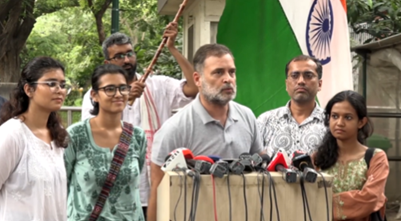
Rahul Gandhi Calls Dharmendra Pradhan’s Resignation a Victory for Students, Demands Further Action
New Delhi, July 2026 : Leader of the Opposition in the Lok Sabha Rahul …