Delhi-NCR Air Quality Hits ‘Very Poor’ Category After Diwali, AQI Reaches 400

New Delhi, Oct 2025 : The air quality in Delhi-NCR plummeted to alarming levels on Tuesday morning, a day after Diwali celebrations, with the overall Air Quality Index (AQI) recorded at 400, remaining in the ‘very poor’ category, according to the Central Pollution Control Board (CPCB).
While the overall AQI stood at 347, several localities reported readings in the ‘severe’ category, signaling serious health concerns for residents. Under CPCB classifications, an AQI of 0–50 is ‘good’, 51–100 ‘satisfactory’, 101–200 ‘moderate’, 201–300 ‘poor’, 301–400 ‘very poor’, and 401–500 is considered ‘severe’.
In Delhi, alarming AQI readings were reported from multiple areas: Narela (354), Najafgarh (334), Mundka (357), Mandir Marg (325), Major Dhyan Chand National Stadium (358), Lodhi Road (334), Jawaharlal Nehru Stadium (317), Jahangirpuri (404), ITO (345), Dilshad Garden (346), Dwarka Sector 8 (333), Mathura Road (341), Bawana (418), and Anand Vihar (352), as per data from the SAMEER app developed by CPCB.
Noida also witnessed a sharp decline in air quality, entering the ‘very poor’ range. Sector-wise AQI readings included Sector 125 (326), Sector 62 (307), Sector 1 (322), and Sector 116 (340). Meanwhile, Gurugram recorded an overall AQI of 338, with specific areas like Gwal Pahari (347), Sector 51 (346), and Vikas Sadan (320) showing similar trends.
The deterioration followed widespread bursting of firecrackers during Diwali festivities. On Diwali morning at 8 a.m., Delhi’s AQI was 335, highlighting the immediate impact of firecrackers on the environment.
Although firecrackers have been banned in Delhi since 2020 to combat winter pollution, this year the Supreme Court permitted the use of green crackers from October 18 to 20, within limited time slots of 6–7 a.m. and 8–10 p.m. However, these rules were widely ignored, with firecrackers being lit beyond the permitted hours.
In response to the surge in pollution, the Commission for Air Quality Management (CAQM) activated Stage-II of the Graded Response Action Plan (GRAP) across Delhi-NCR. The measures aim to reduce pollution, monitor industrial and vehicular emissions, and safeguard public health amid deteriorating air quality.
Residents have been advised to limit outdoor activities, use masks, and keep windows closed to minimize exposure to toxic air, especially vulnerable groups such as children, the elderly, and those with respiratory conditions.





Solar Defence Showcases Indigenous ‘Bhargavastra’ Counter-Swarm Drone System to Indian Army
New Delhi, July 2026 : Solar Defence and Aerospace Ltd. (SDAL) on Friday showcased its ind…
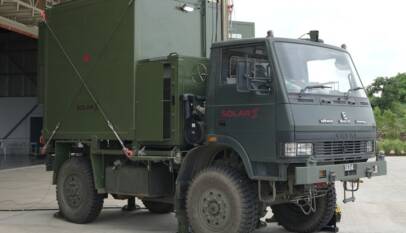
Solar Defence Showcases Indigenous ‘Bhargavastra’ Counter-Swarm Drone System to Indian Army
New Delhi, July 2026 : Solar Defence and Aerospace Ltd. (SDAL) on Friday showcased …