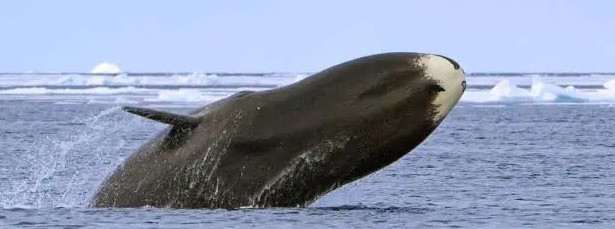
The Bowhead Whale lives for 200 Years, Its secret would help extend human lifespan.

Encased in a blanket of blubber that is nearly half a metre thick, and with a habit of smashing head-first through Arctic ice, the 80,000 kilogram (80 Metric Tons) bowhead whale does not, at first glance, seem a natural habitat embraced with health and longevity.
But one of the cetacean’s most impressive statistics turns out to be its lifespan: sometimes living for more than 200 years, the bowhead whale (Balaena mysticetus) puts humanity’s prized centenarians to shame. An investigation of the animal’s cells has now surfaced one reason for the bowhead’s ability to endure for centuries without succumbing to cancer or other age-related diseases: a cold-activated protein that helps to repair broken DNA1.
“Everybody knows the bowhead whale is extremely long lived, but nobody knew why”, says Zhiyong Mao, a molecular biologist at Tongji University in Shanghai, China, who was not involved in the study. “This tells us that tackling DNA repair to improve genome stability is a very effective strategy to confer this extreme longevity”.
With further research, the findings, which were published on 29th October, could also shed light on ways to help humans live longer, he adds. When the whale protein was expressed in human cells, their ability to repair DNA improved. Researchers have often turned to a menagerie of curiously long-lived animals, from bats to beavers to elephants, in search of clues to an expansive lifespan.
The bowhead whale, however, is a particularly difficult research subject. It is one of the largest animals on Earth; maintaining a few in a laboratory is not an option. And it is endangered, which makes studying the animals in the wild a challenge as well.

But each September, Iñupiaq Inuit villages in northern Alaska are allowed to hunt bowhead whales. Hunters then set aside a few tissue samples, and students working with Vera Gorbunova, a co-author of the study and a biologist at the University of Rochester in New York, who studies ageing, make the long trek north to pick up the samples. “Courier service doesn’t go there”, says Gorbunova. “There are no roads”.
The team brings the tissue samples back and grows some of the whale cells in the laboratory. Given the whale’s longevity, the team hypothesised that its cells might be more resistant in becoming cancerous. Instead, they found the opposite: it took fewer cancer-causing mutations for the whale cells to become malignant than it did for human cells. But those mutations, it turned out, could be less likely to occur in these whales in the first place. The whale cells were better at repairing damaged DNA and had lower rates of mutation than did human cells.
Vera Gorbunova and her team found that this was because of a protein called CIRPB that can mend broken DNA and is activated in cold conditions, such as the icy seas in which bowheads live. Producing CIRPB in human cells that were grown in the laboratory improved DNA repair. And when the protein was expressed in fruit flies (Drosophila), the flies lived longer and were more resistant to radiation, which can cause DNA mutations, than normal fruit flies.
It would take further research of CIRPB’s mechanism to fully understand whether it is beneficial to humans. But overall, the results point to the importance of DNA repair for longevity and cancer prevention, says Mao.
“The most exciting take-home message here is that there is room for improvement”, says Gorbunova. “We can make our DNA repair better”.
Team Maverick








Taiwan Reaffirms South China Sea Claims After Philippines Submits Scarborough Shoal Chart to UN
Taipei, Aug 2026 : Taiwan on Sunday reaffirmed its sovereignty claims over islands in the …
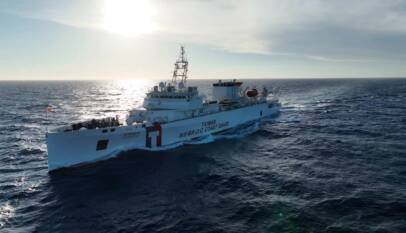
Taiwan Reaffirms South China Sea Claims After Philippines Submits Scarborough Shoal Chart to UN
Taipei, Aug 2026 : Taiwan on Sunday reaffirmed its sovereignty claims over islands in …